Early Life and Inspiration
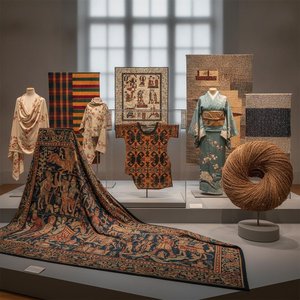
Mariano Fortuny y Marsal (1838-1874), painter orientalist spanish, was born in Grenada on May 5, 1838, to a modest family of artists. When Fortuny was three, his father died suddenly — a loss he carried the rest of his life. After his father’s death, his mother moved the family first to Paris, france, where mariano's mother introduced him to various textiles and fabrics that would later influence his creativity.Artistic Talents and Inventions
Mariano Fortuny showcased his artistic talents from a young age, demonstrating skills in painting, photography, sculpting, architecture, etching, and theatrical stage lighting. His inventions, including over twenty patented between 1901 and 1934, revolutionized the world of theater design.- He developed the fortuny cyclorama dome, a quarter dome-shaped structure of plaster or cloth, which used indirect lighting to create a seamless transition between scenes.
- His treatise "eclairage scenique" (1904) described his discovery of reflecting light off different surfaces, changing its color, intensity, and properties.
Notable Contributions and Collaborations
Mariano Fortuny's work gained widespread recognition in the 1920s. He collaborated with notable figures, including:- Richard Wagner, a german composer, whose operas inspired mariano to paint scenes.
- The famous opera house, La Scala of Milan, where he installed his dome, adapting it for the larger theater and inventing a suction fan to maintain its taut structure.
Legacy and Later Life
Mariano Fortuny passed away on May 3, 1949, in venice, italy. His work inspired french novelist Marcel Proust, and his life was depicted in pere gimferrer's novel "fortuny." Mariano’s legacy continues to influence the world of theatrical design.- Explore more about mariano fortuny's inventions and designs at WahooArt's collection.
- Discover the impact of his work on theatrical lighting in The Museum Destroyed by Fire (united states), a story of an unfortunate event that shaped american art history, available at WahooArt's blog.
Selected Paintings by Mariano Fortuny and Other Artists
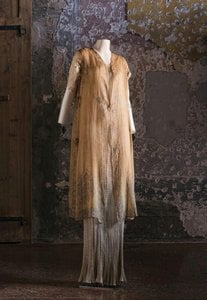
- Mariano Fortuny: Teagown (museum of fine arts, boston, united states), available at WahooArt's collection.
- Marc Chagall: Study to 'song of songs iv' (naive art / primitivism), available at WahooArt.com/@@/8xyhdc-marc-chagall-study-to-song-of-songs-iv
- Pablo Picasso: Clarinet (analytical cubism, oil on canvas), available at WahooArt.com/@@/8xz53k-vincent-van-gogh-tree-roots
- Vincent van Gogh: Tree Roots (50 x 100 cm, post-impressionism, oil on canvas), available at WahooArt.com/@@/8xz53k-vincent-van-gogh-tree-roots
Questions et réponses
Où puis-je consulter l'ensemble des œuvres de Mariano Fortuny ?
Retrouvez toutes les œuvres de Mariano Fortuny sur ce site en consultant sa page Toutes les œuvres d'art.
Dans quels mouvements Mariano Fortuny a-t-il travaillé ?
La page Tous les mouvements artistiques regroupe les œuvres de Mariano Fortuny par mouvement artistique.
Où puis-je voir les œuvres de Mariano Fortuny par ordre chronologique ?
La page Chronologie des œuvres de l'artiste présente les œuvres de Mariano Fortuny classées par date, année par année.