Passer au format impression Passer au format impressionPasser à l'image numérique Passer à l'image numérique EnvoyerEnvoyer
Détails de l'œuvreDétails de l'œuvre Ajouter aux favoris Ajouter aux favoris TéléchargerTélécharger Articles similairesArticles similaires DiaporamaDiaporama StatistiquesStatistiques

Clothing fabric

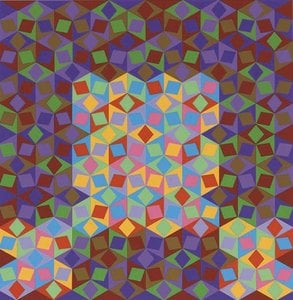
A vibrant spectrum of colorful squares and floral motifs defines this 1973 textile design by Anna Borkowska, offering a mesmerizing mid-century geometric pattern that invites you to bring its bold energy into your collection.

Meta Description: Anna Borkowska, artiste textile polonaise marquée par l’exil soviétique et la guerre froide, est célèbre pour son rôle dans « La Ballon blanc ». Son œuvre explore les souvenirs et la résilience à travers des couleurs évoquant la mer Baltique et une esthétique abstraite pleine d'émotion.

Reproduction à l'huile faite à la main

Huile sur toile peinte à la main, avec cadre et dimensions personnalisés, réalisée sur commande par nos artistes. (Passer au format impression Passer au format impressionPasser à l'image numérique Passer à l'image numérique)

Format standard
personnalisé
CM
INCH

Choisissez parmi nos formats prédéfinis qui respectent les proportions originales de l’œuvre.

largeur
hauteur

Vous pouvez saisir vos propres dimensions pour l'adapter à un cadre ou à un espace spécifique. Si la taille sélectionnée ne correspond pas aux proportions de l'image d'origine, nous recadrerons l'œuvre ou prolongerons la peinture avec des éléments peints à la main supplémentaires. Une maquette numérique vous sera envoyée pour approbation avant le début de la production.
Veuillez noter que l'aperçu à l'écran ne reflète pas le recadrage ou l'extension réels. Seule la maquette montrera fidèlement la composition finale.
Bien que des tailles personnalisées soient disponibles, nous vous recommandons de sélectionner une dimension dans la liste prédéfinie afin de préserver les proportions d'origine.

Exemples de personnalisation possibles : remplacer un visage par la photo du client ; ajouter un animal de compagnie (par exemple, remplacer un chat par un chien) ; inclure un message caché en arrière-plan ; modifier le paysage ou les éléments de l'arrière-plan.
Après la commande, l’équipe WahooArt.com contactera le client par e-mail pour recueillir ses instructions et lui fournira une maquette d’aperçu

Livraison dans le monde entier () en 3 à 4 semaines au lieu des 5 semaines habituelles. (12 septembre). Aucun compromis sur la qualité.

why_choose_icon
Livraison express gratuite dans le monde entier
why_choose_icon
Toile de lin de haute qualité
why_choose_icon
Assurance transport complète
why_choose_icon
Garantie de remboursement des droits de douane
why_choose_icon
Garantie de fidélité des couleurs
why_choose_icon
Garantie de retour de 100 jours (uniquement en cas de défaut)
why_choose_icon
Garantie de remboursement à 100%
why_choose_icon
Tarifs dégressifs sur quantité

Prix total

$ 272

reproduction

Clothing fabric

Technique de reproduction

Format de la reproduction

-

Prix total final

$ 272

Informations clés

  • Medium: Textile
  • Artist: Anna Borkowska
  • Subject or theme: Geometric and botanical patterns
  • Artistic style: Abstract, mid-20th century
  • Notable elements or techniques: Grid-like pattern, floral motifs, vibrant colors

A Kaleidoscope of Texture and Light

In the vibrant tapestry of mid-century textile design, few works capture the exuberant spirit of the era quite like Anna Borkowska’s Clothing Fabric. Created in 1973, this mesmerizing piece serves as a masterclass in color theory and geometric rhythm. At first glance, the eye is swept into a rhythmic dance of chromatic squares, arranged in a meticulous grid that evokes the precision of a mosaic. Each cell within this textile holds a fragment of the visible spectrum, transitioning seamlessly from fiery reds and sun-drenched yellows to deep indigos and soft violets. This deliberate arrangement does more than merely decorate; it creates a sense of perpetual motion, where the eye is never permitted to rest, but rather invited to wander through a luminous landscape of hue and light.

Interspersed among these bold color blocks are delicate floral motifs that soften the geometric rigor of the design. These botanical whispers add a layer of organic complexity, breaking the mathematical precision of the grid with the grace of nature. The interplay between the structured squares and the fluid, blossoming shapes creates a tension that is both visually stimulating and deeply harmonious. To touch this work—even through the medium of a high-quality reproduction—is to sense the phantom presence of the individual threads and yarns that compose its soul. The visible texture of the weave lends an artisanal depth to the piece, reminding the viewer of the meticulous craftsmanship required to marry such bold saturation with intricate detail.

The Weaver of Memories

To truly appreciate this textile, one must look through the lens of Anna Borkowska’s extraordinary life. A survivor of the profound displacements of the mid-20th century, Borkowska possessed a unique ability to weave resilience into her art. Having endured the hardships of Siberian resettlement, her work often transcends simple decoration to become a vessel for memory and continuity. In Clothing Fabric, we see this manifested as a celebration of vitality. The saturated colors and rhythmic patterns act as an emotional counterpoint to the turbulence of history, offering a sanctuary of brightness and order. It is as if the artist sought to reconstruct a sense of wholeness through the very threads she manipulated.

For the discerning collector or interior designer, this piece offers unparalleled versatility. Its bold, kaleidoscopic nature makes it a commanding focal point in a contemporary setting, yet its mid-century roots allow it to integrate seamlessly into more traditional or eclectic environments. Whether rendered as a large-scale wall hanging that breathes life into a minimalist room or used as an accent piece to introduce warmth to a sophisticated study, the artwork provides a profound emotional impact. It is not merely a pattern on fabric; it is an invitation to experience the enduring power of color and the beautiful, structured chaos of the natural world.


Biographie de l'artiste

Anna Borkowska: Threads of Memory and Resilience

Anna Borkowska (1916 – 2008) emerged from the crucible of Soviet exile, forging a distinctive artistic path rooted in textile art—a medium that served as both a reflection of her personal journey and a powerful expression of broader themes concerning displacement, memory, and the enduring spirit of human experience. Born in Mykolaiv, Russia, Borkowska’s early life was irrevocably altered by the tumultuous events of World War II and the subsequent Soviet occupation of Poland. Forced to flee her homeland with her family, she endured the hardships of Siberian resettlement—a formative period that instilled within her a profound understanding of vulnerability and resilience. Her artistic vocation blossomed amidst this backdrop of upheaval. Borkowska’s fascination with textiles stemmed from an instinctive desire to capture intangible emotions and experiences – memories woven into fabric itself. Unlike many artists of her time who focused on representational painting, Borkowska embraced abstraction, utilizing color palettes reminiscent of the Baltic Sea—a landscape deeply ingrained in her subconscious and symbolizing both tranquility and turbulent currents. Her distinctive style combined meticulous craftsmanship with a conceptual depth that resonated powerfully with audiences worldwide. A pivotal moment arrived when she gained international recognition for her portrayal of the benevolent elderly woman in Jafar Panahi’s acclaimed film “The White Balloon” (1995). This role cemented Borkowska's reputation as an actress capable of conveying profound empathy and capturing the essence of human connection—a skill that translated seamlessly into her artistic endeavors. Her work consistently explored themes of loss, nostalgia, and the transformative power of confronting one’s past. The film showcased her ability to portray nuanced characters with sensitivity and grace, highlighting her commitment to portraying humanity's complexities. Borkowska’s oeuvre comprises numerous textile artworks, notably “Clothing Fabric” (1972), a mesmerizing watercolor design characterized by cool blues and purples arranged in a mosaic-like pattern. This piece exemplifies her commitment to conveying emotion through color and texture—a technique that speaks volumes about the artist's ability to distill complex feelings into visual form. The artwork’s serene aesthetic invites contemplation on themes of remembrance and transformation, mirroring Borkowska’s own life experience as a refugee who found solace in artistic creation. Her meticulous attention to detail—evident in the precise layering of pigments and the careful rendering of textures—underscores her dedication to mastering her craft and communicating profound ideas through visual language. Despite her relatively modest output compared to some contemporaries, Anna Borkowska left an indelible mark on Iranian cinema and the broader art landscape. Her unwavering dedication to her craft—coupled with her ability to imbue her work with emotional resonance—ensured that her legacy would endure beyond her lifetime. She remains a testament to the transformative potential of artistic expression in confronting adversity and celebrating the beauty inherent in human memory, embodying resilience and creativity amidst challenging circumstances. ### Useful Links: ### Useful Content:

Early Life and Influences

Anna Borkowska was born in Mykolaiv, Russia, in 1916. Her formative years were marked by the devastation of World War II and subsequent Soviet occupation of Poland, experiences that profoundly shaped her worldview and instilled within her a deep appreciation for resilience.

Textile Art: A Reflection of Emotion

Borkowska’s artistic passion originated from an instinctive desire to capture intangible emotions—memories woven into fabric itself. Rejecting representational painting, she embraced abstraction, drawing inspiration from the tranquil yet turbulent Baltic Sea landscape.

Recognition in Film

Her breakthrough came with her portrayal of a compassionate elderly woman in Jafar Panahi’s “The White Balloon” (1995), securing her reputation as an actress adept at conveying empathy and capturing the essence of human connection. This role demonstrated her ability to portray complex characters with sensitivity.

Notable Artwork: Clothing Fabric

"Clothing Fabric" (1972) exemplifies Borkowska’s distinctive style—a watercolor design characterized by cool blues and purples arranged in a mosaic-like pattern. Her meticulous technique conveyed emotion through color and texture, reflecting her belief that art could communicate profound ideas.

Legacy

Despite her relatively modest output, Anna Borkowska’s unwavering dedication to her craft ensured that her legacy would endure beyond her lifetime. She remains a symbol of artistic resilience and creativity in the face of adversity—a testament to the transformative power of art.

Anna Borkowska

Anna Borkowska

1916 - 2008 , Russie

En bref

  • Artistic Movement Or Style: Art textile
  • Date Of Birth: 1916
  • Date Of Death: 2008
  • Full Name: Anna Borkowska
  • Nationality: Polonaise
  • Notable Artworks: ['Clothing Fabric']
  • Place Of Birth: Mykolaiv, Russie