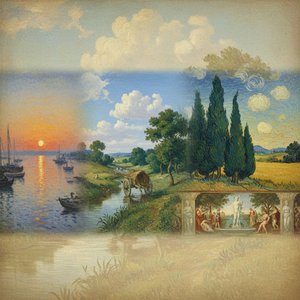
Alfredo Londaibere: A Buenos Aires Painter of Expression and Revelation
Born in Buenos Aires in 1955, Alfredo Londaibere’s artistic journey was a deeply personal one, rooted in a fervent belief that painting possessed the unique capacity to encapsulate an artist's entire being – their expression, truth, and ultimately, their soul. His life and work unfolded within the vibrant, often rebellious, art scene of late 20th-century Argentina, blending traditional techniques with a distinctly modern sensibility, fueled by a profound respect for craft and a rejection of prevailing artistic orthodoxies.
Londaibere’s early years were shaped by rigorous training. He began his artistic education in the workshops of Araceli Vázquez Málaga, Oscar Smöge, and the Asociación Estímulo de Bellas Artes – institutions that instilled in him not only technical proficiency but also a deep appreciation for the history of art and its potential for personal expression. This foundational period laid the groundwork for his distinctive style, characterized by a rich layering of influences and a willingness to experiment with materials and methods.
The Roots of a Rebel: Early Career & Influences
Londaibere’s artistic career began in the 1980s, initially finding expression in the bars and nightclubs of Buenos Aires – venues that provided a fertile ground for alternative voices. This unconventional starting point reflected his independent spirit and a deliberate rejection of the established art world. Crucially, he was deeply involved with GAG (Gay Action Group), an activist collective that fostered intellectual discourse and challenged social norms. This engagement profoundly shaped his worldview, informing his work’s subtle yet persistent critique of societal structures.
His artistic philosophy evolved significantly during this period, influenced by figures like Jorge Gumier Maier, who led the influential “Rojas” group. Londaibere embraced a vernacular approach to art, valuing manual craftsmanship and incorporating elements from popular culture – salvaged materials, religious iconography, and even the detritus of urban life – into his compositions. This deliberate choice was a direct response to what he perceived as the dominance of rational, conceptual approaches in contemporary art, advocating instead for an art rooted in intuition, emotion, and sensory experience.
A Synthesis of Tradition & Innovation
Londaibere’s artistic style is remarkably complex and layered. He masterfully blended traditional European painting techniques with a distinctly Latin American sensibility. His work frequently draws upon surrealist imagery, religious symbolism (often reinterpreted through a personal lens), and elements of indigenous art – creating a unique visual language that speaks to both the past and the present.
He was particularly fascinated by the concept of “the tao of art,” as he described it, viewing painting not merely as a means of representation but as a spiritual practice. His process involved a meditative engagement with materials, a willingness to embrace chance encounters, and a deep respect for the inherent beauty of imperfection. This approach is evident in his use of alpaca edges on wood panels – a deliberate choice that adds texture, depth, and a tactile quality to his paintings.
Notable Works & Legacy
Londaibere’s work has been exhibited extensively throughout Latin America, the United States, and Europe. His paintings are held in prestigious collections, including the Colección Andrés Blaisten in Mexico, the Museum Reina Sofia in Madrid, and the Museum of Modern Art of Buenos Aires. Significant examples include “Angel Zarraga,” a masterful depiction of femininity that showcases his technical skill and expressive power, and “La Femme et le Pantin,” a captivating scene of seduction and contemplation.
The 2019 retrospective at the Museum of Modern Art of Buenos Aires, titled *Yo Soy Santo*, offered a comprehensive overview of Londaibere’s career, revealing the profound depth and complexity of his artistic vision. His legacy extends beyond individual artworks; he was also a dedicated curator and teacher, shaping the careers of numerous young artists and contributing significantly to the vibrant cultural landscape of Buenos Aires. Alfredo Londaibere's art remains a testament to the power of personal expression, the beauty of imperfection, and the enduring relevance of traditional craft in the modern world.
Kysymykset ja vastaukset
Mistä löydän Alfredo Londaibere's teokset ryhmiteltynä taidesuuntauksen mukaan?
Alfredo Londaibere:n teoksia voi selata tyylisuuntien mukaan artistin Kaikki suuntaukset -sivulla.
Mistä Alfredo Londaibere on kotoisin?
Alfredo Londaibere on syntynyt Argentina.
Onko Alfredo Londaibere esittelyssä aikajärjestyksessä?
Alfredo Londaibere -taiteilijan Kronikka on vieritettävä aikajana, joka esittää teokset kronologisessa järjestyksessä jaettuna uravaiheita vastaaviin lukuihin.
Mistä löydän Alfredo Londaibere teokset ryhmiteltynä tekniikan mukaan?
Löytääksesi kaikki Alfredo Londaibere teokset tietyssä tekniikassa, käytä taiteilijan Kaikki tekniikat -sivua.
Miten voin seurata Alfredo Londaibere's teoksia vuosi vuodelta?
Alfredo Londaibere'n teokset ovat nähtävissä aikajärjestyksessä artistin Teosten aikajana -sivulla.
Mihin historialliseen aikakauteen Alfredo Londaibere kuului?
Alfredo Londaibere työskenteli Contemporary -aikakaudella. Aikakausi sijoittaa taiteilijan toiminnan historialliseen kontekstiin.
Missä kaupungissa ja maassa Alfredo Londaibere on syntynyt?
Alfredo Londaibere on syntynyt Buenos Aires, Argentina.
Mistä löytää Alfredo Londaibere teokset järjestettynä värin mukaan?
Väriindeksi-sivulla Alfredo Londaibere:n teokset on järjestetty värin mukaan.