Museolaatuisia giclée- tai kankaitaulun tulosteita nopealla tuotannolla ja joustavilla viimeistelyvaihtoehdoilla. ( Tilaa käsinmaalattu jäljennös Siirry digitaaliseen kuvaan)





























Valitse valmiista mitoistamme sellaiset, jotka vastaavat teoksen alkuperäisiä mittasuhteita.

Voit syöttää omat mitat sopiaksesi tiettyyn kehykseen tai tilaan. Jos valittu koko ei vastaa alkuperäisen kuvan mittasuhteita, rajaamme teosta tai laajennamme kuvaa peilatulla tai yhtenäisellä reunalla. Digitaalinen mallikuva lähetetään hyväksyttäväksi ennen tuotannon aloittamista.
Huomaathan, että näytöllä näkyvä esikatselu ei vastaa lopullista rajausta tai laajennusta. Vain mallikuva näyttää lopullisen sommittelun tarkasti.
Vaikka räätälöityjä kokoja on saatavilla, suosittelemme valitsemaan mitat valmiista listasta alkuperäisten mittasuhteiden säilyttämiseksi.
Maailmanlaajuinen toimitus () 2 viikossa tavallisen 4–5 viikon sijaan. (21 syyskuu)


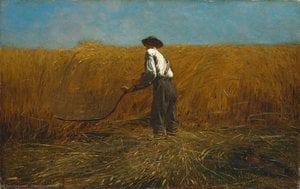
Boy with Anchor
Replikaatin koko
In the gentle interplay of light and sea, Winslow Homer’s "Boy with Anchor" emerges as more than a mere coastal landscape; it is a profound distillation of American identity and a quiet contemplation of childhood resilience. Painted in 1873, this evocative work captures a fleeting moment of peace on a sandy shore, where the vastness of nature meets the tender vulnerability of youth. As one gazes upon the scene, there is an immediate sense of being transported to the rugged, salt-sprayed coastlines of Gloucester, Massachusetts. The painting invites viewers—whether they are seasoned art historians or interior designers seeking a focal point of serenity—to linger in its atmospheric embrace, feeling the warmth of the sun and the rhythmic pull of the tide.
The composition centers on a young boy, whose presence provides a poignant emotional anchor to the piece. Standing upon the sun-drenched beach, he gazes intently toward a distant sailboat, his small hands gripping a sail as if tethered to the very essence of the sea. This simple, almost innocent tableau speaks volumes about the deep-seated connection between humanity and the natural world—a theme that resonates throughout Homer’s illustrious career. The artist utilizes a masterful technique, layering delicate washes of pigment to create a luminous effect that makes the expansive blue sky appear to breathe with light. While the piece is celebrated for its watercolor precision, the vibrant interplay of colors evokes the richness of an oil painting, offering a visual depth that commands attention in any curated collection.
Beyond its surface beauty, "Boy with Anchor" is rich with subtle symbolism that elevates it from a maritime study to a narrative masterpiece. The massive anchor, positioned prominently in the foreground, serves as a heavy, visual metaphor for the boy's burgeoning future. It represents a weighty responsibility and a looming destiny, foreshadowing his inevitable involvement with the sea—a life of both beauty and peril. This juxtaposition of youthful innocence against the formidable tools of the fishing industry creates a tension that is both haunting and hopeful. For collectors, this layer of meaning provides a profound intellectual depth, making the artwork a conversation piece that explores themes of growth, heritage, and the passage of time.
Homer’s historical context further enriches the painting's soul. Working during a period of rapid American industrialization, Homer captured the duality of a nation in flux. The thriving fishing community of Gloucester was facing the pressures of economic change, yet through his brush, Homer preserves the timeless traditions of the coast. His style, characterized by loose and expressive strokes reminiscent of early Impressionism, prioritizes the capture of fleeting light and atmosphere over rigid photographic realism. This approach allows the viewer to experience the emotional truth of the scene—the salt in the air, the warmth of the sand, and the quiet determination of a child standing on the precipice of adulthood.
For the discerning decorator or art enthusiast, a high-quality reproduction of "Boy with Anchor" offers an unparalleled opportunity to infuse a space with character and tranquility. The painting’s palette—a sophisticated blend of vibrant blues, warm sandy tones, and soft whites—complements a wide array of interior aesthetics, from coastal chic to classic American traditionalism. Its ability to evoke a sense of calm makes it an ideal centerpiece for living areas, studies, or even serene bedroom environments.
Investing in such a piece is not merely about acquiring decor; it is about bringing a fragment of American history and emotional resonance into the home. The artwork serves as a window into a bygone era, offering a sense of permanence and grace in an ever-changing world. Whether displayed as a standalone masterpiece or part of a larger gallery wall, Winslow Homer’s vision continues to inspire awe, making "Boy with Anchor" a timeless treasure for any collection dedicated to the beauty of the human spirit and the majesty of the natural landscape.


1836 - 1910 , Yhdysvallat

Explore the profound beauty of American Realism. From Winslow Homer’s rural landscapes to the dignity of everyday life, discover how master artists captured the soul of a nation through evocative oil paintings and timeless fine art techniques.

An expert guide for art collectors exploring the chemistry and artistry of oil, acrylic, tempera, and watercolor. Discover how medium specificity and material integrity define the longevity and value of fine art masterpieces.

Discover the ethereal beauty of premium watercolor reproductions and bespoke commissions at WahooArt. From museum-quality landscapes to custom AI-enhanced portraits, our master artists deliver unparalleled craftsmanship and white-glove service for discerning collectors worldwide.

Discover the ethereal beauty of watercolor through an art-historical lens. Master the delicate balance of light, fluidity, and pigment to capture the luminous essence of nature, inspired by the legendary techniques of the Old Masters and Impressionist greats.

 Katso seinällä
 Lähetä
 Jaa
Jaa
 Tarkemmat tiedot
 Opas
Opas

 Lataa kuva
 Samanlaisia kohteita
 Röntgenkuvaus
 Diaesitys
 Tilastot

 Lue lisää







 Lasivaihtoehto on saatavilla vain alle 110 cm kokoisille teoksille