
Katso seinällä Esikatsele AR-tilassa Tilaa käsinmaalattu jäljennös Siirry digitaaliseen kuvaan Lähetä
Tarkemmat tiedot Opas Lisää suosikkeihin Lataa kuva Samanlaisia kohteita Röntgenkuvaus Diaesitys Tilastot

Claudio and Isabella

William Holman Hunt's 'Claudio and Isabella' (1850) portrays a heartbreaking moral dilemma from Shakespeare, rendered with Pre-Raphaelite detail & symbolism – a poignant scene of sacrifice.

William Holman Hunt (1827-1910) oli pre-rafaelilainen taidemaalari, tunnettu syvällisistä uskonnollisista ja luonnonaiheista maalauksistaan, kuten "Valo maailmaan". Hänen tyylinsä on realistinen ja symbolinen.

Giclée- ja taideprintit

Museolaatuisia giclée- tai kankaitaulun tulosteita nopealla tuotannolla ja joustavilla viimeistelyvaihtoehdoilla. ( Tilaa käsinmaalattu jäljennös Siirry digitaaliseen kuvaan)

P118B $10
P118H $10
P118W $10
P438Z $10
P508JH $12
P508YH $12
P805H $10
P805Z $10
P919BZ $10
P919G $10
P919XJ $10
P959ZH $10
P968JZ $12
W106C $8
W218G $10
W218JH $8
W218Y $10
W307PJ $10
W316G $10
W316PJ $8
W316Y $10
W398PJ $8
W4111J $10
W500HY $15
W500JH $15
W692G $12
W849H $8
W940BG $15
W953PJ $8

Vakiokoko
mittatilaustyö
CM
INCH

Valitse valmiista mitoistamme sellaiset, jotka vastaavat teoksen alkuperäisiä mittasuhteita.

leveys
korkeus

Voit syöttää omat mitat sopiaksesi tiettyyn kehykseen tai tilaan. Jos valittu koko ei vastaa alkuperäisen kuvan mittasuhteita, rajaamme teosta tai laajennamme kuvaa peilatulla tai yhtenäisellä reunalla. Digitaalinen mallikuva lähetetään hyväksyttäväksi ennen tuotannon aloittamista.
Huomaathan, että näytöllä näkyvä esikatselu ei vastaa lopullista rajausta tai laajennusta. Vain mallikuva näyttää lopullisen sommittelun tarkasti.
Vaikka räätälöityjä kokoja on saatavilla, suosittelemme valitsemaan mitat valmiista listasta alkuperäisten mittasuhteiden säilyttämiseksi.

Maailmanlaajuinen toimitus () 2 viikossa tavallisen 4–5 viikon sijaan. (23 syyskuu)

why_choose_icon
Ilmainen pikatoimitus ympäri maailman
why_choose_icon
Korkealaatuinen pellavakangas
why_choose_icon
Kattava kuljetusvakuutus
why_choose_icon
Tulliveron palautustakuu
why_choose_icon
Takuu täydellisestä värien vastaavuudesta
why_choose_icon
100 päivän palautusoikeus valmistusvirhetapauksissa
why_choose_icon
100% rahat takaisin -takuu
why_choose_icon
Määräalennus saatavilla

Kokonaishinta

$ 68

reproduction

Claudio and Isabella

Giclée- ja taideprintit

Replikaatin koko

-

Kokonaishinta

$ 68

Pikaista tietoa

  • Movement: Pre-Raphaelite
  • Notable elements: Moral dilemma
  • Artist: William Holman Hunt
  • Year: 1850
  • Title: Claudio and Isabella
  • Subject or theme: Shakespearean drama
  • Medium: Oil on mahogany

Taidevisakysely

Jokaisessa kysymyksessä on vain yksi oikea vastaus.

Kysymys 1:
What literary work inspired William Holman Hunt’s painting, ‘Claudio and Isabella’?
Kysymys 2:
The painting depicts a moral dilemma involving which two characters?
Kysymys 3:
What is the primary artistic movement associated with ‘Claudio and Isabella’?
Kysymys 4:
According to the description, what is depicted in the mirror that the Lady of Shalott looks at?
Kysymys 5:
What year was ‘Claudio and Isabella’ painted?

A Morality in Paint: William Holman Hunt’s “Claudio and Isabella”

William Holman Hunt's 1850 painting, "Claudio and Isabella," is more than just a depiction of a Shakespearean dilemma; it’s a profound meditation on virtue, sacrifice, and the agonizing weight of moral choice. Born from the burgeoning Pre-Raphaelite movement, this oil on mahogany canvas pulsates with an almost unsettling realism, drawing the viewer into the fraught scene between Claudio and Isabella, siblings caught in a desperate predicament orchestrated by the menacing Angelo.

Hunt, deeply influenced by the writings of John Ruskin and Thomas Carlyle, sought to return art to its roots—to a direct observation of nature and a commitment to moral truth. He rejected the idealized forms and artificiality of academic painting, favoring instead a meticulous attention to detail and a vibrant palette that aimed to capture not just appearances but also the very essence of human emotion. “Claudio and Isabella” exemplifies this approach, demanding close scrutiny from the viewer as if inviting them to witness the unfolding drama firsthand.

The Scene Unfolds: Narrative and Composition

The painting’s composition immediately establishes a sense of unease and impending doom. Claudio, shackled and visibly distressed, occupies the lower left corner, his posture conveying both shame and desperation. His face is turned away from Isabella, shielding himself from her gaze—a poignant symbol of his unwillingness to confront the consequences of his actions. Isabella, positioned on his right, stands tall and resolute, yet her expression betrays a profound sorrow and inner turmoil. The stark contrast between their postures highlights the agonizing choice before them: Claudio’s desire for self-preservation versus Isabella's willingness to sacrifice her own virtue.

The setting—a dimly lit chamber with a window offering a glimpse of a church in the distance—contributes significantly to the painting’s atmosphere. The light, filtered through the glass, casts long shadows and creates an almost theatrical effect, emphasizing the drama unfolding within. Hunt meticulously rendered every element, from the texture of Claudio's clothing to the subtle reflections on the windowpane, demonstrating his mastery of technique and his commitment to realism.

Symbolism and Emotional Resonance

Beyond its narrative clarity, “Claudio and Isabella” is rich in symbolic meaning. The white gown worn by Isabella represents her purity and innocence—a stark contrast to the darkness surrounding her. The window, a recurring motif in Hunt’s work, symbolizes both confinement and access to truth; it offers a glimpse of the outside world but also serves as a barrier between Claudio and Isabella. The church visible through the window further underscores the moral dilemma at the heart of the painting—a reminder of divine judgment and the potential consequences of sin.

The most arresting element is perhaps the palpable sense of anguish conveyed by Hunt’s masterful use of light and shadow. He doesn't shy away from depicting the characters' emotional distress, capturing their vulnerability with unflinching honesty. The painting evokes a powerful feeling of empathy for both Claudio and Isabella, forcing the viewer to confront the uncomfortable questions raised by their situation.

A Legacy of Moral Inquiry

"Claudio and Isabella" remains a compelling work not only for its artistic merit but also for its enduring relevance. Hunt’s depiction of a moral quandary—a woman forced to choose between her brother's life and her own virtue—continues to resonate with audiences today, prompting reflection on the complexities of human relationships and the ethical dilemmas we face. It stands as a testament to Hunt’s belief that art could be a powerful tool for exploring profound philosophical questions and illuminating the human condition.

Taiteilijan elämäkerta

A Life Devoted to Vision

William Holman Hunt, born in Cheapside, London on April 2, 1827, was more than simply a painter; he was a philosophical and spiritual seeker who translated his deepest convictions onto canvas. His early life, though rooted in the bustling commercial world of his father’s warehouse business, held within it an artistic inclination that would ultimately defy expectations. Initially destined for a career mirroring his father's, Hunt found solace and purpose in art, beginning with surreptitious sketching and later, after some struggle, formal training at the Royal Academy Schools. This period of apprenticeship, however, proved restrictive. He yearned for an artistic expression that transcended prevailing academic conventions—a desire that would soon propel him toward revolutionary change. He felt stifled by what he perceived as the artificiality of contemporary art and sought a return to the sincerity and detail found in pre-Renaissance masters, a sentiment central to the formation of the Pre-Raphaelite Brotherhood. Hunt’s journey wasn't merely about aesthetics; it was a quest for truth, morality, and spiritual resonance within the realm of visual representation.

The Genesis of a Revolutionary Brotherhood

In 1848, alongside Dante Gabriel Rossetti and John Everett Millais, Hunt established the Pre-Raphaelite Brotherhood (PRB). This collective wasn’t just an artistic movement; it was a rebellion against what they saw as the decline of art since Raphael. The PRB advocated for a return to meticulous detail, vibrant colors, and sincere subject matter characteristic of early Italian painting—before the perceived artificiality of High Renaissance ideals took hold. Hunt's commitment to this philosophy remained unwavering throughout his career. Early works like *The Hireling Shepherd*, painted in 1851, exemplify this dedication. The painting’s painstaking realism – from the texture of the sheep’s wool to each individual blade of grass – was revolutionary for its time. It wasn’t merely a depiction of rural life; it was an attempt to convey moral and symbolic meaning through precise observation of nature. *The Awakening Conscience*, also from this period, further solidified Hunt’s reputation for intensely naturalistic scenes imbued with psychological depth and moral weight. These paintings weren't just visually striking; they were statements about the artist's belief in art as a vehicle for truth and spiritual awakening. The Brotherhood sought to challenge the established norms of artistic production, rejecting what they perceived as formulaic academic painting in favor of a more direct and honest engagement with the world around them.

A Pilgrimage of Faith and Symbolic Depth

Hunt’s artistic journey took an extraordinary turn with his travels to the Holy Land in the 1850s and 60s. Driven by a desire for historical and topographical accuracy, he embarked on a pilgrimage to Palestine and Syria, meticulously documenting landscapes, costumes, and customs. This dedication to authenticity profoundly influenced his later works, imbuing them with an unparalleled sense of realism and spiritual resonance. *The Shadow of Death*, painted during this period, stands as a powerful example. The painting depicts the scene of Christ’s sacrifice in a way that was both visually arresting and deeply symbolic, reflecting Hunt's profound religious convictions. He sought to capture not just the physical reality but also the emotional weight and spiritual significance of biblical events. His meticulous research into ancient texts and archaeological findings ensured that his depictions were as accurate as possible, adding layers of historical depth to his paintings. *The Light of the World*, begun in 1851 and completed in 1853, encapsulates this synthesis of faith and artistic skill. The image of Christ knocking at a door, offering salvation to those who open their hearts, became immensely popular and remains one of the most recognizable religious paintings of the Victorian era. Hunt’s commitment extended beyond mere representation; he sought to imbue his works with layers of symbolic meaning, drawing upon biblical texts, medieval allegory, and contemporary social commentary. He believed that art had a moral purpose—to uplift, inspire, and guide viewers toward spiritual enlightenment.

Key Influences & Themes

  • Influences: John Ruskin’s writings on art and morality; Early Italian Renaissance painting (pre-Raphael); Biblical texts and medieval allegory.
  • Major Themes: Religious faith, moral awakening, the beauty of nature, social commentary, symbolism. Hunt consistently explored themes of redemption, sacrifice, and the search for spiritual truth in his work.
  • Key Dates: April 2, 1827: Born in Cheapside, London; 1851-1853: Painted *The Light of the World*; September 7, 1910: Passed away and buried in St Paul’s Cathedral, London.

Enduring Legacy

William Holman Hunt's legacy extends far beyond the beauty of his paintings. He revolutionized Victorian art by championing realism, symbolism, and spiritual depth, leaving an indelible mark on generations of artists and viewers alike. His works continue to inspire awe and contemplation, reminding us of the power of art to illuminate the human condition and explore the mysteries of faith. His meticulous attention to detail, combined with his profound understanding of religious and moral themes, established him as one of the most significant figures in Pre-Raphaelite art. Hunt’s influence can be seen in the works of subsequent artists who sought to create paintings that were both visually stunning and intellectually stimulating. His commitment to truth, beauty, and spiritual exploration continues to resonate with audiences today, solidifying his place as a true visionary artist.
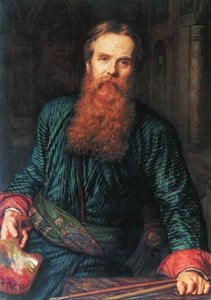
William Holman Hunt

William Holman Hunt

1827 - 1910 , Iso-Britannia

Tietoa taiteilijasta

  • Artistic Movement Or Style: Prerafaeliitti
  • Artists Or Movements Influenced By This Artist: ['Prerafaeliitit']
  • Artists Who Influenced This Artist:
    • Ruskin
    • Italian
  • Date Of Birth: 2. huhtikuuta 1827
  • Date Of Death: 7. syyskuuta 1910
  • Full Name: William Holman Hunt
  • Nationality: Englannin
  • Notable Artworks:
    • The Light of the World
    • Awakening
    • Shadow
  • Place Of Birth: Cheapside, Lontoo
Tutustu teoksiin, jotka on järjestetty aiheiden, tyylien ja ominaisuuksien mukaan.


































