Ilmainen taidekonsultointi

x
Tilaa painos Tilaa painosOsta kuva Osta kuva JaaJaa
DetailsDetails Lisää suosikkeihin Lisää suosikkeihin LataaLataa SamanlaisiaSamanlaisia X-RayX-Ray DiaesitysDiaesitys

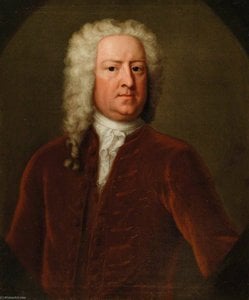
Mrs Livesay

Explore this remarkable portrait by Sir Francis Grant, showcasing Victorian elegance and artistic precision.

Sir Francis Grant (1803-1878): Skotsilainen maalari ja Royal Academian presidentti, tunnettu brittiläisen aristokratian kuvauksistaan kuten kuningatar Viktoria. Tutustu hänen eleganttiin taiteeseensa!

Käsinmaalattu öljykopio

Käsinmaalattu öljyväri kankaalle haluamassasi koossa ja kehyksissä, taiteilijoidemme valmistamana tilauksesta.

P118B $10
P118H $10
P118W $10
P438Z $10
P508JH $12
P508YH $12
P805H $10
P805Z $10
P919BZ $10
P919G $10
P919XJ $10
P959ZH $10
P968JZ $12
W106C $8
W218G $10
W218JH $8
W218Y $10
W307PJ $10
W316G $10
W316PJ $8
W316Y $10
W398PJ $8
W4111J $10
W500HY $15
W500JH $15
W692G $12
W849H $8
W940BG $15
W953PJ $8

Standard
custom
CM
INCH

Valitse valmiista mitoistamme sellaiset, jotka vastaavat teoksen alkuperäisiä mittasuhteita.

leveys
korkeus

Voit syöttää omat mitat sopimaan tiettyyn kehykseen tai tilaan. Jos valitsemasi koko ei vastaa alkuperäisen kuvan mittasuhteita, rajaamme taideteoksen tai jatkamme maalausta käsin maalatuilla elementeillä. Digitaalinen esikatselu lähetetään hyväksyttäväksi ennen tuotannon aloittamista.
Huomioithan, että näytöllä oleva esikatselu ei vastaa todellista rajausta tai jatkamista. Vain digitaalinen mallikuva näyttää lopullisen sommittelun tarkasti.
Vaikka mittatilaustyöt ovat mahdollisia, suosittelemme valitsemaan mitan ennalta määritetystä listasta alkuperäisten mittasuhteiden säilyttämiseksi.

Esimerkkejä muutettavissa olevista asioista: Vaihda kasvot asiakkaan omaan valokuvaan; Lisää lemmikki (esim. korvaa kissa koiralla); Lisää piilotettu viesti taustaan; Muuta taustan maisemaa tai elementtejä.
Tilauksen jälkeen WahooArt.com -tiimi lähettää asiakkaalle ohjeet ja esikatselukuvan.

Maailmanlaajuinen toimitus () 3–4 viikossa tavallisen 5 viikon sijaan. (1 heinäkuu). Laadusta ei tingitä.

why_choose_icon
Ilmainen pikatoimitus ympäri maailman
why_choose_icon
Korkealaatuinen pellavakangas
why_choose_icon
Kattava kuljetusvakuutus
why_choose_icon
Tulliveron palautustakuu
why_choose_icon
Täydellinen värien vastaavuustakuu
why_choose_icon
60 päivän palautusoikeus (vain valmistusvirheet)
why_choose_icon
100% rahat takaisin -takuu
why_choose_icon
Määräalennus tarjous

Kokonaishinta

-

reproduction

Mrs Livesay

Reproduktiotekniikka

Replikaatin koko

-

Kokonaishinta

-

Pikaista tietoa

  • Location: Bristol Museum & Art Gallery
  • Movement: Romanticism
  • Influences: John Ferneley
  • Year: 1851
  • Subject or theme: Formal portrait
  • Title: Mrs Livesay
  • Notable elements or techniques: Layered paint, blending

Taidevisa

Jokaisessa kysymyksessä on vain yksi oikea vastaus.

Kysymys 1:
What is the primary subject matter depicted in ‘Mrs Livesay’?
Kysymys 2:
In what century was Sir Francis Grant commissioned to paint this portrait?
Kysymys 3:
What artistic style is characteristic of ‘Mrs Livesay’, as evidenced by its meticulous detail and realism?
Kysymys 4:
The artist employed a technique known for blending colors to achieve a smooth appearance. What is this technique called?
Kysymys 5:
What does the setting of ‘Mrs Livesay’ – a tree-shaded garden – symbolize in relation to the subject?

Teoksen kuvaus

Mrs Livesay - A Portrait of Quiet Dignity

Sir Francis Grant’s “Mrs Livesay,” completed in 1851, stands as a testament to the Victorian obsession with capturing refined beauty and intellectual engagement within meticulously crafted portraits. More than just a likeness, it embodies an atmosphere of contemplative serenity—a snapshot frozen in time amidst the opulent surroundings of Melton Mowbray’s hunting society.

  • Subject Matter & Context: The painting depicts Mrs. Livesay, a woman of considerable social standing and known for her literary pursuits. Grant skillfully portrays her seated beneath a blossoming tree—a deliberate choice reflecting the Victorian fascination with nature as a symbol of moral virtue and intellectual stimulation.
  • Composition & Perspective: Employing a classic three-quarter pose, Grant’s composition prioritizes intimacy and invites viewers into the subject's inner world. The subtle recession of the landscape background—characterized by hazy greens and browns—creates a shallow depth of field, reinforcing this sense of immediacy.
  • Color Palette & Texture: Grant utilizes a muted color palette dominated by creams, blues, and reds. Soft hues envelop Mrs. Livesay’s attire, contrasting beautifully with the bold drapery behind her. Brushwork contributes significantly to textural richness—the smooth surface of the dress juxtaposed against the textured foliage conveys realism and adds visual interest.
  • Technique & Medium: Executed in oil paint on canvas, Grant’s technique demonstrates mastery of blending and layering pigments to achieve subtle gradations of tone. Careful attention is paid to capturing the nuances of light and shadow, particularly illuminating Mrs. Livesay's face and hands—areas deemed crucial for conveying personality and emotion.
  • Symbolism & Emotional Impact: The act of reading itself serves as a powerful symbol – representing knowledge, contemplation, and intellectual refinement. Combined with the tranquil setting of the garden, “Mrs Livesay” evokes feelings of grace, dignity, and inner peace—a timeless depiction of Victorian ideals.

Grant’s meticulous attention to detail elevates this portrait beyond mere representation; it aspires to capture not just what Mrs. Livesay looked like but also the essence of her character – a woman poised between intellect and beauty, bathed in the gentle light of an idyllic afternoon.

Additional Resources: Bristol Museum & Art Gallery offers a detailed examination of this remarkable artwork.

Samankaltaisia teoksia


Taiteilijan elämäkerta

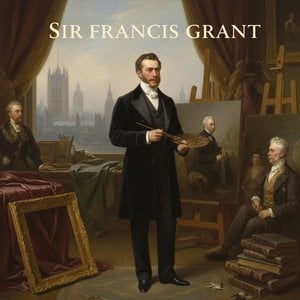
Sir Francis Grant (1803 - 1878): Celebrated Scottish Portrait & Sporting Painter and Royal Academy President, famed for capturing British aristocracy like Queen Victoria

Sir Francis Grant, a name synonymous with refined portraiture and dedicated service to the British art establishment, emerged as one of the most sought-after artists of his era. Born in 1803 into a landed family in Perthshire, Scotland, young Francis initially seemed destined for a career in law. However, the pull of artistic expression proved too strong to resist. Though largely self-taught, he briefly studied under Alexander Nasmyth in Edinburgh, laying an early foundation before forging his own distinctive path. This path wasn’t immediately clear; Grant's initial successes came with sporting scenes, capturing the energy and vibrancy of rural life – subjects that would initially define his reputation. A pivotal moment arrived through his marriage, granting him access to the exclusive world of Melton Mowbray’s hunting set. There, he honed his skills under John Ferneley, a master of equestrian art, and began to specialize in depictions of horses and hounds – endeavors that showcased an exceptional eye for detail and composition.

Early Artistic Beginnings & Sporting Achievements

Grant's artistic journey commenced with a fascination for sketching landscapes and animals, fueled by a lifelong passion for hunting. His early canvases captured the dynamism of rural pursuits with remarkable accuracy and sensitivity. The celebrated *Melton Breakfast* (1834), exhibited at the Royal Academy, stands as an exemplar of this period – a vibrant portrayal of a morning hunt that immediately garnered acclaim. It demonstrated Grant’s ability to convey movement and atmosphere, establishing him as a prominent figure in the burgeoning field of sporting painting. His meticulous attention to detail—the textures of fur, feathers, and foliage—reflected Ferneley's influence and solidified his reputation for capturing the essence of equestrian art. This formative experience instilled in him a profound understanding of observation and representation that would inform his subsequent artistic endeavors.

The Rise of Portraiture & Royal Patronage

However, Grant’s true breakthrough occurred in the realm of portraiture. Recognizing his talent for conveying not merely physical likeness but also inner character and social standing, he swiftly transitioned to capturing the dignity and nuance of aristocratic subjects. His marriage brought him into contact with influential circles within Melton Mowbray's hunting society, providing invaluable opportunities for artistic development and fostering connections with prominent patrons. This patronage proved crucial in securing commissions from the British elite – including the momentous portrait of Queen Victoria herself (1842). This monumental undertaking showcased Grant’s mastery of technique and his ability to portray majesty and grace—a testament to his skill as a portraitist and cementing his position among the foremost artists of his time. The resulting image, lauded for its elegance and psychological depth, became an iconic representation of Victorian royalty.

A Style Defined by Neoclassical Elegance & Romantic Sensibility

Grant’s artistic style blended Neoclassical elegance with a touch of Romantic sensibility – a harmonious fusion that distinguished him from many contemporaries. He skillfully employed chiaroscuro—the dramatic interplay of light and shadow—to sculpt form and convey emotion, mirroring the stylistic conventions favored by artists like Lawrence but tempering them with Victorian restraint. His portraits possessed an understated grandeur, reflecting his profound understanding of human psychology and capturing the subtle nuances of personality. The meticulous rendering of fabrics, textures, and facial expressions underscored Grant’s dedication to realism while simultaneously imbuing his canvases with a sense of poetic beauty. This distinctive approach solidified his reputation as one of Scotland's most accomplished painters.

Legacy & Recognition: Presidency of the Royal Academy

Grant’s artistic achievements culminated in 1866 with his election as President of the Royal Academy—a prestigious honor recognizing not only his prolific output but also his respected standing within the British art world. During his tenure, he championed innovation and fostered dialogue between artists and scholars, furthering the Academy's mission to promote excellence in visual arts. He instituted a groundbreaking practice: the holding of major loan exhibitions – expanding the Academy’s reach and influence and attracting wider public engagement. Grant’s unwavering commitment to artistic integrity ensured that the Royal Academy remained a cornerstone of British cultural heritage. His enduring legacy resides not only in his celebrated paintings but also in his transformative role as leader—a testament to his profound contribution to Victorian art history. He remains a pivotal figure – a skilled portraitist, a respected visionary, and a chronicler of his time. His work offers not just aesthetic pleasure but also a fascinating glimpse into a bygone era.

Sir Francis Grant

Sir Francis Grant

1803 - 1878 , Iso-Britannia

Pikatiedot

  • Artistic Movement Or Style: Neoclassical, Romanticism
  • Artists Or Movements Influenced By This Artist:
    • Martin Archer Shee
    • Solomon Hart
  • Artists Who Influenced This Artist:
    • Alexander Nasmyth
    • John Ferneley
  • Date Of Birth: 18 Jan. 1803
  • Date Of Death: 5 Oct. 1878
  • Full Name: Sir Francis Grant
  • Nationality: Scottish
  • Notable Artworks:
    • Melton Breakfast
    • Lady Glenlyon
    • Queen Victoria Riding
  • Place Of Birth: Edinburgh, United Kingdom
Tutustu teoksiin, jotka on järjestetty aiheiden, tyylien ja ominaisuuksien mukaan.