

 Acrylic On CanvasWallArtContemporary Realism
 1965
1965 29.0 x 21.0 cm
 Serralves-museo
Tällä sivulla esitettyä taideteosta suojaa tekijänoikeuslaki, mikä tarkoittaa, ettemme voi laillisesti luoda tai myydä täsmälleen samanlaista jäljennöstä. Tämä suoja toteutetaan kansainvälisten sopimusten, kuten esimerkiksi Berne-konventio ja kansallisilla laeilla, mukaan lukien niillä määritellyt Yhdysvaltain tekijänoikeuslaki – Luku 17. Kaikki oikeudet pidätetään. Luvaton kopiointi tai jäljittely on kielletty.
Kunnioittavana ja laillisena vaihtoehtona tarjoamme alkuperäisestä inspiroituneita, yksilöllisiä ja käsinmaalattuja taideteoksia. Taitavat ja ammattimaiset taiteilijamme tutkivat huolellisesti alkuperäisen teoksen tyyliä, tunnelmaa ja taiteellista ydintä luodakseen uuden, ainutlaatuisen teoksen, joka herättää saman tunteen – säilyttäen samalla oman itsenäisen alkuperäisyytensä.
Tämä menetelmä noudattaa täysin tekijänoikeussäännöksiä, sillä se ei sisällä suojatun taideteoksen kopioimista tai jäljentämistä. Sen sijaan kyseessä on luova uudelleentulkinta – uusi maalaus, joka ammentaa vaikutteita alkuperäisestä, mutta ei ole sen identtinen kopio.
Käsinmaalattu öljyväri kankaalle haluamassasi koossa ja kehyksissä, taiteilijoidemme valmistamana tilauksesta. ( Vaihda tulosteeseen Siirry digitaaliseen kuvaan)





























Valitse valmiista mitoistamme sellaiset, jotka vastaavat teoksen alkuperäisiä mittasuhteita.

Kirjoita tarvitsemasi leveys ja korkeus, jotta teos sopii kehyskehyksiisi tai seinällesi. Koska kyseessä on käsinmaalattu teos, taiteilija voi maalata hieman enemmän kuvan ympärille tai rajata sitä hieman, jos haluat eri muotoisen koon — valinta on sinun. Lähetämme sinulle digitaalisen mallikuvan hyväksyttäväksi ennen kuin maalaus alkaa. Tällä sivulla näkyvä kuva ei vastaa lopullista tulosta — vain mallikuva näyttää sen.
Maailmanlaajuinen toimitus () 3–4 viikossa tavallisen 5 viikon sijaan. (18 lokakuu). Laadusta ei tingitä.
Sem título
Replikaatin koko
Sigmar Polke’s “Sem título,” created in 1968, stands as an arresting testament to the burgeoning aesthetic of capitalist realism—a movement that sought to depict everyday life with unflinching honesty, mirroring the visual language of advertising and documentary filmmaking. More than just a photographic collage, it's a carefully constructed puzzle designed to challenge our assumptions about how we perceive the world around us.
The artwork itself comprises a grid of black and white photographs meticulously arranged on canvas. Each image depicts seemingly banal objects—a lemon, a pear, a piece of fruit—presented in starkly lit studio conditions. These aren’t idealized representations; they are rendered with a deliberate lack of polish, capturing the subtle imperfections inherent in natural forms. This technique deliberately rejects the romanticism prevalent in earlier artistic movements and embraces instead the cold precision demanded by the emerging economic order.
Polke’s masterful manipulation of photographic emulsion is crucial to understanding the piece's impact. He employed a process known as “photogram,” where he placed objects directly onto photographic paper coated with light-sensitive chemicals—without any camera involved. This method captures an imprint of the object’s surface texture and tonal variations, resulting in images that appear almost ghostly, devoid of traditional perspective or depth.
The choice of black and white contributes significantly to the artwork's mood. It eliminates color distractions, forcing viewers to focus on form and texture—elements Polke skillfully exploits to convey a sense of quiet contemplation. The canvas itself is treated with a matte varnish, further diffusing light and enhancing the subtle nuances of grayscale.
“Sem título” emerged during a period of profound societal transformation in Germany following the Second World War. Capitalism was rapidly gaining dominance, reshaping cultural landscapes and influencing artistic sensibilities. Polke’s work directly confronts this shift by presenting familiar subjects—fruit—in a manner that simultaneously celebrates and interrogates their materiality. It's a subtle critique of consumer culture, questioning whether we truly see what is before us or if our perceptions are shaped by preconceived notions.
The grid format reinforces this conceptual framework. By juxtaposing multiple images side-by-side, Polke disrupts any easy narrative flow and compels the viewer to actively engage in interpreting the visual information presented. This deliberate fragmentation mirrors the complexities of modern experience—the way in which our understanding of reality is constantly mediated by external forces.
Despite its intellectual rigor, “Sem título” possesses a remarkable emotional resonance. The stillness of the images—captured without movement—invites viewers to slow down and consider their own gaze. There’s an unspoken invitation to observe closely, to appreciate the subtle beauty hidden within seemingly ordinary objects.
Ultimately, Polke's “Sem título” transcends mere representation; it becomes a meditation on perception itself. It reminds us that what we see is not simply what exists but rather how our minds interpret and process sensory input—a profound statement about the human condition that continues to resonate with audiences today.
Sigmar Polke:n "Sem título" yhdistää Acrylic On Canvas-tekniikan ja Contemporary Realism-tyylin. Tekniikka ja tyylisuunta kuvaavat teoksen valmistustapaa ja tyyliä.
Rosy Brown (#ddad7a) on Sigmar Polke:n "Sem título" -teoksen hallitseva väri.
Teoksen Sigmar Polke:n "Sem título" tunnelma on Calm, ja sen emotionaalinen sävy on Reflective.

1941 - 2010 , Saksa

Explore the profound emotional depth of documentary photography art. Discover how collectors curate powerful historical narratives through museum-quality black and white prints and fine art reproductions that preserve humanity's most resilient moments.
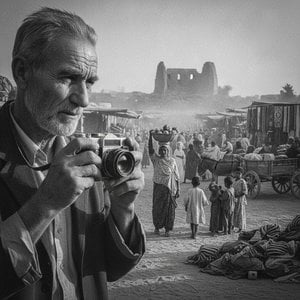
Explore the profound evolution of documentary photography through a cultural lens. From early social realism to modern visual narratives, discover how photographers have captured history, labor, and the human condition to redefine fine art.

Explore the profound evolution of contemporary photography through a connoisseur's lens. From monochrome mastery to digital innovation, discover how modern photographic works shape fine art collections and define our cultural legacy.

Explore the profound artistry of black and white photography. From historical mastery to the interplay of light and shadow, discover how monochrome captures timeless emotion and form through a sophisticated lens of art history.

 Katso seinällä
 Lähetä
 Jaa
Jaa
 Tarkemmat tiedot
 Opas
Opas

 Lataa kuva
 Samanlaisia kohteita
 Röntgenkuvaus
 Diaesitys
 Tilastot
 Lue lisää









 Lasivaihtoehto on saatavilla vain alle 110 cm kokoisille teoksille


