x
Käsinmaalattu öljyväri kankaalle haluamassasi koossa ja kehyksissä, taiteilijoidemme valmistamana tilauksesta.
Valitse valmiista mitoistamme sellaiset, jotka vastaavat teoksen alkuperäisiä mittasuhteita.
Voit syöttää omat mitat sopimaan tiettyyn kehykseen tai tilaan. Jos valitsemasi koko ei vastaa alkuperäisen kuvan mittasuhteita, rajaamme taideteoksen tai jatkamme maalausta käsin maalatuilla elementeillä. Digitaalinen esikatselu lähetetään hyväksyttäväksi ennen tuotannon aloittamista.
Huomioithan, että näytöllä oleva esikatselu ei vastaa todellista rajausta tai jatkamista. Vain digitaalinen mallikuva näyttää lopullisen sommittelun tarkasti.
Vaikka mittatilaustyöt ovat mahdollisia, suosittelemme valitsemaan mitan ennalta määritetystä listasta alkuperäisten mittasuhteiden säilyttämiseksi.
Maailmanlaajuinen toimitus () 3–4 viikossa tavallisen 5 viikon sijaan. (3 heinäkuu). Laadusta ei tingitä.
Primavera - (15)
Replikaatin koko
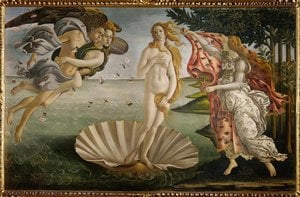
Sandro Botticelli’s “Primavera,” completed around 1482, stands as one of the most beloved paintings of the Early Renaissance—a visual poem capturing the essence of springtime and embodying humanist ideals. Commissioned by Lorenzo Medici for his wedding celebration, this masterpiece transcends mere depiction; it's an invitation to contemplate beauty, fertility, and the harmonious balance between humanity and nature.
The painting depicts nine figures arranged in a circular grove beneath a blossoming almond tree. At its center stands Venus, goddess of love and beauty, attended by Zephyr and Chloris—the West Wind and Flora, the goddess of flowers—who bring forth blossoms from the barren branches. Surrounding them are the Three Graces – Kore, Thalia, Euphrosyne – dancing joyously, symbolizing youthful exuberance and grace. Apollo, accompanied by Selene, watches over the scene, representing intellect and divine illumination.
Botticelli's mastery lies in his exquisitely refined technique—a hallmark of Florentine painting during this period. Employing tempera on poplar wood, he achieved astonishing luminosity and detail through meticulous layering of translucent glazes. This method allowed him to capture the ethereal quality of light and color, creating an atmosphere that is both serene and vibrant. Observe how Botticelli skillfully renders the textures of petals, drapery, and skin with remarkable precision—a testament to his dedication to anatomical accuracy informed by classical observation.
"Primavera" draws heavily upon imagery from Greek mythology, reflecting the humanist revival that characterized Renaissance Florence. The almond tree symbolizes rebirth and fertility, mirroring the cyclical rhythms of nature and aligning with Christian beliefs about resurrection. Each figure embodies specific virtues—love, joy, harmony, and beauty—representing aspirations for human flourishing. The inclusion of Apollo and Selene underscores the importance of reason and divine guidance in achieving spiritual enlightenment.
More than just a visual spectacle, “Primavera” communicates profound emotional resonance. Its tranquil composition evokes feelings of peace, optimism, and wonder—a celebration of life’s transformative power. Botticelli's idealized figures radiate grace and serenity, inviting viewers to contemplate the sublime beauty of the natural world and the pursuit of moral excellence. It remains a timeless emblem of Renaissance artistic achievement and continues to inspire admiration for its exquisite craftsmanship and evocative symbolism.
1445 - 1510 , Italia
Kerro meille projektistasi, niin taideasiantuntijamme tarjoavat sinulle kolme henkilökohtaista taidesuositusta.
Anna meidän kuratoida 3 vaihtoehtoa juuri sinulle – Ilmaiseksi!