

Museolaatuisia giclée- tai kankaitaulun tulosteita nopealla tuotannolla ja joustavilla viimeistelyvaihtoehdoilla. ( Tilaa käsinmaalattu jäljennös Siirry digitaaliseen kuvaan)





























Valitse valmiista mitoistamme sellaiset, jotka vastaavat teoksen alkuperäisiä mittasuhteita.

Voit syöttää omat mitat sopiaksesi tiettyyn kehykseen tai tilaan. Jos valittu koko ei vastaa alkuperäisen kuvan mittasuhteita, rajaamme teosta tai laajennamme kuvaa peilatulla tai yhtenäisellä reunalla. Digitaalinen mallikuva lähetetään hyväksyttäväksi ennen tuotannon aloittamista.
Huomaathan, että näytöllä näkyvä esikatselu ei vastaa lopullista rajausta tai laajennusta. Vain mallikuva näyttää lopullisen sommittelun tarkasti.
Vaikka räätälöityjä kokoja on saatavilla, suosittelemme valitsemaan mitat valmiista listasta alkuperäisten mittasuhteiden säilyttämiseksi.
Maailmanlaajuinen toimitus () 2 viikossa tavallisen 4–5 viikon sijaan. (12 lokakuu)
St Michael and the Satan
Replikaatin koko
In the hallowed halls of the Louvre, there exists a masterpiece that captures the very essence of cosmic conflict. Raphael’s St. Michael and the Satan is not merely a painting; it is a breathtaking theater of the soul, where the boundaries between heaven and earth dissolve into a singular moment of divine justice. As the eye meets the canvas, one is immediately struck by the profound tension held within the composition. The archangel Michael, a figure of celestial grace and unyielding strength, stands poised above his fallen adversary. This is the definitive depiction of the archetypal battle between good and evil, a visual symphony where the triumph of faith over temptation is rendered with such visceral intensity that the viewer becomes a witness to the eternal struggle for righteousness.
The artistry on display exemplifies the pinnacle of the High Renaissance, yet it whispers of the dramatic, muscular energy that would soon define the Mannerist movement. Raphael, a master of harmony, utilizes a pyramidal composition to anchor the chaos, directing the viewer's gaze upward toward the triumphant archangel. The anatomy of the figures is rendered with a sculptural precision reminiscent of Michelangelo, yet Raphael infuses the scene with a unique, fluid elegance. Every muscle in Michael’s form and every twisted limb of the defeated Satan contributes to a sense of movement captured at a standstill—a breathless pause in the midst of an epic upheaval.
To behold this work is to experience the transformative power of light and pigment. Executed with exceptional technical mastery, the painting utilizes oil glazes to achieve a luminous depth that seems to glow from within. Raphael’s palette in this period was particularly daring; he moves away from his more tranquil tones to embrace a rich, dramatic spectrum of warm golds, deep reds, and earthy browns. These colors do more than just decorate the scene—they breathe life into it. The metallic sheen of the light reflecting off celestial armor and the dark, brooding shadows cast over the demonic form create a chiaroscuro effect that heightens the emotional stakes of the encounter.
The texture of the work invites close contemplation, as visible brushwork adds a layer of vitality to the landscape and the figures alike. There is an alchemy at play here, where the blending of pigments creates a sense of atmosphere so thick one can almost feel the stormy sky pressing down upon the rocky terrain. For the collector or the interior designer, such a piece offers more than just visual interest; it provides a focal point of immense gravity and sophistication. A high-quality reproduction of this masterpiece brings with it a sense of historical weight and an unparalleled ability to command the atmosphere of any curated space.
Beyond its aesthetic splendor, St. Michael and the Satan serves as a profound theological allegory. Commissioned during the height of papal influence, likely for Pope Leo X, the painting functions as a symbol of divine authority and the inevitable victory of the light. Every element is heavy with meaning: the spear held by the archangel represents the piercing truth of faith, while the subjugated Satan embodies the chaos of sin. The composition serves as a reminder that even in the darkest moments of human experience, there is an underlying order and a divine protection that remains unshakable.
For those seeking to adorn their homes or galleries with art that inspires reflection and awe, this work stands as a testament to the enduring power of the Renaissance spirit. It is a piece that speaks to the resilience of the human spirit and the eternal hope for triumph over adversity. Whether viewed as a historical relic of the Vatican’s golden age or as a breathtaking display of technical virtuosity, Raphael’s vision continues to captivate, offering a window into a realm where beauty and divinity are inextricably linked.
Rafael:n "St Michael and the Satan" -teoksen Earthy värit soveltuvat erinomaisesti sen suositeltuun tilaan: Living Room.
"St Michael and the Satan" on tehty vuonna 1518 käyttäen tekniikkaa Oil On Canvas.
Teoksen "St Michael and the Satan" takana ovat Rafael ja Baroque-suuntaus.
"St Michael and the Satan" on toteutettu tekniikalla Oil On Canvas.
Vuosiluku 1518 sijoittaa teoksen "St Michael and the Satan" Rafael:n kehityksen Mature Period-vaiheeseen.
Rafael:n "St Michael and the Satan" -teoksen Dramatic tunnelma sopii täydellisesti sen suositeltuun tilaan: Living Room.
"St Michael and the Satan" on Rafael:n luoma teos. Tällä sivulla olevat tiedot kuvaavat Rafael:n alkuperäistä työtä.
Rafael:n "St Michael and the Satan" luokitellaan Iconic ja se kuuluu Baroque-tyylisuuntaan.

Raffaello Sanzio da Urbino, paremmin tunnettu nimellä Rafael, syntyi vuonna 1483 pienen mutta henkisesti vilkkaan Urbinon kaupunkivaltion muureissa Keski-Italiassa. Hänen varhaisvuotensa olivat syvästi juurtuneet ilmapiiriin, jossa arvostettiin sekä taidokkuutta että humanistista oppimista. Hänen isänsä, Giovanni Santi, ei ollut pelkästään herttua Federico da Montefeltron palveluksessa oleva maalari – hän oli syvällisesti renessanssiajan ajatusten virtojen kanssa tekemisissä oleva mies, runoilija joka kuvasi herttuan elämää ja etsi aktiivisesti innovatiivisia taiteellisia ideoita koko Italiasta ja sen ulkopuolelta. Tämä uppoutuminen hovielämään, jossa arvostettiin hienostuneisuutta ja älyllistä keskustelua, muokkasi syvästi nuoren Rafaelin herkkyyttä. Isän menettäminen yksitoista vuotiaana toi vastuuta, mutta myös mahdollisuuden kehittää taitojaan perheen työpajassa oppien tekniikoita ja perinteitä paikallisten taiteilijoiden ohjauksessa. Jo näissä varhaisissa töissä alkoi ilmetä lempeä sulavuus ja tarkka yksityiskohtien huomiointi – hänen kypsän tyylinsä tunnusmerkit.
Rafaelin taiteellinen matka oli jatkuvan kehityksen prosessi, jota leimasi intensiivisten opintojen ja assimilaation aika. Hänen varhainen koulutuksensa Pietro Peruginon alaisuudessa Perugiassa loi vankan pohjan umbrilaiselle tyylille – sille oli ominaista pehmeä muotoilu, harmoniset sommittelut ja rauhalliset uskonnolliset kohtaukset. Rafaelilla oli kuitenkin hillitön uteliaisuus, joka ajoi hänet etsimään uusia haasteita ja laajentamaan taiteellisia horisonttejaan. Vuonna 1504 hän matkusti Firenzeen, kaupunkiin jossa pulsoi taiteellisen innovaation energiaa. Täällä hän kohtasi Leonardo da Vincin ja Michelangelon mestariteoksia, taiteilijoita jotka työnsivät maalaamisen rajoja ennennäkemättömällä tavalla. Hän tutki huolellisesti heidän tekniikoitaan – Leonardon sfumatoa, hänen hienovaraisia valon ja varjon sävyjä sekä Michelangelon voimakasta anatomista tarkkuutta ja dramaattisia sommitteluja. Tämä firenzeläinen jakso oli Rafaelille koetinkivi, joka pakotti hänet kohtaamaan uusia taiteellisia mahdollisuuksia ja synteesoimaan ne omaan ainutlaatuiseen visioonsa. Vaikutus näkyy hänen aikaisempien töidensä lisääntyneessä dynaamisuudessa ja psykologisessa syvyydessä, erityisesti madonnojen sarjassaan.
Vuonna 1508 Rafael sai kutsun, joka muuttaisi hänen uransa suunnan – paavin Julius II:n kutsun tulla Roomaan. Tämä merkitsi hänen tuotteliaisimman ja juhlistetun kautensa alkua. Ikuinen kaupunki tarjosi hänelle vertaansa vailla olevan mahdollisuuden esitellä kykyjään suuressa mittakaavassa koristamalla paavin huoneistoja Vatikaanissa henkeäsalpaavilla freskoilla. Koulun athenalainen koulu, ehkä hänen tunnetuin työnsä, on todiste hänen mestaruudestaan sommittelussa, perspektiivissä ja filosofisessa allegoriassa. Majesteettisessa tilassaan Rafael kokosi antiikin klassisten hahmojen – Platonin, Aristoteleen, Pythagoraan, Eukleideen – luoden eloisan tableau’n joka juhlisti ihmisen järkeä ja tiedon tavoittelua. Hän jatkoi työskentelyä myöhempien paavien, Leo X:n mukaan lukien, ryhtyen monumentaalisiin projekteihin kuten Stanze della Segnaturan koristeluun ja Stanza d'Eliodoroon. Hänen freskonsa näissä huoneissa eivät ole pelkästään koristeellisia; ne ovat syvällisiä lausuntoja paavillisen vallan, uskonnollisesta vakaumuksesta ja renessanssin ihanteista.
Rafaelin taiteellista tyyliä kuvataan usein harmoniseksi sekoitukseksi sulavuutta, selkeyttä ja idealisoitua kauneutta. Hänellä oli poikkeuksellinen kyky syntetisoida monimuotoisia vaikutteita – umbrilainen perinne, firenzeläiset innovaatiot, antiikin klassisuus – ainutlaatuisesti tasapainoiseen estetiikkaan. Hänen sommittelunsa on huolellisesti suunniteltuja ja niissä on järjestystaju ja suhteellisuussuhde joka heijastaa hänen syvällistä ymmärrystään renessanssin periaatteista. Hänen hahmonsa säteilevät rauhallista arvokkuutta ja tunteiden ilmaisua, ruumiillistaen humanistisen ihanteen ihmisen täydellisyydestä. Hän oli myös mestarivärittäjä käyttäen rikkaita, kirkkaita sävyjä luodakseen teoksia jotka ovat sekä visuaalisesti kiehtovia että älyllisesti stimuloivia. Toisin kuin Michelangelon usein dramaattinen ja myrskyisä tyyli, Rafaelin työ huokuu rauhallisuutta ja harmoniaa – laatua joka on ihastuttanut yleisöjä vuosisatojen ajan.
Rafaelin ennenaikainen kuolema vuonna 1520 kolmekymmentäseitsemän vuoden iässä katkaisi uran, joka oli täynnä potentiaalia. Hänen perintönsä kuitenkin kestää yhtenä läntisen taidehistorian merkittävimmistä hahmoista. Hänen työnsä tuli korkean renessanssin estetiikan kulmakiveksi ja toimi mallina sukupolville taiteilijoita. Vaikka Michelangelon vaikutus hallitsisi myöhemmin taiteellista keskustelua, Rafaelin painotus selkeyteen, harmoniaan ja idealisoituun kauneuteen koki uuden nousukauden uusklassisella aikakaudella, jonka kriitikot kuten Johann Joachim Winckelmann puolustivat. Tänään hänen maalauksensa jatkavat ihmetyksen ja ihailun herättämistä lumoamalla katsojia teknisellä loistollaan, tunteellisella syvyydellään ja kestävillä vetovoimillaan. Hänen vaikutuksensa näkyy lukemattomissa myöhemmissä taideteoksissa vahvistaen hänen paikkansa renessanssin todellisena mestarina – maalari joka vangitsi paitsi aiheensa fyysisen ulkonäön myös ihmisen armon ja arvokkuuden olemuksen.

1483 - 1520 , Italia
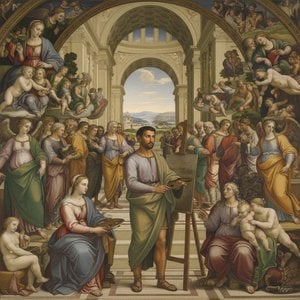
Elevate your home with the sublime harmony of Raphael’s masterpieces. Explore iconic High Renaissance works, from St. George to The School of Athens, and discover how premium, hand-painted reproductions can transform your space into a sanctuary of classical elegance and timeless beauty.

 Katso seinällä
 Lähetä
 Jaa
Jaa
 Tarkemmat tiedot
 Opas
Opas

 Lataa kuva
 Samanlaisia kohteita
 Röntgenkuvaus
 Diaesitys
 Tilastot

 Lue lisää









 Lasivaihtoehto on saatavilla vain alle 110 cm kokoisille teoksille


![Stanze Vaticane - Heliodoroksen karkotus temppelistä (yksityiskohta) [02]](/media/artworks/images-thumb/3a/23/3a2308b63b60b5cb105575e135028d92.jpg)

