Katso seinällä Esikatsele AR-tilassa Vaihda tulosteeseen Siirry digitaaliseen kuvaan Lähetä
Tarkemmat tiedot Opas Lisää suosikkeihin Lataa kuva Samanlaisia kohteita Röntgenkuvaus Diaesitys Tilastot

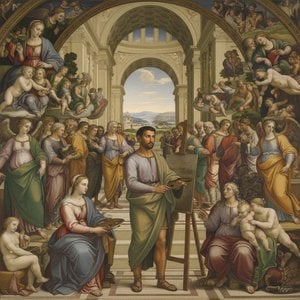
The Blessing Christ

Marvel at Raphael's 'The Blessing Christ,' a captivating High Renaissance oil painting depicting Jesus offering grace and divine love. Explore its beauty & symbolism – available as a stunning reproduction.

lta tulla Roomaan. Tämä merkitsi hänen tuotteliaisimman ja juhlistetun kautensa alkua. Ikuinen kaupunki tarjosi hänelle vertaansa vailla olevan mahdollisuuden esitellä kykyjään laajassa mittakaavassa koristamalla paavin asunnot Vatikaanissa henkeäsalpaavilla freskoilla. <b>Koulun athenalaisesta</b>

Käsinmaalattu öljyvärinen jäljennös

Käsinmaalattu öljyväri kankaalle haluamassasi koossa ja kehyksissä, taiteilijoidemme valmistamana tilauksesta. ( Vaihda tulosteeseen Siirry digitaaliseen kuvaan)

Corner sample of the P118B picture frame: moulded polystyrene, 5 cm wide and 3 cm thick
P118B 10
Corner sample of the P118H picture frame: moulded polystyrene, 5 cm wide and 3 cm thick
P118H 10
Corner sample of the P118W picture frame: moulded polystyrene, 5 cm wide and 3 cm thick
P118W 10
Corner sample of the P438Z picture frame: moulded polystyrene, 5.5 cm wide and 3.5 cm thick
P438Z 10
Corner sample of the P508JH picture frame: moulded polystyrene, 7 cm wide and 3.5 cm thick
P508JH 12
Corner sample of the P508YH picture frame: moulded polystyrene, 7 cm wide and 3.5 cm thick
P508YH 12
Corner sample of the P805H picture frame: moulded polystyrene, 5 cm wide and 3.5 cm thick
P805H 10
Corner sample of the P805Z picture frame: moulded polystyrene, 5 cm wide and 3.5 cm thick
P805Z 10
Corner sample of the P919BZ picture frame: moulded polystyrene, 7 cm wide and 3.5 cm thick
P919BZ 10
Corner sample of the P919G picture frame: moulded polystyrene, 7 cm wide and 3.5 cm thick
P919G 10
Corner sample of the P919XJ picture frame: moulded polystyrene, 7 cm wide and 3.5 cm thick
P919XJ 10
Corner sample of the P959ZH picture frame: moulded polystyrene, 5 cm wide and 3 cm thick
P959ZH 10
Corner sample of the P968JZ picture frame: moulded polystyrene, 6 cm wide and 4 cm thick
P968JZ 12
Corner sample of the W106C picture frame: solid wood, 5 cm wide and 3 cm thick
W106C 8
Corner sample of the W218G picture frame: solid wood, 5 cm wide and 3 cm thick
W218G 10
Corner sample of the W218JH picture frame: solid wood, 5 cm wide and 3 cm thick
W218JH 8
Corner sample of the W218Y picture frame: solid wood, 5 cm wide and 3 cm thick
W218Y 10
Corner sample of the W307PJ picture frame: solid wood, 6 cm wide and 3 cm thick
W307PJ 10
Corner sample of the W316G picture frame: solid wood, 6 cm wide and 3 cm thick
W316G 10
Corner sample of the W316PJ picture frame: solid wood, 6 cm wide and 3 cm thick
W316PJ 8
Corner sample of the W316Y picture frame: solid wood, 6 cm wide and 3 cm thick
W316Y 10
Corner sample of the W398PJ picture frame: solid wood, 5 cm wide and 3 cm thick
W398PJ 8
Corner sample of the W4111J picture frame: solid wood, 6.5 cm wide and 3.5 cm thick
W4111J 10
Corner sample of the W500HY picture frame: solid wood, 7 cm wide and 5 cm thick
W500HY 15
Corner sample of the W500JH picture frame: solid wood, 7 cm wide and 5 cm thick
W500JH 15
Corner sample of the W692G picture frame: solid wood, 8 cm wide and 4 cm thick
W692G 12
Corner sample of the W849H picture frame: solid wood, 5 cm wide and 3 cm thick
W849H 8
Corner sample of the W940BG picture frame: solid wood, 7.5 cm wide and 4.5 cm thick
W940BG 15
Corner sample of the W953PJ picture frame: solid wood, 6 cm wide and 3.5 cm thick
W953PJ 8

Vakiokoko
mittatilaustyö
CM
INCH

Valitse valmiista mitoistamme sellaiset, jotka vastaavat teoksen alkuperäisiä mittasuhteita.

leveys
korkeus

Voit syöttää omat mitat sopimaan tiettyyn kehykseen tai tilaan. Jos valitsemasi koko ei vastaa alkuperäisen kuvan mittasuhteita, rajaamme taideteoksen tai jatkamme maalausta käsin maalatuilla elementeillä. Digitaalinen esikatselu lähetetään hyväksyttäväksi ennen tuotannon aloittamista.
Huomioithan, että näytöllä oleva esikatselu ei vastaa todellista rajausta tai jatkamista. Vain digitaalinen mallikuva näyttää lopullisen sommittelun tarkasti.
Vaikka mittatilaustyöt ovat mahdollisia, suosittelemme valitsemaan mitan ennalta määritetystä listasta alkuperäisten mittasuhteiden säilyttämiseksi.

Esimerkkejä muokattavista asioista: Vaihda kasvot asiakkaan omaan valokuvaan; Lisää lemmikki (esim. korvaa kissa koiralla); Lisää taustalle piilotettu viesti; Muuta taustan maisemaa tai elementtejä.
Tilauksen jälkeen WahooArt.com -tiimi lähettää asiakkaalle sähköpostitse ohjeet ja esikatselukuvan.

Maailmanlaajuinen toimitus () 3–4 viikossa tavallisen 5 viikon sijaan. (10 lokakuu). Laadusta ei tingitä.

Ilmainen pikatoimitus ympäri maailman
Korkealaatuinen pellavakangas
Kattava kuljetusvakuutus
Tulliveron palautustakuu
Takuu täydellisestä värien vastaavuudesta
100 päivän palautusoikeus valmistusvirhetapauksissa
100% rahat takaisin -takuu
Määräalennus saatavilla

Kokonaishinta

€ 234

The Blessing Christ

Reproduktiotapa

Replikaatin koko

-

Kokonaishinta

€ 234

Pikaista tietoa

  • Title: The Blessing Christ
  • Medium: Oil on wood
  • Artistic style: Chiaroscuro, Harmony
  • Dimensions: 30 x 25 cm
  • Location: Pinacoteca Tosio Martinengo
  • Movement: High Renaissance
  • Subject or theme: Religious scene, Christ

Taidevisakysely

Jokaisessa kysymyksessä on vain yksi oikea vastaus.

Kysymys 1:
What is the primary subject depicted in Raphael’s ‘The Blessing Christ’?
Kysymys 2:
Which artistic technique is prominently featured in ‘The Blessing Christ’ to create depth and volume?
Kysymys 3:
In what historical period was ‘The Blessing Christ’ created?
Kysymys 4:
Where is ‘The Blessing Christ’ currently housed?
Kysymys 5:
The image description highlights a specific element of the painting’s composition. What is this element?

Raphael’s “The Blessing Christ”: A Renaissance Masterpiece of Grace

Raphael’s “The Blessing Christ,” painted in 1505, is more than just a beautiful depiction of a biblical scene; it's a profound meditation on divine love and human connection. This oil painting, now residing within the Pinacoteca Tosio Martinengo in Brescia, Italy, stands as a testament to Raphael’s mastery of composition, color, and his deep understanding of High Renaissance ideals – a period defined by its revival of classical forms and a renewed focus on humanism. The work immediately draws the viewer into a serene tableau: Jesus Christ, youthful and radiant, extends his hand in blessing, while two figures—believed to be angels or perhaps devoted disciples—stand attentively on either side. The scene unfolds against a subtly rendered mountainous backdrop, adding depth and a sense of timelessness to the composition.

At the heart of “The Blessing Christ” lies Raphael’s masterful use of chiaroscuro – the dramatic interplay of light and dark – a technique borrowed from Leonardo da Vinci. This skillful manipulation creates an astonishingly realistic volume, imbuing each figure with palpable presence. The warm glow illuminating Jesus’ face and outstretched hand contrasts sharply with the shadowed areas, drawing our attention to the central act of grace. The color palette is equally harmonious; Raphael employs a carefully chosen range of reds, blues, and golds that evoke a sense of tranquility and spiritual reverence. Notice how the rich crimson robe emphasizes Christ's divinity, while the softer hues surrounding him contribute to the painting’s overall atmosphere of peace.

Historical Context: The Dawn of a New Era

“The Blessing Christ” is inextricably linked to the Italian Renaissance, a transformative period in European history. Emerging from the shadows of the Middle Ages, this era witnessed a fervent return to classical Greek and Roman art and philosophy. Artists like Raphael sought inspiration from these ancient sources, integrating humanist ideals – emphasizing human potential and achievement – into their work. The painting reflects this shift by portraying Christ not as a distant deity but as a relatable figure offering compassion and guidance. The Renaissance’s embrace of perspective and anatomical accuracy is subtly present here, contributing to the illusion of depth and realism.

Raphael's creation emerged during a time when the Papal States were consolidating power in Rome, and the Vatican was undergoing significant architectural and artistic renovations. The commission for “The Blessing Christ” likely stemmed from this atmosphere of patronage and artistic innovation. It’s fascinating to consider how this painting fits within the broader context of Raphael's career – a period marked by rapid growth and prolific output, culminating in his relocation to Rome where he would become one of the most celebrated artists of all time.

Symbolism and Spiritual Resonance

Beyond its technical brilliance, “The Blessing Christ” is rich in symbolic meaning. The outstretched hand represents divine grace and benediction – a tangible offering of love and forgiveness. The pointing finger directs our gaze towards Jesus’ wound, a potent reminder of his sacrifice on the cross. This detail underscores the central theme of redemption and salvation, core tenets of Christian belief. The two figures flanking Christ are often interpreted as angels or disciples, symbolizing faith and devotion – witnesses to this profound moment of grace.

The painting's emotional impact is undeniable. It evokes a sense of serenity, reverence, and hope. Viewers are invited to contemplate the nature of faith, compassion, and the enduring power of divine love. This resonance has ensured that “The Blessing Christ” remains an iconic work of art for centuries, continuing to inspire awe and contemplation in audiences around the world.

Artistic Style & Influences: A Synthesis of Tradition

Raphael’s style in "The Blessing Christ" is a masterful synthesis of influences. He skillfully blended elements of his early Umbrian training with the innovations he encountered during his time in Florence and Rome. The painting demonstrates a clear understanding of perspective, anatomical accuracy, and color theory – hallmarks of Renaissance art. However, it also retains a certain lyrical quality reminiscent of his earlier work, creating a harmonious balance between tradition and innovation.

Notably, Raphael’s use of light and shadow echoes the techniques employed by Leonardo da Vinci, while the composition draws inspiration from classical depictions of religious figures. Further enriching this artistic tapestry are works by artists like Giulio Romano, whose frescoes in Mantua showcased similar dramatic lighting effects and a focus on human emotion, and Sandro Botticelli, known for his graceful figures and elegant compositions. Studying these related artworks provides valuable insight into Raphael’s creative process and the broader artistic landscape of the High Renaissance.

To experience the full impact of “The Blessing Christ,” consider exploring reproductions available at WahooArt.com – a remarkable opportunity to bring this timeless masterpiece into your home or office, allowing its beauty and symbolism to inspire you daily.

Kysymykset ja vastaukset

Miten voin hankkia teoksen Rafael:n "The Blessing Christ" digitaalisen tiedoston?

Saadaksesi digitaalisen tiedoston teoksesta Rafael:n "The Blessing Christ", tilaa korkearesoluutioinen digitaalinen kuvalataus sivulta tämä sivu.

Miten voin löytää teoksia, jotka muistuttavat teosta Rafael:n "The Blessing Christ"?

Teokset, jotka muistuttavat teosta "The Blessing Christ", löytyvät teoksen Samankaltaisia -sivulta.

Kuka myy käsinmaalattuja kopioita teoksesta Rafael:n "The Blessing Christ"?

"The Blessing Christ" on saatavilla muodossa käsinmaalattu öljyvärireproduktio pellavakankaalle. Tilauksen voi tehdä osoitteessa tämä sivu, ja voit valita haluamasi koon.

Mistä voin ostaa painoksen teoksesta Rafael:n "The Blessing Christ"?

Teoksen Rafael:n "The Blessing Christ" painos voidaan tilata suoraan osoitteesta tämä sivu: taideteosvedos puuvillakangas- tai arkistoluokan kankaalle painettuna.

Kuka on teoksen "The Blessing Christ" tekijä ja mihin taidesuuntaukseen se kuuluu?

"The Blessing Christ" on Rafaeln luoma teos, joka edustaa High Renaissance-tyyliä. Taiteilija ja tyylisuunta määrittelevät teoksen perinteet.

Mihin taidesuuntaukseen Rafael:n "The Blessing Christ" kuuluu?

Teoksen Rafael:n "The Blessing Christ" tyylisuunta on High Renaissance. Tämä luokittelu sijoittaa teoksen muiden samankaltaisten taiteilijoiden ja teosten joukkoon.

Kenelle taiteilijalle "The Blessing Christ" on laitettu tekijyys?

Teos "The Blessing Christ" on yhdistetty Rafael.


Taiteilijan elämäkerta

Renessanssin valon tuoja: Rafaelin elämä ja taiteellinen nousu

Raffaello Sanzio da Urbino, paremmin tunnettu nimellä Rafael, syntyi vuonna 1483 pienen mutta henkisesti vilkkaan Urbinon kaupunkivaltion muureissa Keski-Italiassa. Hänen varhaisvuotensa olivat syvästi juurtuneet ilmapiiriin, jossa arvostettiin sekä taidokkuutta että humanistista oppimista. Hänen isänsä, Giovanni Santi, ei ollut pelkästään herttua Federico da Montefeltron palveluksessa oleva maalari – hän oli syvällisesti renessanssiajan ajatusten virtojen kanssa tekemisissä oleva mies, runoilija joka kuvasi herttuan elämää ja etsi aktiivisesti innovatiivisia taiteellisia ideoita koko Italiasta ja sen ulkopuolelta. Tämä uppoutuminen hovielämään, jossa arvostettiin hienostuneisuutta ja älyllistä keskustelua, muokkasi syvästi nuoren Rafaelin herkkyyttä. Isän menettäminen yksitoista vuotiaana toi vastuuta, mutta myös mahdollisuuden kehittää taitojaan perheen työpajassa oppien tekniikoita ja perinteitä paikallisten taiteilijoiden ohjauksessa. Jo näissä varhaisissa töissä alkoi ilmetä lempeä sulavuus ja tarkka yksityiskohtien huomiointi – hänen kypsän tyylinsä tunnusmerkit.

Umbriasta Firenzeen: Uusia vaikutteita omaksumassa

Rafaelin taiteellinen matka oli jatkuvan kehityksen prosessi, jota leimasi intensiivisten opintojen ja assimilaation aika. Hänen varhainen koulutuksensa Pietro Peruginon alaisuudessa Perugiassa loi vankan pohjan umbrilaiselle tyylille – sille oli ominaista pehmeä muotoilu, harmoniset sommittelut ja rauhalliset uskonnolliset kohtaukset. Rafaelilla oli kuitenkin hillitön uteliaisuus, joka ajoi hänet etsimään uusia haasteita ja laajentamaan taiteellisia horisonttejaan. Vuonna 1504 hän matkusti Firenzeen, kaupunkiin jossa pulsoi taiteellisen innovaation energiaa. Täällä hän kohtasi Leonardo da Vincin ja Michelangelon mestariteoksia, taiteilijoita jotka työnsivät maalaamisen rajoja ennennäkemättömällä tavalla. Hän tutki huolellisesti heidän tekniikoitaan – Leonardon sfumatoa, hänen hienovaraisia valon ja varjon sävyjä sekä Michelangelon voimakasta anatomista tarkkuutta ja dramaattisia sommitteluja. Tämä firenzeläinen jakso oli Rafaelille koetinkivi, joka pakotti hänet kohtaamaan uusia taiteellisia mahdollisuuksia ja synteesoimaan ne omaan ainutlaatuiseen visioonsa. Vaikutus näkyy hänen aikaisempien töidensä lisääntyneessä dynaamisuudessa ja psykologisessa syvyydessä, erityisesti madonnojen sarjassaan.

Roomalainen menestys: Tilaukset ja mestariteoksia

Vuonna 1508 Rafael sai kutsun, joka muuttaisi hänen uransa suunnan – paavin Julius II:n kutsun tulla Roomaan. Tämä merkitsi hänen tuotteliaisimman ja juhlistetun kautensa alkua. Ikuinen kaupunki tarjosi hänelle vertaansa vailla olevan mahdollisuuden esitellä kykyjään suuressa mittakaavassa koristamalla paavin huoneistoja Vatikaanissa henkeäsalpaavilla freskoilla. Koulun athenalainen koulu, ehkä hänen tunnetuin työnsä, on todiste hänen mestaruudestaan sommittelussa, perspektiivissä ja filosofisessa allegoriassa. Majesteettisessa tilassaan Rafael kokosi antiikin klassisten hahmojen – Platonin, Aristoteleen, Pythagoraan, Eukleideen – luoden eloisan tableau’n joka juhlisti ihmisen järkeä ja tiedon tavoittelua. Hän jatkoi työskentelyä myöhempien paavien, Leo X:n mukaan lukien, ryhtyen monumentaalisiin projekteihin kuten Stanze della Segnaturan koristeluun ja Stanza d'Eliodoroon. Hänen freskonsa näissä huoneissa eivät ole pelkästään koristeellisia; ne ovat syvällisiä lausuntoja paavillisen vallan, uskonnollisesta vakaumuksesta ja renessanssin ihanteista.

Armon ja loiston synteesi: Rafaelin taiteellinen tyyli

Rafaelin taiteellista tyyliä kuvataan usein harmoniseksi sekoitukseksi sulavuutta, selkeyttä ja idealisoitua kauneutta. Hänellä oli poikkeuksellinen kyky syntetisoida monimuotoisia vaikutteita – umbrilainen perinne, firenzeläiset innovaatiot, antiikin klassisuus – ainutlaatuisesti tasapainoiseen estetiikkaan. Hänen sommittelunsa on huolellisesti suunniteltuja ja niissä on järjestystaju ja suhteellisuussuhde joka heijastaa hänen syvällistä ymmärrystään renessanssin periaatteista. Hänen hahmonsa säteilevät rauhallista arvokkuutta ja tunteiden ilmaisua, ruumiillistaen humanistisen ihanteen ihmisen täydellisyydestä. Hän oli myös mestarivärittäjä käyttäen rikkaita, kirkkaita sävyjä luodakseen teoksia jotka ovat sekä visuaalisesti kiehtovia että älyllisesti stimuloivia. Toisin kuin Michelangelon usein dramaattinen ja myrskyisä tyyli, Rafaelin työ huokuu rauhallisuutta ja harmoniaa – laatua joka on ihastuttanut yleisöjä vuosisatojen ajan.

Perintö ja kestävä vaikutus

Rafaelin ennenaikainen kuolema vuonna 1520 kolmekymmentäseitsemän vuoden iässä katkaisi uran, joka oli täynnä potentiaalia. Hänen perintönsä kuitenkin kestää yhtenä läntisen taidehistorian merkittävimmistä hahmoista. Hänen työnsä tuli korkean renessanssin estetiikan kulmakiveksi ja toimi mallina sukupolville taiteilijoita. Vaikka Michelangelon vaikutus hallitsisi myöhemmin taiteellista keskustelua, Rafaelin painotus selkeyteen, harmoniaan ja idealisoituun kauneuteen koki uuden nousukauden uusklassisella aikakaudella, jonka kriitikot kuten Johann Joachim Winckelmann puolustivat. Tänään hänen maalauksensa jatkavat ihmetyksen ja ihailun herättämistä lumoamalla katsojia teknisellä loistollaan, tunteellisella syvyydellään ja kestävillä vetovoimillaan. Hänen vaikutuksensa näkyy lukemattomissa myöhemmissä taideteoksissa vahvistaen hänen paikkansa renessanssin todellisena mestarina – maalari joka vangitsi paitsi aiheensa fyysisen ulkonäön myös ihmisen armon ja arvokkuuden olemuksen.

Rafael

Rafael

1483 - 1520 , Italia

Tietoa taiteilijasta

  • Artistic Movement Or Style: Korkea renessanssi
  • Artists Or Movements Influenced By This Artist: ['Neoklassismi']
  • Artists Who Influenced This Artist:
    • Leonardo da Vinci
    • Michelangelo
  • Date Of Birth: 1483
  • Date Of Death: 1520
  • Full Name: Raffaello Sanzio
  • Nationality: Italialainen
  • Notable Artworks:
    • Koulun Ateenassa
    • Sistuksen Madonna
  • Place Of Birth (City And Country): Urbino, Italia
Tutustu teoksiin, jotka on järjestetty aiheiden, tyylien ja ominaisuuksien mukaan.