

 Oil On CanvasWallArtArt Nouveau
 19th Century
 81.0 x 116.0 cm
 Chrysler Museum of Art
Käsinmaalattu öljyväri kankaalle haluamassasi koossa ja kehyksissä, taiteilijoidemme valmistamana tilauksesta. ( Vaihda tulosteeseen Siirry digitaaliseen kuvaan)





























Valitse valmiista mitoistamme sellaiset, jotka vastaavat teoksen alkuperäisiä mittasuhteita.

Voit syöttää omat mitat sopimaan tiettyyn kehykseen tai tilaan. Jos valitsemasi koko ei vastaa alkuperäisen kuvan mittasuhteita, rajaamme taideteoksen tai jatkamme maalausta käsin maalatuilla elementeillä. Digitaalinen esikatselu lähetetään hyväksyttäväksi ennen tuotannon aloittamista.
Huomioithan, että näytöllä oleva esikatselu ei vastaa todellista rajausta tai jatkamista. Vain digitaalinen mallikuva näyttää lopullisen sommittelun tarkasti.
Vaikka mittatilaustyöt ovat mahdollisia, suosittelemme valitsemaan mitan ennalta määritetystä listasta alkuperäisten mittasuhteiden säilyttämiseksi.
Maailmanlaajuinen toimitus () 3–4 viikossa tavallisen 5 viikon sijaan. (20 syyskuu). Laadusta ei tingitä.


Misia on a Divan
Replikaatin koko
Pierre Bonnard's *Misia on a Divan*, painted around 1897, is more than just a portrait; it’s a carefully constructed evocation of domestic tranquility and the subtle beauty of everyday life. This oil on canvas work, measuring 81 x 116 cm, offers a poignant glimpse into the world of the artist himself, revealing his masterful command of color and light – hallmarks that would define his unique artistic vision. The scene depicts a woman, likely Bonnard’s wife Marthe, reclining on a divan, accompanied by their dog, Misia. The painting's quiet intimacy is immediately arresting, drawing the viewer into a space of relaxed repose.
*Misia on a Divan* exemplifies the burgeoning Art Nouveau movement that was gaining momentum in France at the end of the 19th century. Rejecting the rigid formality and historical subject matter favored by the established academic art world, artists like Bonnard sought inspiration from nature’s fluidity and the vibrant hues found in Japanese prints – a trend known as *Japonisme*. This influence is strikingly evident here; the sinuous curves of the divan, the flowing lines of Misia's form, and the overall sense of organic movement all speak to this artistic rebellion. The painting represents a decisive break from the past, a deliberate attempt to create art that was fresh, modern, and deeply personal.
Bonnard's technique is characterized by his extraordinary use of color. He didn't employ color to simply represent reality; instead, he used it to convey emotion and atmosphere. The dominant reds and pinks in *Misia on a Divan* are not merely descriptive but powerfully expressive. Notice how the warm tones create a sense of comfort and intimacy, enveloping the viewer in the scene’s quiet serenity. Bonnard's layering of thin glazes – a hallmark of his style – allows for an incredible luminosity and depth, further enhancing the painting’s emotional impact. The subtle gradations of color contribute to the overall dreamlike quality of the work.
Beyond its aesthetic qualities, *Misia on a Divan* is rich in symbolic meaning. The presence of Misia, the dog, adds an element of companionship and loyalty to the scene. The carefully arranged objects – the chair, the clock, the vase – contribute to the feeling of domestic comfort and order. The painting can be interpreted as a celebration of the simple pleasures of life: rest, relaxation, and the bonds between loved ones. It’s a testament to Bonnard's ability to find beauty in the ordinary, transforming everyday moments into works of art.
Bonnard’s work bridges the gap between Impressionism and Post-Impressionism. While influenced by Monet and Renoir’s focus on light and color, Bonnard pushed beyond mere optical representation, delving into subjective experience and emotion. *Misia on a Divan* stands as a powerful example of this artistic evolution, securing its place as one of the artist's most beloved and enduring works. Its quiet beauty continues to resonate with viewers today, offering a timeless meditation on domesticity, light, and the power of color.


1867 - 1947 , Ranska

Explore the transformative era of Post-Impressionism. Discover how masters like Cézanne and Matisse revolutionized color and form, moving beyond Impressionism to shape modern art history through structural innovation and expressive emotion.
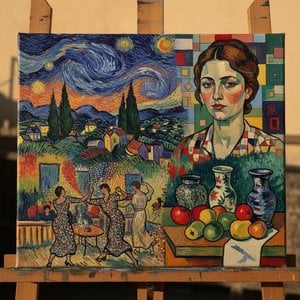
Unveil the profound revolution of Post-Impressionism. Explore how masters like Van Gogh and Cézanne utilized bold colors and emotional depth to transcend mere representation, laying the foundation for modern art. A sophisticated journey through history's most emotive brushstrokes.

Discover the profound emotional depth of Post-Impressionist landscapes. Explore how masters like Van Gogh revolutionized art through vibrant color, textured impasto, and symbolic expression in this expert guide to the movement that redefined modern art history.

Master the nuances of Impressionism vs. Post-Impressionism with our expert guide. Explore the revolutionary shift from Monet’s fleeting light to Van Gogh’s emotional depth. Discover how these iconic movements continue to inspire fine art collectors and modern interiors today.

Explore the vibrant evolution of Post-Impressionism. From Seurat's revolutionary Pointillism to the emotional depth of masters, discover how this movement redefined modern art history through color, structure, and unparalleled creative expression.

 Katso seinällä
 Lähetä
 Jaa
Jaa
 Tarkemmat tiedot
 Guide
Guide

 Lataa kuva
 Samanlaisia kohteita
 Röntgenkuvaus
 Diaesitys
 Tilastot
 Lue lisää







 Lasivaihtoehto on saatavilla vain alle 110 cm kokoisille teoksille


