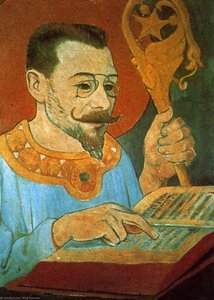
Käsinmaalattu öljyväri kankaalle haluamassasi koossa ja kehyksissä, taiteilijoidemme valmistamana tilauksesta. ( Vaihda tulosteeseen Siirry digitaaliseen kuvaan)





























Valitse valmiista mitoistamme sellaiset, jotka vastaavat teoksen alkuperäisiä mittasuhteita.

Kirjoita tarvitsemasi leveys ja korkeus, jotta teos sopii kehyksiisi tai seinällesi. Koska kyseessä on käsinmaalattu teos, taiteilija voi maalata hieman enemmän kuvan ympärille tai rajata sitä hieman, jos haluat eri muotoisen koon — valinta on sinun. Lähetämme sinulle digitaalisen mallikuvan hyväksyttäväksi ennen kuin maalaus alkaa. Tällä sivulla näkyvä kuva ei vastaa lopullista tulosta — vain mallikuva näyttää sen.
Maailmanlaajuinen toimitus () 3–4 viikossa tavallisen 5 viikon sijaan. (27 lokakuu). Laadusta ei tingitä.
The Wall
Replikaatin koko
Paul Sérusier’s “The Wall,” painted in 1890, stands as a testament to the burgeoning spirit of abstraction within Post-Impressionism and represents a crucial juncture in artistic history. Executed during his formative years alongside Vincent van Gogh and Paul Gauguin at Pont-Aven, Brittany, this unassuming landscape transcends mere depiction; it embodies a deliberate quest for expressive simplification—a technique championed by Gauguin himself—that would profoundly shape the trajectory of modern art.
Sérusier’s masterful application of cloisonnism—a technique popularized by Gauguin—is immediately apparent. Unlike traditional oil painting, where colors blend seamlessly, cloisonnism employs thin layers of pigment separated by lines of white gesso or bole. This method creates a mosaic-like effect, emphasizing distinct areas of color and enhancing the textural quality of the artwork. The deliberate use of white adds luminosity and contributes to the overall sense of serenity.
“The Wall” emerged from the influential Pont-Aven circle, where Sérusier collaborated closely with Gauguin on groundbreaking artistic experiments. Gauguin's unwavering belief in the power of color and symbolic representation served as a catalyst for artists like Sérusier to push beyond Impressionistic conventions. This painting represents not merely a beautiful landscape but also an active engagement with philosophical ideas concerning spirituality and the relationship between humanity and nature—themes central to the broader artistic discourse of the period.
The composition itself speaks volumes about Sérusier’s intentions. The solitary figure, positioned near the fence, suggests contemplation and introspection. While seemingly simple in its visual elements, “The Wall” vibrates with emotional depth—a quiet stillness punctuated by the vibrant hues of the surrounding landscape. It invites viewers to consider not what is seen but what is felt; a subtle echo of Gauguin’s desire to capture the essence of experience rather than merely reproducing it.
"The Wall" solidified Sérusier's position as one of the foremost figures in Synthetism and profoundly impacted subsequent generations of artists. Its understated beauty combined with its innovative technique continues to inspire admiration and serves as a poignant reminder of the transformative potential inherent within artistic exploration—a legacy that resonates powerfully even today.
Teoksen Paul Sérusier:n "The Wall" tunnetila on Reflective. Se tiivistää teoksen välittämän tunnelman.
Paul Sérusier:n "The Wall" yhdistää landscape, field, fence, man, trees, synthesis, impressionism-aiheet Serene-tunnelmaan.
Voit tilata teoksen Paul Sérusier:n "The Wall" painoksena suoraan sen Taidevedos -sivulta: taideteosvedos puuvillakangas- tai arkistoluokan kankaalle painettuna.


1864 - 1927 , Ranska

Unveil the profound revolution of Post-Impressionism. Explore how masters like Van Gogh and Cézanne utilized bold colors and emotional depth to transcend mere representation, laying the foundation for modern art. A sophisticated journey through history's most emotive brushstrokes.

Explore the transformative era of Post-Impressionism. Discover how masters like Cézanne and Matisse revolutionized color and form, moving beyond Impressionism to shape modern art history through structural innovation and expressive emotion.

 Esikatselu
 Jaa teos
 Jaa
Jaa
 Tiedot
 Opas
Opas

 Lataa kuva
 Samanlaisia kohteita
 Röntgenkuvaus
 Diaesitys
 Tilastot


 Lue lisää









 Lasivaihtoehto on saatavilla vain alle 110 cm kokoisille teoksille