Katso seinällä Esikatsele AR-tilassa Vaihda tulosteeseen Siirry digitaaliseen kuvaan Lähetä
Tarkemmat tiedot Opas Lisää suosikkeihin Lataa kuva Samanlaisia kohteita Röntgenkuvaus Diaesitys Tilastot

Lucifer

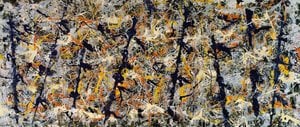
Experience Jackson Pollock's iconic 'Lucifer,' a dynamic Abstract Expressionist masterpiece from 1947 featuring layered drips and patterns in black and white. A captivating exploration of form and emotion, perfect for art lovers seeking a bold statement piece.

"meta_description": "Jackson Pollock (1912-1956) oli abstraktin ekspressionismin pioneeri ja tunnettu roiskemaalauksistaan. Hänen tyylinsä mullisti taiteen, ja hänen teoksensa ovat edelleen inspiraation lähde."

Käsinmaalattu öljyvärinen jäljennös

Käsinmaalattu öljyväri kankaalle haluamassasi koossa ja kehyksissä, taiteilijoidemme valmistamana tilauksesta. ( Vaihda tulosteeseen Siirry digitaaliseen kuvaan)

Corner sample of the P118B picture frame: valettu polystyreeni, 5 cm wide and 3 cm thick
P118B 10
Corner sample of the P118H picture frame: valettu polystyreeni, 5 cm wide and 3 cm thick
P118H 10
Corner sample of the P118W picture frame: valettu polystyreeni, 5 cm wide and 3 cm thick
P118W 10
Corner sample of the P438Z picture frame: valettu polystyreeni, 5.5 cm wide and 3.5 cm thick
P438Z 10
Corner sample of the P508JH picture frame: valettu polystyreeni, 7 cm wide and 3.5 cm thick
P508JH 12
Corner sample of the P508YH picture frame: valettu polystyreeni, 7 cm wide and 3.5 cm thick
P508YH 12
Corner sample of the P805H picture frame: valettu polystyreeni, 5 cm wide and 3.5 cm thick
P805H 10
Corner sample of the P805Z picture frame: valettu polystyreeni, 5 cm wide and 3.5 cm thick
P805Z 10
Corner sample of the P919BZ picture frame: valettu polystyreeni, 7 cm wide and 3.5 cm thick
P919BZ 10
Corner sample of the P919G picture frame: valettu polystyreeni, 7 cm wide and 3.5 cm thick
P919G 10
Corner sample of the P919XJ picture frame: valettu polystyreeni, 7 cm wide and 3.5 cm thick
P919XJ 10
Corner sample of the P959ZH picture frame: valettu polystyreeni, 5 cm wide and 3 cm thick
P959ZH 10
Corner sample of the P968JZ picture frame: valettu polystyreeni, 6 cm wide and 4 cm thick
P968JZ 12
Corner sample of the W106C picture frame: massiivipuu, 5 cm wide and 3 cm thick
W106C 8
Corner sample of the W218G picture frame: massiivipuu, 5 cm wide and 3 cm thick
W218G 10
Corner sample of the W218JH picture frame: massiivipuu, 5 cm wide and 3 cm thick
W218JH 8
Corner sample of the W218Y picture frame: massiivipuu, 5 cm wide and 3 cm thick
W218Y 10
Corner sample of the W307PJ picture frame: massiivipuu, 6 cm wide and 3 cm thick
W307PJ 10
Corner sample of the W316G picture frame: massiivipuu, 6 cm wide and 3 cm thick
W316G 10
Corner sample of the W316PJ picture frame: massiivipuu, 6 cm wide and 3 cm thick
W316PJ 8
Corner sample of the W316Y picture frame: massiivipuu, 6 cm wide and 3 cm thick
W316Y 10
Corner sample of the W398PJ picture frame: massiivipuu, 5 cm wide and 3 cm thick
W398PJ 8
Corner sample of the W4111J picture frame: massiivipuu, 6.5 cm wide and 3.5 cm thick
W4111J 10
Corner sample of the W500HY picture frame: massiivipuu, 7 cm wide and 5 cm thick
W500HY 15
Corner sample of the W500JH picture frame: massiivipuu, 7 cm wide and 5 cm thick
W500JH 15
Corner sample of the W692G picture frame: massiivipuu, 8 cm wide and 4 cm thick
W692G 12
Corner sample of the W849H picture frame: massiivipuu, 5 cm wide and 3 cm thick
W849H 8
Corner sample of the W940BG picture frame: massiivipuu, 7.5 cm wide and 4.5 cm thick
W940BG 15
Corner sample of the W953PJ picture frame: massiivipuu, 6 cm wide and 3.5 cm thick
W953PJ 8

Vakiokoko
mittatilaustyö
CM
INCH

Valitse valmiista mitoistamme sellaiset, jotka vastaavat teoksen alkuperäisiä mittasuhteita.

leveys
korkeus

Kirjoita tarvitsemasi leveys ja korkeus, jotta teos sopii kehyskehyksiisi tai seinällesi. Koska kyseessä on käsinmaalattu teos, taiteilija voi maalata hieman enemmän kuvan ympärille tai rajata sitä hieman, jos haluat eri muotoisen koon — valinta on sinun. Lähetämme sinulle digitaalisen mallikuvan hyväksyttäväksi ennen kuin maalaus alkaa. Tällä sivulla näkyvä kuva ei vastaa lopullista tulosta — vain mallikuva näyttää sen.

Esimerkkejä muokattavista asioista: Vaihda kasvot asiakkaan omaan valokuvaan; Lisää lemmikki (esim. korvaa kissa koiralla); Lisää taustalle piilotettu viesti; Muuta taustan maisemaa tai elementtejä.
Tilauksen jälkeen WahooArt.com -tiimi lähettää asiakkaalle sähköpostitse ohjeet ja esikatselukuvan.

Maailmanlaajuinen toimitus () 3–4 viikossa tavallisen 5 viikon sijaan. (21 lokakuu). Laadusta ei tingitä.

Ilmainen pikatoimitus ympäri maailman
Korkealaatuinen pellavakangas
Kattava kuljetusvakuutus
Tulliveron palautustakuu
Takuu täydellisestä värien vastaavuudesta
100 päivän palautusoikeus valmistusvirhetapauksissa
100% rahat takaisin -takuu
Määräalennus saatavilla

Kokonaishinta

€ 238

Lucifer

Reproduktiotapa

Replikaatin koko

-

Kokonaishinta

€ 238

Pikaista tietoa

  • Notable elements: Intricate patterns, texture & depth
  • Medium: Drip Painting
  • Dimensions: 268 x 104 cm
  • Artistic style: Abstract, Symbolic
  • Year: 1947
  • Title: Lucifer

A Descent into Chaos: Exploring Jackson Pollock's "Lucifer"

Jackson Pollock’s “Lucifer,” painted in 1947, isn’t merely a painting; it’s an immersion. Measuring a substantial 268 x 104 cm, this work embodies the raw energy and profound emotionality of Abstract Expressionism at its zenith. The canvas explodes with a carefully orchestrated dance of black and white, a visual storm rendered through Pollock's revolutionary drip technique – a method he perfected to capture not just form, but the very essence of movement and feeling. Close inspection reveals an intricate network of layered textures, each drop and splatter contributing to a composition that feels both chaotic and meticulously controlled.

  • Technique: Pollock’s “all-over” technique is central to "Lucifer's" impact. He abandoned traditional brushes, opting instead for sticks, knives, and even syringes to fling paint directly onto the canvas, creating a dense tapestry of overlapping marks.
  • Color Palette: The stark contrast between black and white amplifies the painting’s dynamism, forcing the viewer to confront the interplay of light and shadow within its complex structure.
  • Scale: The large format of "Lucifer" envelops the observer, drawing them into the heart of Pollock's creative process.

The Genesis of a Vision: Early Influences and Artistic Context

Pollock’s artistic journey began with a restless spirit shaped by his upbringing in Cody, Wyoming – a landscape that instilled within him a deep appreciation for natural forces and the rhythms of the West. His early exposure to Native American art, particularly through his father's surveying work, subtly informed his later explorations of composition and spiritual resonance. This influence is not overt imitation but rather a foundational layer contributing to the painting’s underlying power. Pollock’s formal training at the Art Students League under Thomas Hart Benton, a key figure in the Regionalist movement, further solidified his understanding of dynamic composition – a skill he then radically transformed through his own innovative approach. “Lucifer” stands as a testament to this evolution, building upon established principles while forging entirely new pathways for artistic expression.

Decoding the Symbolism: Layers of Interpretation

"Lucifer" resists easy interpretation, deliberately eschewing representational imagery in favor of abstract forms and textures. The interwoven patterns can be seen as symbolic representations of inner turmoil, spiritual struggle, or perhaps simply a visual manifestation of the artist’s subconscious. Some scholars suggest that the dominant black and white hues symbolize duality – light versus darkness, order versus chaos – reflecting the core themes explored by Abstract Expressionism. The seemingly random arrangement of shapes and forms actually possesses a carefully constructed dynamism, inviting viewers to engage in their own personal interpretations.

A Legacy of Innovation: "Lucifer" within the Art Historical Landscape

“Lucifer” is inextricably linked to the broader context of Abstract Expressionism, a movement that sought to liberate art from traditional constraints and explore the depths of human emotion. Works by Clyfford Still, with their similarly monumental scale and abstract forms, share conceptual affinities. Furthermore, the influence of Wassily Kandinsky’s exploration of geometric shapes and vibrant colors can be detected in Pollock's approach. Currently held within the Peggy Guggenheim Collection in Venice, "Lucifer" remains a pivotal work in Pollock’s oeuvre and a cornerstone of modern art history – a testament to his revolutionary vision and enduring impact.

Kysymykset ja vastaukset

Kuinka voimakkaita värit ovat teoksessa Paul Jackson Pollock:n "Lucifer"?

Paul Jackson Pollock:n "Lucifer" -teoksessa on Monochromatic väri-intensiteetti.

Mikä on suositeltu tulostuskoko teokselle Paul Jackson Pollock:n "Lucifer"?

Suositeltu tulostuskoko teokselle Paul Jackson Pollock:n "Lucifer" on Large.

Millä muilla nimillä Paul Jackson Pollock tunnetaan?

Paul Jackson Pollock esiintyy myös nimillä Jackson Pollock, Pollock, Paul Jackson.


Taiteilijan elämäkerta

Early Life and the Seeds of Innovation

Paul Jackson Pollock, born in Cody, Wyoming, in 1912, was a restless spirit from the outset. His early life was marked by frequent relocation as his father, LeRoy Pollock, pursued work as a land surveyor across the vast landscapes of the American West. This itinerant existence instilled in young Pollock a deep connection to the natural world and an exposure to diverse cultures, particularly through encounters with Native American art during those surveying trips – impressions that would subtly permeate his artistic vision later in life. Though he never explicitly imitated Indigenous styles, the raw energy and spiritual resonance of these early experiences undoubtedly left their mark. He grew up in Arizona and Chico, California, absorbing a sense of both rugged individualism and the spirit of the frontier. Pollock’s formal artistic training began at the Manual Arts High School in Los Angeles, followed by studies at the Art Students League of New York under the tutelage of Thomas Hart Benton. Benton, a prominent figure in the Regionalist movement, emphasized rhythmic composition and narrative themes rooted in American life. Pollock initially absorbed these lessons, learning to create works that reflected the landscapes and people of America. However, his inherent inclination leaned toward more abstract explorations, driven by a desire to move beyond representational art and delve into deeper emotional and psychological realms. He was also profoundly impacted by Mexican muralists like José Clemente Orozco, whose powerful depictions of social struggle resonated deeply with him, sparking an interest in conveying complex narratives through visual form. These early influences laid a foundation, but it was the burgeoning world of Surrealism that truly unlocked Pollock’s artistic potential.

The Birth of Action Painting and a Revolutionary Technique

The 1930s saw Pollock experimenting with various techniques, seeking alternatives to traditional brushwork. He began pouring paint, exploring its fluidity and unpredictable nature. However, it was around 1947 that his artistic trajectory underwent a radical transformation. Abandoning the easel altogether, Pollock laid canvases directly on the floor, initiating what would become known as his “drip technique.” He then proceeded to drip, splash, and fling paint onto the canvas from above, orchestrating a dynamic dance between artist, medium, and surface. This wasn’t merely about applying paint; it was about embodying the act of creation itself. Pollock's canvases became arenas for physical expression, capturing the immediacy of his gestures and emotions. The resulting paintings are characterized by their “all-over” composition – a lack of central focus that invites the viewer to explore the entire surface as a unified field of energy. Intricate networks of lines and colors intertwine, creating a visual complexity that is both captivating and challenging. He employed unconventional tools—sticks, knives, even syringes—to manipulate the paint in unpredictable ways, further emphasizing the spontaneous nature of his process. This innovative approach positioned Pollock as a central figure in the burgeoning Abstract Expressionist movement, which emerged in post-World War II New York City.

Influences and Artistic Development

Pollock’s artistic development was shaped by a diverse range of influences. Beyond Benton and Orozco, he drew inspiration from European modernism, particularly the work of Pablo Picasso, whose innovative use of form and color challenged traditional notions of representation. He also explored Surrealist techniques, embracing the subconscious and dreamlike imagery associated with the movement. The influence of Max Ernst, a pioneer of collage and automatism, is evident in Pollock’s early experiments with chance and improvisation. His marriage to Lee Krasner, a fellow artist and intellectual, was particularly significant; she provided unwavering emotional support and actively encouraged his artistic development, recognizing the groundbreaking nature of his work. She understood his need for freedom and experimentation, fostering an environment where he could push the boundaries of art.

Iconic Works and Lasting Legacy

Pollock’s most celebrated works—such as Number 1, 1950 (Lavender Mist), One: Number 31, 1950, Blue Poles: Number 11, 1952, and Convergence—are testaments to his revolutionary technique. These paintings are not simply images; they are records of a performance, imbued with the artist’s physical presence and emotional intensity. The dynamic energy that emanates from these canvases is palpable, drawing viewers into a world of pure abstraction. His work transcended mere aesthetics; it was an exploration of process over product – a deliberate rejection of traditional notions of composition and representation. Pollock delved into Jungian psychology, exploring archetypes and the subconscious in his art, seeking to tap into universal symbols and primal energies. Pollock’s impact on the history of art is immeasurable. He fundamentally altered the way artists approached painting, breaking free from easel-based methods and embracing a more performative approach. His work helped solidify New York City's position as a global center for modern art, shifting the focus away from European dominance. Despite initial skepticism from some critics, Pollock’s reputation grew steadily after his untimely death in 1956 at the age of 44. Today, he is universally recognized as one of the most important and influential artists of the 20th century, a visionary who dared to challenge conventions and redefine the boundaries of artistic expression. His innovative techniques and expressive style continue to inspire and provoke, ensuring his enduring legacy for generations to come.
Paul Jackson Pollock

Paul Jackson Pollock

1912 - 1956 , Yhdysvallat

Tietoa taiteilijasta

  • Artistic Movement Or Style: Abstrakti ekspressionismi
  • Artists Or Movements Influenced By This Artist:
    • Color Field
    • Abstrakti ekspressionismi
  • Artists Who Influenced This Artist:
    • Thomas Hart Benton
    • José Clemente Orozco
  • Date Of Birth: 28 tammiku 1912
  • Date Of Death: 11 elokuuta 1956
  • Full Name: Paul Jackson Pollock
  • Nationality: Amerikkalainen
  • Notable Artworks:
    • Numero 1, 1949
    • Syksynrytmi
    • Yhdistyminen
  • Place Of Birth: Cody, Wyoming
Tutustu teoksiin, jotka on järjestetty aiheiden, tyylien ja ominaisuuksien mukaan.