Katso seinällä Esikatsele AR-tilassa Tilaa käsinmaalattu jäljennös Siirry digitaaliseen kuvaan Lähetä
Tarkemmat tiedot Opas Lisää suosikkeihin Lataa kuva Samanlaisia kohteita Röntgenkuvaus Diaesitys Tilastot

Hedelmä – –

Paul Cézannen 'Hedelmä' - rauhallinen vallankumous! Tämä 1879 vuodelta oleva maalaus on modernin taiteen käännekohta. Tutustu tässä upeaan, käsinmaalattuun jälleenmyyntikappaleeseen!

Paul Cézanne: Post-impressionismin pioneeri, joka yhdisti impressionismin kubismiin. Tutustu geometrisiin muotoihin ja taiteen vallankumoukselliseen visioon! #Cézanne

Giclée- ja taideprintit

Museolaatuisia giclée- tai kankaitaulun tulosteita nopealla tuotannolla ja joustavilla viimeistelyvaihtoehdoilla. ( Tilaa käsinmaalattu jäljennös Siirry digitaaliseen kuvaan)

Corner sample of the P118B picture frame: moulded polystyrene, 5 cm wide and 3 cm thick
P118B €10
Corner sample of the P118H picture frame: moulded polystyrene, 5 cm wide and 3 cm thick
P118H €10
Corner sample of the P118W picture frame: moulded polystyrene, 5 cm wide and 3 cm thick
P118W €10
Corner sample of the P438Z picture frame: moulded polystyrene, 5.5 cm wide and 3.5 cm thick
P438Z €10
Corner sample of the P508JH picture frame: moulded polystyrene, 7 cm wide and 3.5 cm thick
P508JH €12
Corner sample of the P508YH picture frame: moulded polystyrene, 7 cm wide and 3.5 cm thick
P508YH €12
Corner sample of the P805H picture frame: moulded polystyrene, 5 cm wide and 3.5 cm thick
P805H €10
Corner sample of the P805Z picture frame: moulded polystyrene, 5 cm wide and 3.5 cm thick
P805Z €10
Corner sample of the P919BZ picture frame: moulded polystyrene, 7 cm wide and 3.5 cm thick
P919BZ €10
Corner sample of the P919G picture frame: moulded polystyrene, 7 cm wide and 3.5 cm thick
P919G €10
Corner sample of the P919XJ picture frame: moulded polystyrene, 7 cm wide and 3.5 cm thick
P919XJ €10
Corner sample of the P959ZH picture frame: moulded polystyrene, 5 cm wide and 3 cm thick
P959ZH €10
Corner sample of the P968JZ picture frame: moulded polystyrene, 6 cm wide and 4 cm thick
P968JZ €12
Corner sample of the W106C picture frame: solid wood, 5 cm wide and 3 cm thick
W106C €8
Corner sample of the W218G picture frame: solid wood, 5 cm wide and 3 cm thick
W218G €10
Corner sample of the W218JH picture frame: solid wood, 5 cm wide and 3 cm thick
W218JH €8
Corner sample of the W218Y picture frame: solid wood, 5 cm wide and 3 cm thick
W218Y €10
Corner sample of the W307PJ picture frame: solid wood, 6 cm wide and 3 cm thick
W307PJ €10
Corner sample of the W316G picture frame: solid wood, 6 cm wide and 3 cm thick
W316G €10
Corner sample of the W316PJ picture frame: solid wood, 6 cm wide and 3 cm thick
W316PJ €8
Corner sample of the W316Y picture frame: solid wood, 6 cm wide and 3 cm thick
W316Y €10
Corner sample of the W398PJ picture frame: solid wood, 5 cm wide and 3 cm thick
W398PJ €8
Corner sample of the W4111J picture frame: solid wood, 6.5 cm wide and 3.5 cm thick
W4111J €10
Corner sample of the W500HY picture frame: solid wood, 7 cm wide and 5 cm thick
W500HY €15
Corner sample of the W500JH picture frame: solid wood, 7 cm wide and 5 cm thick
W500JH €15
Corner sample of the W692G picture frame: solid wood, 8 cm wide and 4 cm thick
W692G €12
Corner sample of the W849H picture frame: solid wood, 5 cm wide and 3 cm thick
W849H €8
Corner sample of the W940BG picture frame: solid wood, 7.5 cm wide and 4.5 cm thick
W940BG €15
Corner sample of the W953PJ picture frame: solid wood, 6 cm wide and 3.5 cm thick
W953PJ €8

Vakiokoko
mittatilaustyö
CM
INCH

Valitse valmiista mitoistamme sellaiset, jotka vastaavat teoksen alkuperäisiä mittasuhteita.

leveys
korkeus

Voit syöttää omat mitat sopiaksesi tiettyyn kehykseen tai tilaan. Jos valittu koko ei vastaa alkuperäisen kuvan mittasuhteita, rajaamme teosta tai laajennamme kuvaa peilatulla tai yhtenäisellä reunalla. Digitaalinen mallikuva lähetetään hyväksyttäväksi ennen tuotannon aloittamista.
Huomaathan, että näytöllä näkyvä esikatselu ei vastaa lopullista rajausta tai laajennusta. Vain mallikuva näyttää lopullisen sommittelun tarkasti.
Vaikka räätälöityjä kokoja on saatavilla, suosittelemme valitsemaan mitat valmiista listasta alkuperäisten mittasuhteiden säilyttämiseksi.

Maailmanlaajuinen toimitus () 2 viikossa tavallisen 4–5 viikon sijaan. (10 lokakuu)

Ilmainen pikatoimitus ympäri maailman
Korkealaatuinen pellavakangas
Kattava kuljetusvakuutus
Tulliveron palautustakuu
Takuu täydellisestä värien vastaavuudesta
100 päivän palautusoikeus valmistusvirhetapauksissa
100% rahat takaisin -takuu
Määräalennus saatavilla

Kokonaishinta

€ 59

Hedelmä – –

Giclée- ja taideprintit

Replikaatin koko

-

Kokonaishinta

€ 59

Pikaista tietoa

  • Influences: Impressionism
  • Medium: Oil on canvas
  • Notable elements: Repetitive brushstrokes
  • Artistic style: Still life, Formal quality
  • Artist: Paul Cézanne
  • Subject or theme: Everyday objects
  • Year: 1879

Taidevisakysely

Jokaisessa kysymyksessä on vain yksi oikea vastaus.

Kysymys 1:
What artistic movement is Paul Cézanne most closely associated with?
Kysymys 2:
The painting 'Fruit' primarily exemplifies Cézanne’s interest in:
Kysymys 3:
Which artist is famously quoted as saying that Cézanne ‘is the father of us all’?
Kysymys 4:
What was a significant challenge Cézanne faced early in his career regarding his artistic style?
Kysymys 5:
The brushstrokes in 'Fruit' are characterized by:

The Quiet Revolution: Paul Cézanne’s ‘Fruit’

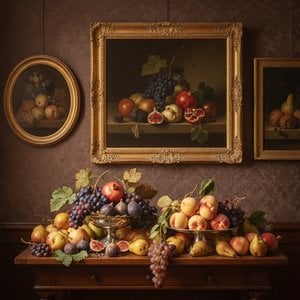
Paul Cézanne's 'Fruit,' painted in 1879, isn’t merely a still life; it’s a pivotal moment in the history of art – a quiet revolution conducted with apples, bowls, and bottles. This deceptively simple composition, measuring just 45 x 55 cm, encapsulates Cézanne's radical departure from traditional representation and his profound influence on the burgeoning movements that would reshape the 20th century. More than a depiction of everyday objects, it’s an exploration of form, structure, and the very essence of seeing – a testament to Cézanne’s belief that art should capture not just what is *seen*, but how it is *felt*. The painting immediately draws the viewer in with its muted palette of ochres, browns, and greens, creating a sense of earthy solidity. Yet, within this apparent stillness lies an intense dynamism, born from Cézanne’s meticulous observation and his deliberate manipulation of perspective.

A Bridge Between Worlds

Cézanne's artistic journey began with a deep respect for the established traditions of Romanticism and Realism. However, he quickly recognized the limitations of these approaches, particularly within the context of Impressionism. He sought to move beyond capturing fleeting impressions of light and color – as championed by his contemporaries like Camille Pissarro – and instead delve into the underlying geometric structure of objects. ‘Fruit’ exemplifies this shift. Notice how Cézanne doesn't simply paint an apple; he dissects it, revealing its essential forms—the curves of the skin, the planes of the flesh, the subtle shadows that define its volume. This is not a photograph; it’s a carefully constructed study in form and space, anticipating the geometric explorations of Cubism by decades.

The Language of Brushstrokes

Cézanne's technique is instantly recognizable. He employed a series of repetitive, exploratory brushstrokes – often small and broken—to build up surfaces with layers of color. These aren’t blended smoothly; instead, they retain their individual character, creating a textured, almost sculptural effect. Observe how he uses planes of color to define the shapes of the fruit and surrounding objects, suggesting depth and volume without relying on traditional perspective. The bowls, bottles, and vase are not merely placed in the composition; they actively shape it, contributing to its overall structure. This deliberate use of texture and form was revolutionary at the time, challenging the conventions of academic painting and paving the way for a more abstract approach to representation.

A Historical Turning Point

Initially, Cézanne’s work faced skepticism and even ridicule from critics who found his style unconventional. However, figures like Camille Pissarro and Ambroise Vollard recognized his genius and championed his art, providing crucial support during a period of artistic transition. Vollard's decision to organize a solo exhibition in 1895 proved pivotal, bringing Cézanne’s work to a wider audience and establishing him as a key figure in the development of modern art. His influence extended far beyond his immediate circle; artists like Henri Matisse and Pablo Picasso famously declared that “Cézanne is the father of us all,” acknowledging his profound impact on their own artistic explorations. ‘Fruit,’ therefore, stands not just as a beautiful painting but as a crucial document in the evolution of Western art – a harbinger of the radical changes to come.

Bringing Cézanne Home: A Hand-Painted Reproduction

WahooArt offers exquisite hand-painted reproductions of Paul Cézanne’s ‘Fruit,’ meticulously crafted by our team of skilled artists. Each reproduction captures the essence of the original painting, faithfully recreating its subtle color palette, textured brushstrokes, and dynamic composition. Whether you're an art enthusiast, a collector seeking to expand your collection, or simply looking for a stunning piece of artwork to enhance your interior space, a WahooArt reproduction of ‘Fruit’ is a timeless investment – a tangible connection to one of the most influential artists in modern history. Explore our range of sizes and framing options today and bring this revolutionary work into your world.

Kysymykset ja vastaukset

Minä vuonna ja mihin tyylisuuntaan "Hedelmä – –" on tehty?

"Hedelmä – –" on luotu vuonna 1879 Post-Impressionism-suuntauksen teoksena. Päivämäärä ja tyylisuunta ankkuroivat teoksen taidehistoriaan.

Kuka on luonut "Hedelmä – –"?

Teoksen "Hedelmä – –" taiteilija on Paul Cézanne. Teos on luetteloitu Paul Cézanne nimellä.

Kuinka vanha Paul Cézanne oli tehdessään "Hedelmä – –"?

Paul Cézanne oli 40 vuotias luodessaan teoksen "Hedelmä – –" vuonna 1879. Ikä on laskettu taiteilijan syntymävuodesta 1839.

Miten teoksen "Hedelmä – –" värit sointuvat yhteen?

Paul Cézanne:n "Hedelmä – –" esittää Ristiriitainen väripaletti väriharmoniaa.

Mihin vaiheeseen Paul Cézannein uraa teos "Hedelmä – –" (1879) kuuluu?

"Hedelmä – –", luotu vuonna 1879, kuuluu Paul Cézanne'n uran Mature Period-vaiheeseen."

Minä vuonna teos Paul Cézanne:n "Hedelmä – –" on luotu?

Paul Cézanne:n "Hedelmä – –" on luotu vuonna 1879.

Miltä aikakaudelta Paul Cézanne:n "Hedelmä – –" on peräisin?

"Hedelmä – –" kuuluu luku aikakauteen.


Taiteilijan elämäkerta

Paul Cézannen vallankumouksellinen visio: Elämä ja taide

Paul Cézanne, syntynyt Aix-en-Provencessa vuonna 1839, on monumentaalinen hahmo, joka yhdistää impressionismin ohikiitävät vaikutelmat kubismin fragmentoituneisiin muotoihin. Hänen matkansa ei ollut välitön menestys; se oli pikemminkin taiteellisen tutkimuksen hidossa kyteytymistä, jota leimasivat epäilyksen ja kriittisen hylkäyksen ajanjaksot, jotka lopulta huipentuivat perintöön, joka muutti modernin taiteen kulun peruuttamattomasti. Cézanne syntyi varakkaaseen perheeseen – hänen isänsä oli aluksi hattutekijä ja myöhemmin pankkiiri – ja hän nautti epätavallista taloudellista turvallisuutta kunnianhimoisille taiteilijoille, mikä antoi hänelle vapauden omistautua intohimolleen ilman välittömiä kaupallisen menestyksen paineita. Vaikka hänen isänsä pyrkimykset ohjasivat hänet alun perin lakimiehen uralle, taiteellinen ilmaisu osoittautui liian vahvaksi ja hän lopulta hylkäsi lain maalauksen hyväksi, mikä määritti hänen elämänsä. Varhaisiin vaikutteisiin sisältyi nuoruudessa vallitseva romantiikka ja Barbizon-koulukunnan omistautuminen maisemalle, mutta juuri kohtaamiset taiteilijoiden Paul Gauguinin ja Georges Seuratin kanssa sekä heidän innovatiiviset lähestymistapansa väriin ja muotoon saivat Cézannen luomaan oman erottuvan polkunsa.

Varhaisista varjoista rakenteeseen: Tyylin kehitys

Cézannen varhainen työ kuvasti usein romanttisen maalauksen dramaattisia, tunteellisesti latautuneita teemoja – tummat väripaletit ja ilmeikäs siveltö hallitsivat hänen kankaitaan. Tämä alkuvaihe oli kuitenkin vain askel kohti paljon analyyttisempää ja uraauurtavampaa lähestymistapaa. Tyytymätön pelkästään valon ohikiitävien vaikutelmien vangitsemiseen, kuten impressionistit suosivat, Cézanne aloitti pyrkimyksen ymmärtää ja esittää itse esineiden perusrakenne. Hän ei etsinyt vain *mitä* hän näki, vaan *kuinka* hän havaitsi todellisuuden muodostavat perustavanlaatuiset muodot. Tämä johti hänet hajottamaan luonnolliset muodot geometrisiksi vastineikseen – kartioiksi, sylintereiksi, palloiksi – ennakoiden kubistista vallankumousta vuosikymmeniä ennen sen toteutumista. Hänen tekniikkansa tunnettiin pienistä, toistuvista siveltöviivoista, jotka kerrostettiin huolellisesti rakentamaan monimutkaisia värikenttiä ja tekstuureja, luoden aiemmin näkemätöntä kiinteyttä ja syvyyttä maalauksissa. Hän ei ollut kiinnostunut illuusionomaisesta tilasta; sen sijaan hän esitti usein esineitä useista näkökulmista samanaikaisesti, haastaen perinteiset perspektiivikäsitykset ja pakottaen katsojan osallistumaan aktiivisesti hänen sompailujensa rakennettuun luonteeseen. Tämä tahallinen vääristymä ei ollut mielivaltainen vaan yritys välittää täydellisempi käsitys muodosta, joka esitti ei vain hetkeä ajassa vaan havainnon synteesiä.

Maisemat, asetelmat ja ihmishahmo: Keskeiset teokset ja toistuvat motiivit

Cézannen tuotanto on huomattavan monipuolinen, kattaen maisemia, asetelmia, muotokuvia ja kylpijöiden kuvauksia, mutta kaikki yhdistyvät hänen ainutlaatuiseen lähestymistapaansa muotoon ja väriin. Jas de Bouffanin lampi, joka on maalattu vuonna 1880, edustaa hänen maisematyötään ja osoittaa hänen kykynsä vangita luonnon olemus huolellisella muotojen ja sävyjen järjestelyllä. Émile Zolan muotokuva, joka on luotu vuonna 1866, paljastaa hänen kehittyvän tyylinsä ja tarjoaa vakuuttavan välähdyksen läheisen ystävänsä ja kirjailijan älylliseen intensiteettiin. Hänen asetelmansa, kuten omenoiden ja muiden hedelmien esitykset, eivät ole pelkästään esineiden kuvauksia vaan tutkimuksia volyymista, valosta ja tilasuhteista. Mont Sainte-Victoire -sarjasta tuli Cézannelle pakkomielle, toistuva motiivi, jonka avulla hän pystyi tutkimaan väsymättä muotoa ja perspektiiviä vuosikymmenien ajan. Nämä maalaukset eivät ole pelkästään vuoren kuvauksia; ne ovat tutkimuksia siitä, kuinka me havaitsemme syvyyttä, volyymiä ja valon ja varjon leikkiä. Lopuksi hänen Kylpijöidensä sarjansa, jotka kuvaavat alastomia hahmoja idyllisissä maisemissa, edustaa syvällistä ihmishahmon tutkimusta ja sen yhteyttä luontoon, joka on usein täynnä ajattomuuden ja hiljaisen pohdiskelun tunnetta.

Innovaatioon taottu perintö: Cézannen vaikutus moderniin taiteeseen

Paul Cézannen vaikutus myöhemmille sukupolville taiteilijoita on mittaamaton. Häntä pidetään laajalti "modernin taiteen isänä" hänen uraauurtavien panostensa vuoksi kuvakieleen, jotka tasoittivat tietä monille 2000-luvun merkittäville taidesuuntauksille. Pablo Picasso ja Georges Braque olivat syvästi velkaa Cézannen painotukselle geometrisille muodoille ja useille näkökulmille, joista tuli kubismin keskeisiä periaatteita. Hänen rohkea värienkäyttönsä inspiroi myös fauvistiliikettä, jonka johtajat, kuten Henri Matisse, omaksuivat eloisia, epäluonnollisia sävyjä. Jopa surrealistiset taiteilijat löysivät resonanssia Cézannen subjektiivisen havainnon ja psykologisen syvyyden tutkimuksesta. Erityisten liikkeiden lisäksi Cézannen vaatiminen artistin henkilökohtaisesta visiosta ja perinteisten akateemisten rajoitusten hylkääminen vapautti sukupolvien maalarit tutkimaan uusia ilmaisumuotoja. Hän haastoi itse representaation määritelmän, siirtäen painopisteen todellisuuden jäljittelystä visuaalisen kokemuksen rakentamiseen perustavanlaatuisen rakenteen ja subjektiivisen havainnon pohjalta. Hänen kuolemansa vuonna 1906 ei merkinnyt loppua vaan alkua – uuden aikakauden sarastusta taiteen historiassa, jota hänen vallankumouksellinen visionsa syvästi muokkasi.
Paul Cézanne

Paul Cézanne

1839 - 1906 , Ranska

Tietoa taiteilijasta

  • Artistic Movement Or Style: Postimpressionismi
  • Artists Or Movements Influenced By This Artist:
    • Kubismi
    • Fauvismi
  • Artists Who Influenced This Artist:
    • Romantiikka
    • Barbizonin koulu
  • Date Of Birth: 19. tammikuuta 1839
  • Date Of Death: 22. lokakuuta 1906
  • Full Name: Paul Cézanne
  • Nationality: Ranskalainen
  • Notable Artworks:
    • Jas de Bouffanin lampi
    • Émile Zolan muotokuva
    • Mont Sainte-Victoire
  • Place Of Birth: Aix-en-Provence, Ranska
Tutustu teoksiin, jotka on järjestetty aiheiden, tyylien ja ominaisuuksien mukaan.