

 Öljyväri kankaalleSeinätaidePost-Impressionism
 1885luku
 65.0 x 81.0 cm
Museolaatuisia giclée- tai kankaitaulun tulosteita nopealla tuotannolla ja joustavilla viimeistelyvaihtoehdoilla. ( Tilaa käsinmaalattu jäljennös Siirry digitaaliseen kuvaan)





























Valitse valmiista mitoistamme sellaiset, jotka vastaavat teoksen alkuperäisiä mittasuhteita.

Voit syöttää omat mitat sopiaksesi tiettyyn kehykseen tai tilaan. Jos valittu koko ei vastaa alkuperäisen kuvan mittasuhteita, rajaamme teosta tai laajennamme kuvaa peilatulla tai yhtenäisellä reunalla. Digitaalinen mallikuva lähetetään hyväksyttäväksi ennen tuotannon aloittamista.
Huomaathan, että näytöllä näkyvä esikatselu ei vastaa lopullista rajausta tai laajennusta. Vain mallikuva näyttää lopullisen sommittelun tarkasti.
Vaikka räätälöityjä kokoja on saatavilla, suosittelemme valitsemaan mitat valmiista listasta alkuperäisten mittasuhteiden säilyttämiseksi.
Maailmanlaajuinen toimitus () 2 viikossa tavallisen 4–5 viikon sijaan. (21 syyskuu)


Chestnut Tree and Farm
Replikaatin koko
Paul Cézanne's "Chestnut Tree and Farm" (1885) presents a serene landscape dominated by a majestic chestnut tree at its center. The composition is carefully structured, with the tree acting as a focal point amidst a backdrop of other trees, some adorned with vibrant green leaves while others stand bare, indicative of the season. A winding pathway gracefully leads through the park, inviting viewers into the scene and offering glimpses of two benches nestled along its route. Adding a touch of life to the tranquil atmosphere is a solitary bird perched delicately on a branch. In the background, a well-maintained house stands as a testament to human presence within this natural setting.
"Chestnut Tree and Farm" exemplifies Cézanne's signature Post-Impressionist style. His technique is characterized by bold brushstrokes and a vivid palette that creates a sense of depth and texture, drawing the viewer into the scene. Unlike traditional Impressionism, which sought to capture fleeting moments of light and color, Cézanne aimed for a more enduring representation of form and structure. He employed multiple perspectives within the same canvas, subtly distorting reality to achieve a greater sense of spatial complexity. The use of geometric shapes and simplified forms is evident throughout the painting, foreshadowing his later influence on Cubism.
Painted in 1885, "Chestnut Tree and Farm" reflects a period of artistic transition from Impressionism to Post-Impressionism. Cézanne was exploring new ways to represent the world, moving away from purely optical impressions towards a more intellectual and structural approach. The chestnut tree itself can be interpreted as a symbol of strength, longevity, and resilience—a testament to nature's enduring power. The presence of the house suggests the harmonious coexistence between humanity and the natural environment. This work was created during a time when artists were questioning traditional artistic conventions and seeking new forms of expression.
The painting evokes a sense of tranquility, peace, and contemplation. Cézanne's masterful use of color and form creates an immersive experience for the viewer, inviting them to lose themselves in the beauty of the landscape. "Chestnut Tree and Farm" is not merely a depiction of a scene; it is an exploration of perception, structure, and the enduring power of nature. Its influence on subsequent generations of artists is undeniable, solidifying Cézanne's place as one of the most important figures in modern art history.


1839 - 1906 , Ranska
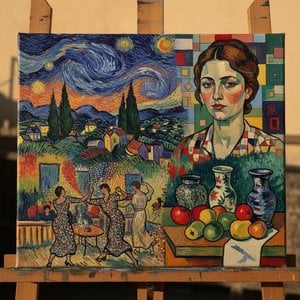
Unveil the profound revolution of Post-Impressionism. Explore how masters like Van Gogh and Cézanne utilized bold colors and emotional depth to transcend mere representation, laying the foundation for modern art. A sophisticated journey through history's most emotive brushstrokes.

Explore the vibrant evolution of Post-Impressionism. From Seurat's revolutionary Pointillism to the emotional depth of masters, discover how this movement redefined modern art history through color, structure, and unparalleled creative expression.
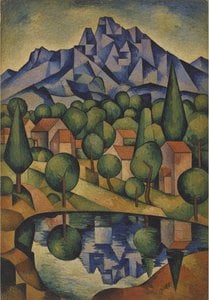
Explore the profound legacy of Paul Cézanne. Discover how his mastery of geometric forms and vibrant color bridged Impressionism and Cubism, offering timeless inspiration for fine art collectors and enthusiasts seeking to understand the foundations of modern art.

Explore the transformative era of Post-Impressionism. Discover how masters like Cézanne and Matisse revolutionized color and form, moving beyond Impressionism to shape modern art history through structural innovation and expressive emotion.

Master the nuances of Impressionism vs. Post-Impressionism with our expert guide. Explore the revolutionary shift from Monet’s fleeting light to Van Gogh’s emotional depth. Discover how these iconic movements continue to inspire fine art collectors and modern interiors today.

 Katso seinällä
 Lähetä
 Jaa
Jaa
 Tarkemmat tiedot
 Guide
Guide

 Lataa kuva
 Samanlaisia kohteita
 Röntgenkuvaus
 Diaesitys
 Tilastot
 Lue lisää







 Lasivaihtoehto on saatavilla vain alle 110 cm kokoisille teoksille


