

Käsinmaalattu öljyväri kankaalle haluamassasi koossa ja kehyksissä, taiteilijoidemme valmistamana tilauksesta. ( Vaihda tulosteeseen Siirry digitaaliseen kuvaan)





























Valitse valmiista mitoistamme sellaiset, jotka vastaavat teoksen alkuperäisiä mittasuhteita.

Kirjoita tarvitsemasi leveys ja korkeus, jotta teos sopii kehyskehyksiisi tai seinällesi. Koska kyseessä on käsinmaalattu teos, taiteilija voi maalata hieman enemmän kuvan ympärille tai rajata sitä hieman, jos haluat eri muotoisen koon — valinta on sinun. Lähetämme sinulle digitaalisen mallikuvan hyväksyttäväksi ennen kuin maalaus alkaa. Tällä sivulla näkyvä kuva ei vastaa lopullista tulosta — vain mallikuva näyttää sen.
Maailmanlaajuinen toimitus () 3–4 viikossa tavallisen 5 viikon sijaan. (27 lokakuu). Laadusta ei tingitä.
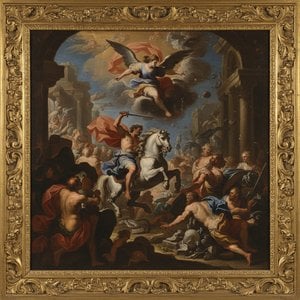
Midas Bathing in Pactolus
Replikaatin koko
Nicolas Poussin's "Midas Bathing in Pactolus," created in the 17th century, is a captivating work of art that showcases the artist’s skill and mastery in depicting mythological scenes. This baroque piece features several nude figures, including a man and a woman, surrounded by nature, creating a scene rich in symbolism and dramatic beauty.
The painting includes elements of mythology, such as a goat and a tree, which add to the overall atmosphere of the piece. The central narrative revolves around Midas, the king of Phrygia, washing himself in the river Pactolus to undo the curse that turned everything he touched into gold. This story, taken from Ovid's Metamorphoses, serves as a classic example of the dangers of greed and the importance of humility. The composition is pyramidal, with the largest figure at the apex, suggesting stability and importance. The scene evokes feelings of tranquility mixed with sadness and perhaps loss.
Nicolas Poussin's style is characterized by his use of classical themes, harmonious composition, and balanced proportions. His work was influenced by the Italian Renaissance and the art of Titian. The painting "Midas Bathing in Pactolus" is a testament to Poussin’s skill in creating beautiful and thought-provoking works of art. The style aligns with Baroque painting, characterized by dramatic lighting, dynamic compositions, and emotional intensity.
The artwork depicts a classical scene featuring three nude male figures resting near a stream or riverbank. It’s an oil painting with a dramatic and somewhat melancholic atmosphere. The use of lines is predominantly curvilinear, following the contours of the bodies and natural forms, creating a sense of fluidity. Shapes are largely organic – flowing drapery, rounded figures, and irregular rock formations. Textures appear rich and layered, achieved through impasto techniques, particularly evident in the rocks and foliage. Lighting is directional, casting strong shadows that emphasize volume and form, contributing to the dramatic effect. The technique involves meticulous brushwork and glazing to build up color and luminosity. Materials used are oil paints on canvas.
Nicolas Poussin (1594-1665) was a renowned French painter who spent much of his career in Rome. His work significantly influenced later artists, including Jacques-Louis David and Paul Cézanne. The painting is currently housed at the Musée des Beaux-Arts in Rouen, France. For more information on Nicolas Poussin and his works, visit WahooArt.com. Handmade oil paintings reproductions of "Midas Bathing in Pactolus" are available at WahooArt.com, allowing art lovers to own a piece of history.
"Midas Bathing in Pactolus" on Nicolas Poussin tekemä teos, joka on syntynyt Baroque-suuntauksen vaikutuksesta; taiteilija on kotoisin Ranska. Taiteilijan alkuperä yhdistää teoksen Baroque-tyyliin, jota Ranska -maasta kotoisin olevat taiteilijat edustavat.
Teosta "Midas Bathing in Pactolus" voi tutkia kerros kerrokselta teoksen X-säteily -sivulla, joka on interaktiivinen katselija ja konservointityön valupöytää mukaillen luotu näkymä, sisältäen yksitoista kuvan optista kerrosta.
"Midas Bathing in Pactolus"-teokselle ominainen Dark väripaletti saa pääroolin Espresso (#3f2514)-värin johdolla.


1594 - 1665 , Ranska

Explore the breathtaking drama of the Baroque era. From the mastery of chiaroscuro to epic mythological narratives, discover a definitive guide to art's most powerful period of light, shadow, and emotion for the true classical art enthusiast.

Embark on a sophisticated journey through the eternal allure of mythological art. Discover how master painters breathe life into ancient legends, from Greek deities to Baroque masterpieces, and learn to curate these timeless narratives within your own exquisite art collection.
Explore the breathtaking power of Baroque art. Delve into the dramatic interplay of light, shadow, and motion through the works of masters like Caravaggio. Discover how the era's intense emotional realism continues to inspire collectors and connoisseurs of classical grandeur.

 Katso seinällä
 Lähetä
 Jaa
Jaa
 Tarkemmat tiedot
 Opas
Opas

 Lataa kuva
 Samanlaisia kohteita
 Röntgenkuvaus
 Diaesitys
 Tilastot

 Lue lisää









 Lasivaihtoehto on saatavilla vain alle 110 cm kokoisille teoksille


