

Tällä sivulla esitettyä taideteosta suojaa tekijänoikeuslaki, mikä tarkoittaa, ettemme voi laillisesti luoda tai myydä täsmälleen samanlaista jäljennöstä. Tämä suoja toteutetaan kansainvälisten sopimusten, kuten esimerkiksi Berne-konventio ja kansallisilla laeilla, mukaan lukien niillä määritellyt Yhdysvaltain tekijänoikeuslaki – Luku 17. Kaikki oikeudet pidätetään. Luvaton kopiointi tai jäljittely on kielletty.
Kunnioittavana ja laillisena vaihtoehtona tarjoamme alkuperäisestä inspiroituneita, yksilöllisiä ja käsinmaalattuja taideteoksia. Taitavat ja ammattimaiset taiteilijamme tutkivat huolellisesti alkuperäisen teoksen tyyliä, tunnelmaa ja taiteellista ydintä luodakseen uuden, ainutlaatuisen teoksen, joka herättää saman tunteen – säilyttäen samalla oman itsenäisen alkuperäisyytensä.
Tämä menetelmä noudattaa täysin tekijänoikeussäännöksiä, sillä se ei sisällä suojatun taideteoksen kopioimista tai jäljentämistä. Sen sijaan kyseessä on luova uudelleentulkinta – uusi maalaus, joka ammentaa vaikutteita alkuperäisestä, mutta ei ole sen identtinen kopio.
Käsinmaalattu öljyväri kankaalle haluamassasi koossa ja kehyksissä, taiteilijoidemme valmistamana tilauksesta. ( Vaihda tulosteeseen Siirry digitaaliseen kuvaan)





























Valitse valmiista mitoistamme sellaiset, jotka vastaavat teoksen alkuperäisiä mittasuhteita.

Voit syöttää omat mitat sopimaan tiettyyn kehykseen tai tilaan. Jos valitsemasi koko ei vastaa alkuperäisen kuvan mittasuhteita, rajaamme taideteoksen tai jatkamme maalausta käsin maalatuilla elementeillä. Digitaalinen esikatselu lähetetään hyväksyttäväksi ennen tuotannon aloittamista.
Huomioithan, että näytöllä oleva esikatselu ei vastaa todellista rajausta tai jatkamista. Vain digitaalinen mallikuva näyttää lopullisen sommittelun tarkasti.
Vaikka mittatilaustyöt ovat mahdollisia, suosittelemme valitsemaan mitan ennalta määritetystä listasta alkuperäisten mittasuhteiden säilyttämiseksi.
Maailmanlaajuinen toimitus () 3–4 viikossa tavallisen 5 viikon sijaan. (13 lokakuu). Laadusta ei tingitä.
Untitled
Replikaatin koko
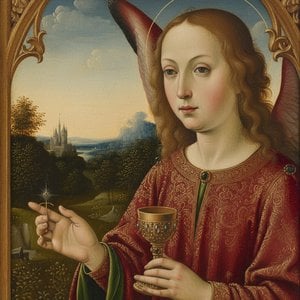
Hans Memling's “Untitled (D2X7SN),” painted around 1480, is not merely an image; it’s a quiet revelation. The work depicts Jesus Christ, rendered with the meticulous detail and serene grace that define his style, holding a luminous sphere in his hand. This isn’t a depiction of triumphant power or dramatic suffering, but one of contemplative stillness. The painting invites us into a moment of profound introspection, set against a backdrop of rolling hills, verdant trees, and a distant, castle-like structure – elements that ground the divine figure within a recognizable, earthly realm. The oil on wood panel technique lends itself beautifully to Memling’s style; the medium allows for layers of translucent glaze, creating a rich depth of color and texture that seems to emanate light from within.
To understand this painting is to understand Hans Memling himself. Born in Germany around 1430, he rose to prominence as one of the leading figures of the Early Netherlandish school. His journey began with an apprenticeship under Rogier van der Weyden in Brussels, a master renowned for his emotional intensity and refined realism. From Van der Weyden, Memling absorbed a dedication to precise detail and a nuanced understanding of human expression. However, Memling’s work distinguishes itself through its inherent tranquility and clarity. He settled in Bruges by 1465, becoming a respected citizen and prolific artist within the thriving artistic community of Flanders. Bruges at this time was a hub of commerce and culture, attracting patrons from across Europe – individuals who sought not only religious devotion but also sophisticated artistry in their commissions.
The central element demanding our attention is, undoubtedly, the sphere held by Christ. Its smooth, polished surface reflects light and draws the eye, yet its meaning remains tantalizingly ambiguous. Spheres, in Renaissance art, often symbolize the world, or *cosmos*, representing God’s creation and dominion over it. In this context, it could signify Christ's role as both creator and sustainer of all things. Alternatively, the sphere might represent divine wisdom or perfection – qualities embodied by Christ himself. The landscape behind him isn’t merely decorative; it reinforces this idea of a world held in balance, overseen by a benevolent power. The castle in the distance could symbolize the heavenly city, a destination for the faithful, or perhaps allude to earthly power structures existing under divine authority. Memling doesn't offer easy answers; he presents symbols that invite contemplation and personal interpretation.
Memling’s paintings possess an enduring quality – a sense of peace and spiritual resonance that transcends centuries. “Untitled (D2X7SN)” is no exception. It's a work that speaks to the human desire for connection with the divine, offering not grand pronouncements but quiet contemplation. The painting exemplifies Memling’s ability to blend meticulous realism with profound spirituality, creating an image that is both visually stunning and emotionally moving. Today, his works are treasured in museums worldwide, including the Memling Museum in Bruges – housed within the historic Sint Jans Hospital – a testament to his lasting influence on art history. Owning a reproduction of this piece isn’t simply acquiring a beautiful object; it's inviting a moment of serenity and spiritual reflection into your space.
Teoksen Hans Memling:n "Untitled" hallitseva väri on Walnut (#814c2b).
Teoksen Hans Memling:n "Untitled" värikylläisyys on Balanced Soft.
Teoksella Hans Memling:n "Untitled" on Square -muoto. Muoto kuvaa sommittelun mittasuhteita.
Teoksen Hans Memling:n "Untitled" hallitseva sävy on Golden Yellow Range. Tämä sävy on paletin perussävy.
Hans Memling:n "Untitled" on on edelleen tekijänoikeuden suojaama. Tämä tila määrittää, miten teoksen kuvaa saa käyttää uudelleen.
Hans Memling:n "Untitled" esittää: jesus christ, sphere, landscape, religious art, medieval, oil painting, flemish primitives, portrait.
Esikatselu teoksesta Hans Memling:n "Untitled" on saatavilla teoksen Esikatselu -sivulla.
Hans Memling käytti tekniikkana Oil On Panel-tekniikkaa teoksessa "Untitled". Tekniikka määrittelee alkuperäisen teoksen materiaalisen luonteen.


Saksa

Explore the exquisite precision of Flemish painting. From Jan van Eyck to Robert Campin, discover the revolutionary oil techniques and rich symbolism that defined the Northern Renaissance and continue to inspire fine art collectors today.

Embark on a journey through the exquisite precision of Flemish Art. Discover the pioneering oil techniques, profound symbolism, and luminous realism that define the Northern Renaissance masters in this expert guide for art enthusiasts.

Delve into the luminous revolution of Early Netherlandish painting. Unveil how Jan van Eyck and Flemish masters pioneered oil techniques to achieve unparalleled depth, sacred symbolism, and breathtaking realism, forever shaping the legacy of Western art history.

Explore the dramatic brilliance of the Flemish Baroque movement. Discover how masters like Peter Paul Rubens utilized chiaroscuro and dynamic composition to redefine art history through light, shadow, and unparalleled emotion.
Embark on a journey through the luminous world of Early Netherlandish art. Discover the revolutionary oil techniques, microscopic realism, and sacred symbolism used by masters like Jan van Eyck to redefine Western art history in this expert-led guide.

 Katso seinällä
 Lähetä
 Jaa
Jaa
 Tarkemmat tiedot
 Opas
Opas

 Lataa kuva
 Samanlaisia kohteita
 Röntgenkuvaus
 Diaesitys
 Tilastot


 Lue lisää









 Lasivaihtoehto on saatavilla vain alle 110 cm kokoisille teoksille


