

 Oil On CanvasWallArtExpressionism
 1974Modern
 71.0 x 71.0 cm
Tällä sivulla esitettyä taideteosta suojaa tekijänoikeuslaki, mikä tarkoittaa, ettemme voi laillisesti luoda tai myydä täsmälleen samanlaista jäljennöstä. Tämä suoja toteutetaan kansainvälisten sopimusten, kuten esimerkiksi Berne-konventio ja kansallisilla laeilla, mukaan lukien niillä määritellyt Yhdysvaltain tekijänoikeuslaki – Luku 17. Kaikki oikeudet pidätetään. Luvaton kopiointi tai jäljittely on kielletty.
Kunnioittavana ja laillisena vaihtoehtona tarjoamme alkuperäisestä inspiroituneita, yksilöllisiä ja käsinmaalattuja taideteoksia. Taitavat ja ammattimaiset taiteilijamme tutkivat huolellisesti alkuperäisen teoksen tyyliä, tunnelmaa ja taiteellista ydintä luodakseen uuden, ainutlaatuisen teoksen, joka herättää saman tunteen – säilyttäen samalla oman itsenäisen alkuperäisyytensä.
Tämä menetelmä noudattaa täysin tekijänoikeussäännöksiä, sillä se ei sisällä suojatun taideteoksen kopioimista tai jäljentämistä. Sen sijaan kyseessä on luova uudelleentulkinta – uusi maalaus, joka ammentaa vaikutteita alkuperäisestä, mutta ei ole sen identtinen kopio.
Käsinmaalattu öljyväri kankaalle haluamassasi koossa ja kehyksissä, taiteilijoidemme valmistamana tilauksesta. ( Vaihda tulosteeseen Siirry digitaaliseen kuvaan)





























Valitse valmiista mitoistamme sellaiset, jotka vastaavat teoksen alkuperäisiä mittasuhteita.

Kirjoita tarvitsemasi leveys ja korkeus, jotta teos sopii kehyskehyksiisi tai seinällesi. Koska kyseessä on käsinmaalattu teos, taiteilija voi maalata hieman enemmän kuvan ympärille tai rajata sitä hieman, jos haluat eri muotoisen koon — valinta on sinun. Lähetämme sinulle digitaalisen mallikuvan hyväksyttäväksi ennen kuin maalaus alkaa. Tällä sivulla näkyvä kuva ei vastaa lopullista tulosta — vain mallikuva näyttää sen.
Maailmanlaajuinen toimitus () 3–4 viikossa tavallisen 5 viikon sijaan. (25 lokakuu). Laadusta ei tingitä.
Ali
Replikaatin koko
In the pantheon of twentieth-century portraiture, few works possess the visceral, psychological weight found in Lucian Freud’s 1974 masterpiece, Ali. This evocative oil on canvas is far more than a mere depiction of a seated figure; it is an intimate encounter with the human condition. Through his signature approach to Expressionism, Freud transcends the boundaries of traditional portraiture to present a subject that feels both profoundly exposed and deeply introsive. The painting captures a woman seated in an armchair, her shirt slightly open, a detail that heightens the sense of raw, unvarnished reality. There is an unmistakable air of discomfort or perhaps a quiet, heavy displeasure radiating from her posture, drawing the viewer into a silent dialogue with her internal struggle.
The technical execution of Ali serves as a testament to Freud’s unparalleled mastery of the medium. Eschewing the polished smoothness of classical realism, Freud employs thick, heavy brushstrokes that lend a sculptural quality to the flesh and fabric. This impasto technique creates a tactile surface where the paint itself seems to pulse with life. The color palette is intentionally muted, dominated by somber tones of beige, grey, and white, which directs all emotional energy toward the subject's facial expression. These subtle hues, combined with the soft, diffused lighting, create delicate shadows that trace the contours of her face, emphasizing the physical reality of her form while maintaining a haunting, atmospheric stillness.
Beyond the immediate emotional impact, the composition of Ali demonstrates Freud’s sophisticated use of space to evoke psychological depth. The arrangement of two chairs flanking the subject creates a structured, almost stage-like environment that provides a sense of dimensionality within the domestic setting. This careful placement prevents the portrait from feeling flat, instead creating a hollowed-out space that mirrors the emptiness or contemplation felt by the sitter. The organic, flowing lines of the woman’s body and hair stand in stark contrast to the rigid, geometric structure of the armchair, a visual tension that echoes the conflict between the softness of human vulnerability and the cold permanence of our surroundings.
For collectors and interior designers alike, this piece offers a profound opportunity to introduce a focal point of intellectual and emotional gravity into a space. Ali is not merely a decoration; it is an anchor for thought. Its ability to command attention through its intense, dramatic atmosphere makes it an ideal centerpiece for curated collections or sophisticated living environments that value art with narrative depth. To possess a reproduction of this work is to invite the haunting beauty of Freud’s vision into one's home—a constant reminder of the complex, beautiful, and often unsettling layers of the human psyche.
"Ali" on kokonaisuutena balanced, ja sen luminanssi on Gentle Luminance.
Lucian Freud:n "Ali" on on edelleen tekijänoikeuden suojaama. Tekijänoikeuden voimassaolo lasketaan taiteilijan kuolinvuodesta, joka oli 2011.
Teoksen "Ali" taiteilija on Lucian Freud. Teos on luetteloitu Lucian Freud nimellä.


1922 - 2011 , Saksa
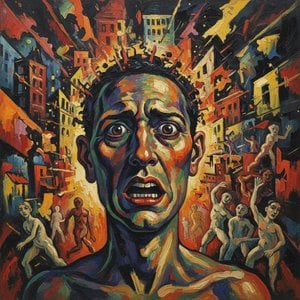
Explore the profound psychological depths of Expressionist art. From Schiele to Kirchner, discover how these masterpieces evoke raw emotion. Our expert curation offers museum-quality reproductions for the discerning collector seeking intensity and soul in their modern fine art collection.

Explore the profound psychological depth of Expressionist portraiture. From Munch to Schiele, discover how distorted forms and visceral brushstrokes unmask raw human emotion in this definitive guide for art enthusiasts and collectors.

 Katso seinällä
 Lähetä
 Jaa
Jaa
 Tarkemmat tiedot
 Opas
Opas

 Lataa kuva
 Samanlaisia kohteita
 Röntgenkuvaus
 Diaesitys
 Tilastot
 Lue lisää









 Lasivaihtoehto on saatavilla vain alle 110 cm kokoisille teoksille


