

 Oil On CanvasWallArtNeo-Classicism
 1772Early Modern
 101.0 x 126.0 cm
 National Gallery of Art
Museolaatuisia giclée- tai kankaitaulun tulosteita nopealla tuotannolla ja joustavilla viimeistelyvaihtoehdoilla. ( Tilaa käsinmaalattu jäljennös Siirry digitaaliseen kuvaan)
Valitse valmiista mitoistamme sellaiset, jotka vastaavat teoksen alkuperäisiä mittasuhteita.

Voit syöttää omat mitat sopiaksesi tiettyyn kehykseen tai tilaan. Jos valittu koko ei vastaa alkuperäisen kuvan mittasuhteita, rajaamme teosta tai laajennamme kuvaa peilatulla tai yhtenäisellä reunalla. Digitaalinen mallikuva lähetetään hyväksyttäväksi ennen tuotannon aloittamista.
Huomaathan, että näytöllä näkyvä esikatselu ei vastaa lopullista rajausta tai laajennusta. Vain mallikuva näyttää lopullisen sommittelun tarkasti.
Vaikka räätälöityjä kokoja on saatavilla, suosittelemme valitsemaan mitat valmiista listasta alkuperäisten mittasuhteiden säilyttämiseksi.
Maailmanlaajuinen toimitus () 2 viikossa tavallisen 4–5 viikon sijaan. (13 lokakuu)
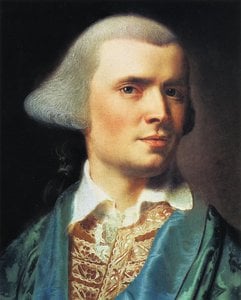
Eleazer Tyng
Replikaatin koko
The portrait of Eleazer Tyng, painted by John Singleton Copley in 1772, stands as a significant example of American Neoclassical portraiture. Housed within the National Gallery of Art, this artwork offers a glimpse into the life and status of a prominent figure during colonial times. The painting’s meticulous detail and realistic rendering capture not only Tyng's likeness but also convey a sense of wisdom and dignified composure.
John Singleton Copley was a pioneering Anglo-American painter renowned for his exceptional skill in capturing the likenesses of wealthy and influential figures in colonial New England. He was largely self-taught, demonstrating an innate talent and dedication to his craft. His work is characterized by attention to detail, realism, and a deep understanding of his subjects. Copley's artistic contributions extended beyond portraiture; he also explored landscapes and innovative depictions of modern life.
The painting exemplifies the principles of Neoclassicism, an art movement that emphasized order, simplicity, and classical ideals. Copley’s technique involved meticulous observation and skillful execution using oil paints on canvas. The portrait measures 101 x 126 cm. Noticeable are the dramatic lighting effects creating strong contrasts between light and shadow, which emphasize wrinkles and texture on Tyng's face and clothing. This attention to detail contributes to a sense of realism while maintaining an air of formality characteristic of Neoclassical portraits.
Eleazer Tyng (1724-1809) was a prominent figure in colonial Massachusetts, serving as a judge and holding various important positions within the community. The portrait reflects his status and influence during a period of significant change leading up to the American Revolution. The painting provides valuable insight into the attire and social customs of the elite class in colonial America. It is believed that Tyng's family commissioned the portrait, likely as a means of commemorating his legacy.
Beyond its historical significance, the portrait evokes a sense of quiet dignity and contemplative wisdom. Tyng’s seated posture and direct gaze convey an impression of authority and intelligence. The formal attire further reinforces his status and position within society. While the overall tone is somber, the painting's skillful execution and attention to detail create a lasting emotional impact, inviting viewers to connect with a figure from colonial history.
Sen Reflective tunnelman ansiosta John Singleton Copley:n "Eleazer Tyng" on suositeltava lahja Anniversary.
Teoksen John Singleton Copley:n "Eleazer Tyng" mitatut arvot ovat: kirkkaus deep_shadow, luminanssi Dark.
Voit esikatsella teoksen John Singleton Copley:n "Eleazer Tyng" reproduktiota avaamalla teoksen Esikatselu -sivun.
Suositeltu tila teokselle John Singleton Copley:n "Eleazer Tyng" on Living Room. Suositusta voidaan tietysti mukauttaa sisustukseesi sopivaksi.
Teoksen John Singleton Copley:n "Eleazer Tyng" teemoihin kuuluvat portrait, male, formal, wisdom, status, 18th century, colonial. Yhdessä ne tiivistävät teoksen aiheen.
"Eleazer Tyng" kuuluu Early Modern aikakauteen.
"Eleazer Tyng" edustaa taiteilijan John Singleton Copley tuotantokautta Early Period."
Teoksen John Singleton Copley:n "Eleazer Tyng" tekniikka on Oil On Canvas. Vedosten tavoitteena on jäljitellä tämän tekniikan ulkoasua.

1738 - 1815 , Iso-Britannia

Discover the profound elegance of Neoclassicism. Explore how the pursuit of order, symmetry, and Greco-Roman ideals created a timeless aesthetic for collectors seeking grandeur and intellectual depth in fine art and architecture.

Discover the profound beauty of Academic Classicism. Explore the principles of order, anatomical precision, and the enduring legacy of Neoclassical masters through this expert guide to timeless elegance and technical perfection in fine art.

 Katso seinällä
 Lähetä
 Jaa
Jaa
 Tarkemmat tiedot
 Opas
Opas

 Lataa kuva
 Samanlaisia kohteita
 Röntgenkuvaus
 Diaesitys
 Tilastot
 Lue lisää






































 Lasivaihtoehto on saatavilla vain alle 110 cm kokoisille teoksille


