

 OilWallArtAcademic Realism
 188619th Century
 53.0 x 43.0 cm
Käsinmaalattu öljyväri kankaalle haluamassasi koossa ja kehyksissä, taiteilijoidemme valmistamana tilauksesta. ( Vaihda tulosteeseen Siirry digitaaliseen kuvaan)





























Valitse valmiista mitoistamme sellaiset, jotka vastaavat teoksen alkuperäisiä mittasuhteita.

Voit syöttää omat mitat sopimaan tiettyyn kehykseen tai tilaan. Jos valitsemasi koko ei vastaa alkuperäisen kuvan mittasuhteita, rajaamme taideteoksen tai jatkamme maalausta käsin maalatuilla elementeillä. Digitaalinen esikatselu lähetetään hyväksyttäväksi ennen tuotannon aloittamista.
Huomioithan, että näytöllä oleva esikatselu ei vastaa todellista rajausta tai jatkamista. Vain digitaalinen mallikuva näyttää lopullisen sommittelun tarkasti.
Vaikka mittatilaustyöt ovat mahdollisia, suosittelemme valitsemaan mitan ennalta määritetystä listasta alkuperäisten mittasuhteiden säilyttämiseksi.
Maailmanlaajuinen toimitus () 3–4 viikossa tavallisen 5 viikon sijaan. (23 syyskuu). Laadusta ei tingitä.


Charles Octavius Parsons
Replikaatin koko
In the quiet intensity of John Singer Sargent’s 1886 portrait, Charles Octavius Parsons, we encounter more than just the likeness of a man; we witness the very heartbeat of the industrial revolution. This striking monochrome masterpiece transcends the boundaries of traditional portraiture to embody an era defined by audacious scientific breakthroughs and burgeoning social ambition. As the "father of steam propulsion," Parsons stands before us not merely as a subject, but as a symbol of the transformative energies that reshaped maritime transport and the trajectory of global progress itself. To gaze upon this work is to feel the weight of a pivotal moment in history, where the boundaries of human ingenuity were being pushed into uncharted waters.
Sargent, a master of capturing the psychological landscape, delves deep into the character of his sitter. The portrait captures Parsons during the height of his intellectual fervor, specifically around the development of the Turbinia, the world’s first steam turbine. Through the artist's lens, we see the intersection of scientific brilliance and Victorian determination. There is a profound sense of purpose etched into the composition, inviting collectors and art enthusiasts to contemplate a time when a single idea could alter the course of civilization.
The true magic of this piece lies in Sargent’s unparalleled ability to distill raw emotion onto the canvas through meticulous observation. His technique is a breathtaking dance between loose, expressive strokes and painstaking detail. One cannot help but be captivated by how deftly he renders the textures of the era; the subtle sheen of Parsons’ dark hair and the heavy, tactile quality of his suit are brought to life with a virtuosity that feels almost liquid. Sargent employed rapid, confident movements—particularly evident in the rendering of the hands—to convey a sense of dynamism and inner conviction.
Light serves as the primary narrator in this composition. The strategic use of illumination highlights key facial features, sculpting shadows that lend a monumental depth to the subject's face. This interplay of light and shadow does more than create three-dimensional form; it guides the viewer’s gaze, reinforcing Parsons' commanding presence and creating an atmosphere of intellectual gravity. For those seeking to adorn a space with art, this painting offers a sophisticated study in contrast, making it a timeless centerpiece for any curated collection or refined interior design.
Beyond its technical brilliance, this portrait carries an emotional resonance that remains potent over a century later. It evokes a sense of nostalgia for the Gilded Age—a period of shimmering elegance and profound change. The presence of subtle background figures suggests the social fabric from which such great minds emerged, adding layers of narrative depth to the work. It is a piece that speaks to the enduring human spirit of discovery and the pursuit of excellence.
For interior designers and art lovers alike, a high-quality reproduction of this Sargent masterpiece offers an opportunity to introduce a sense of historical prestige and intellectual depth into a room. Whether placed in a private study, a corporate boardroom, or a grand living space, the portrait of Charles Octavius Parsons serves as a conversation starter—a window into a world where light, shadow, and human genius converge to create something truly eternal.


1856 - 1925 , Italia
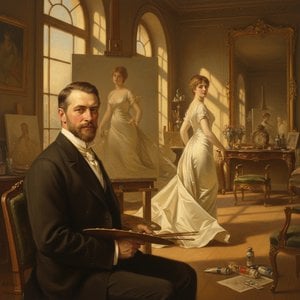
Discover the luminous mastery of John Singer Sargent. Explore an expert analysis of his legendary light, Gilded Age elegance, and technical brilliance, perfect for fine art enthusiasts seeking to bring timeless classical beauty into their modern collections.

Discover the breathtaking elegance of John Singer Sargent's masterpieces. From iconic Gilded Age portraits to impressionistic landscapes, explore the technical brilliance and timeless allure of this American master through our premium, hand-painted fine art reproductions.

 Katso seinällä
 Lähetä
 Jaa
Jaa
 Tarkemmat tiedot
 Opas
Opas

 Lataa kuva
 Samanlaisia kohteita
 Röntgenkuvaus
 Diaesitys
 Tilastot
 Lue lisää







 Lasivaihtoehto on saatavilla vain alle 110 cm kokoisille teoksille


