

Käsinmaalattu öljyväri kankaalle haluamassasi koossa ja kehyksissä, taiteilijoidemme valmistamana tilauksesta. ( Vaihda tulosteeseen Siirry digitaaliseen kuvaan)





























Valitse valmiista mitoistamme sellaiset, jotka vastaavat teoksen alkuperäisiä mittasuhteita.

Voit syöttää omat mitat sopimaan tiettyyn kehykseen tai tilaan. Jos valitsemasi koko ei vastaa alkuperäisen kuvan mittasuhteita, rajaamme taideteoksen tai jatkamme maalausta käsin maalatuilla elementeillä. Digitaalinen esikatselu lähetetään hyväksyttäväksi ennen tuotannon aloittamista.
Huomioithan, että näytöllä oleva esikatselu ei vastaa todellista rajausta tai jatkamista. Vain digitaalinen mallikuva näyttää lopullisen sommittelun tarkasti.
Vaikka mittatilaustyöt ovat mahdollisia, suosittelemme valitsemaan mitan ennalta määritetystä listasta alkuperäisten mittasuhteiden säilyttämiseksi.
Maailmanlaajuinen toimitus () 3–4 viikossa tavallisen 5 viikon sijaan. (10 lokakuu). Laadusta ei tingitä.
Flacon bleu et poulet
Replikaatin koko
James Ensor's Flacon bleu et poulet, painted in the early 20th century, isn’t merely a depiction of a blue bottle and a bird; it’s a carefully constructed tableau of unease, a window into the artist’s uniquely unsettling psyche. This work, firmly rooted within the burgeoning Expressionist movement, offers a glimpse into a world saturated with symbolism and shadowed by a profound sense of melancholy—a characteristic so deeply ingrained in Ensor's artistic vision. The painting immediately confronts us with its deliberate distortion; the bird, rendered almost lifeless, lies sprawled on the ground, devoid of vitality, while the bottle, a vibrant splash of color against the muted tones, seems to hold an unsettling stillness itself. It’s a scene that begs questions – not about simple objects, but about their relationship and the atmosphere they evoke.
Born in Ostend, Belgium, in 1860, James Ensor was a product of a fascinating cultural crossroads – his English father and Belgian mother instilled within him a sense of both belonging and alienation. This duality profoundly shaped his artistic trajectory. Early exposure to the vibrant chaos of a seaside resort town, coupled with his parents’ souvenir shop overflowing with exotic masks and curiosities, fueled an imagination that constantly sought to deconstruct and reimagine reality. Initially hesitant to conform to the rigid conventions of academic art, Ensor enrolled at the Académie Royale des Beaux-Arts in Brussels but quickly recognized its limitations. He yearned for a freedom to express his inner world, a desire that ultimately led him away from traditional techniques and toward a distinctly personal style – one characterized by bold colors, distorted forms, and a deliberate rejection of idealized beauty.
Ensor’s masterful use of color is immediately striking in Flacon bleu et poulet. The intense blue of the bottle dominates the composition, drawing the eye while simultaneously creating a sense of artificiality or even menace. The muted browns and greys of the surrounding objects – the books, the chair – contribute to the painting’s overall atmosphere of quiet despair. More than just color choices, Ensor employs distortion to heighten emotional impact. The bird is not realistically rendered; its form is simplified, almost skeletal, suggesting a loss of life or perhaps an embodiment of stagnation. The positioning of the objects—the books clustered together, the chair angled awkwardly—creates a sense of imbalance and unease, mirroring the psychological state implied by the scene. His technique leans heavily into the expressive potential of paint itself; visible brushstrokes contribute to the painting’s raw energy.
Beyond its formal elements, Flacon bleu et poulet is rich in symbolic meaning. The blue bottle could represent both fragility and containment – a vessel holding something precious or perhaps something dangerous. The bird, often associated with freedom and spirituality, here lies lifeless, suggesting a loss of innocence or a rejection of higher ideals. The scattered books hint at knowledge and learning, yet their presence alongside the inanimate bird suggests a disconnect between intellect and experience. Some art historians have linked the painting to Ensor’s personal anxieties about mortality and the fleeting nature of existence. Ultimately, the work invites viewers to contemplate themes of isolation, decay, and the unsettling realities of the human condition – a testament to Ensor's ability to translate complex emotions onto canvas with remarkable power. It is a piece that lingers in the mind long after viewing, prompting reflection on its layered meanings.
Explore a stunning hand-painted reproduction of James Ensor’s *Flacon bleu et poulet* at WahooArt.com and discover the captivating world of this extraordinary artist.
"Flacon bleu et poulet" edustaa taiteilijan James Ensor tuotantokautta Mature Expressionism."
Voit tilata käsin maalatun jäljennöksen teoksesta James Ensor:n "Flacon bleu et poulet" suoraan osoitteesta tämä sivu: käsinmaalattu öljyvärireproduktio pellavakankaalle, valmistettuna tilauksesta.
James Ensor:n "Flacon bleu et poulet" esittää: bird, bottle, books, chair, decay, tension, masks, belgium.
Tilataksesi painoksen teoksesta James Ensor:n "Flacon bleu et poulet", voit tehdä tilauksen suoraan osoitteessa tämä sivu: taideteosvedos puuvillakangas- tai arkistoluokan kankaalle painettuna.
James Ensor:n "Flacon bleu et poulet" yhdistää Acrylic On Canvas-tekniikan ja Expressionist Figurative-tyylin. Tekniikka ja tyylisuunta kuvaavat teoksen valmistustapaa ja tyyliä.
Teoksella "Flacon bleu et poulet" on lisätyn todellisuuden esikatselu: teoksen AR-esikatselu -sivu näyttää sen omassa tilassasi yhteensopivalla laitteella.
"Flacon bleu et poulet" on James Ensor:n luoma teos. Tällä sivulla olevat tiedot kuvaavat James Ensor:n alkuperäistä työtä.


1860 - 1949 , Belgia
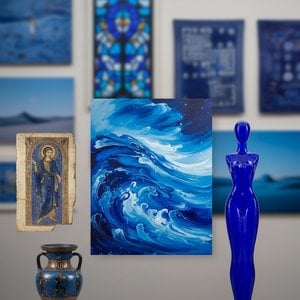
Explore the rich history of blue in art! Discover its symbolism, from ancient pigments to modern masterpieces by Kandinsky & Seurat. Uncover the psychological impact and cultural meanings behind this captivating hue.

Uppoudu 10 tunnetuimman taideteoksen maailmaan, joita hallitsee liukuväri! Tutustu impressionismin ja postimpressionismin mestareihin sekä sinisen sävyjen merkitykseen. Löydä inspiraatiota kotiisi WahooArt.com:ista – laadukkaat taidevedokset ja kuratoidut sisustusratkaisut odottavat! Tutustu kokoelm

Explore the unsettling yet captivating world of James Ensor, a pioneer of Expressionism. Discover his satirical masterpieces, symbolic imagery & lasting influence on modern art. High-quality reproductions available at WahooArt.

Tutustu James Abbott McNeill Whistlerin 25 vaikuttavinta mestariteosta! Uppoudu amerikkalaisen impressionismin maailmaan, tunnelmallisiin nocturneihin ja upeisiin muotokuviin. Löydä inspiraatiota sisustukseen WahooArt.comista – taidekopiot museolaadulla. Explore the full collection online!
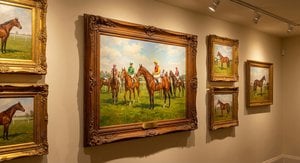
Tutustu Sir Alfred James Munningsin 25 lumoavinta mestariteosta! Uppoudu brittiläisen maalaisidyllin ja hevosmaalausten maailmaan. Löydä inspiraatiota kotiisi WahooArt.com:ista – taideprintit museolaadulla.

 Katso seinällä
 Lähetä
 Jaa
Jaa
 Tarkemmat tiedot
 Opas
Opas

 Lataa kuva
 Samanlaisia kohteita
 Röntgenkuvaus
 Diaesitys
 Tilastot
 Lue lisää









 Lasivaihtoehto on saatavilla vain alle 110 cm kokoisille teoksille


