

Käsinmaalattu öljyväri kankaalle haluamassasi koossa ja kehyksissä, taiteilijoidemme valmistamana tilauksesta. ( Vaihda tulosteeseen Siirry digitaaliseen kuvaan)





























Valitse valmiista mitoistamme sellaiset, jotka vastaavat teoksen alkuperäisiä mittasuhteita.

Voit syöttää omat mitat sopimaan tiettyyn kehykseen tai tilaan. Jos valitsemasi koko ei vastaa alkuperäisen kuvan mittasuhteita, rajaamme taideteoksen tai jatkamme maalausta käsin maalatuilla elementeillä. Digitaalinen esikatselu lähetetään hyväksyttäväksi ennen tuotannon aloittamista.
Huomioithan, että näytöllä oleva esikatselu ei vastaa todellista rajausta tai jatkamista. Vain digitaalinen mallikuva näyttää lopullisen sommittelun tarkasti.
Vaikka mittatilaustyöt ovat mahdollisia, suosittelemme valitsemaan mitan ennalta määritetystä listasta alkuperäisten mittasuhteiden säilyttämiseksi.
Maailmanlaajuinen toimitus () 3–4 viikossa tavallisen 5 viikon sijaan. (25 syyskuu). Laadusta ei tingitä.


PAYSAGE AVEC UNE STATUE DANS UNE NICHE
Replikaatin koko
Hubert Robert, a name synonymous with evocative landscapes and the romantic allure of ruins, stands apart as one of the most distinctive figures in 18th-century French art. Born in Paris in 1733, his artistic journey unfolded against a backdrop of dramatic stylistic shifts—from the opulent Rococo to the burgeoning Neoclassicism—yet he steadfastly pursued a singular vision: capturing not merely what was seen but what lingered within memory and imagination.
Robert’s oeuvre is defined by an obsession with ruins, transforming crumbling monuments into canvases brimming with atmospheric drama. Unlike many of his contemporaries who sought to glorify grandeur and order, Robert deliberately confronted the inevitable passage of time, presenting scenes that simultaneously celebrated beauty and acknowledged mortality. This preoccupation isn't simply aesthetic; it reflects a broader intellectual current—the Romantic fascination with sublime landscapes and the melancholic contemplation of history’s fading glories.
Robert skillfully blended elements of both Romanticism and Neoclassicism, achieving an unparalleled effect. The Romantic impulse to infuse paintings with emotion and imagination is evident in his masterful depiction of light and shadow—particularly the diffused glow that illuminates the crumbling stone walls and foliage of his landscapes. Simultaneously, he adheres to neoclassical principles of composition and perspective, grounding these visions in a carefully constructed framework.
Considered “the painter of ruins,” Robert’s technique is characterized by visible brushstrokes—a deliberate rejection of the polished surfaces favored by earlier artists—that convey spontaneity and immediacy. He employs glazing techniques to subtly modulate color, creating luminous washes that heighten the sense of atmosphere. The artist meticulously renders architectural details with precision while simultaneously allowing for textural variation, mirroring the organic decay he portrays.
More than just a visual spectacle, Robert’s paintings resonate with profound symbolic meaning. The ruins themselves serve as emblems of time's relentless march and the futility of human ambition—yet they are also imbued with an aura of timeless beauty. Nestled within an arched niche stands a statue, representing classical ideals of artistic excellence and moral virtue—a deliberate allusion to the grandeur of ancient Greece and Rome.
The figures depicted in Robert’s landscapes—often solitary wanderers contemplating crumbling ruins—are imbued with a sense of melancholy contemplation. They embody the Romantic spirit's preoccupation with emotion and introspection, inviting viewers to ponder the relationship between humanity and history. Ultimately, Robert’s art transcends mere decoration; it offers a meditation on beauty, decay, and the enduring legacy of civilization.

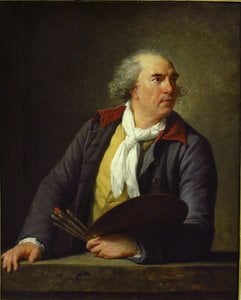
1733 - 1808 , Ranska
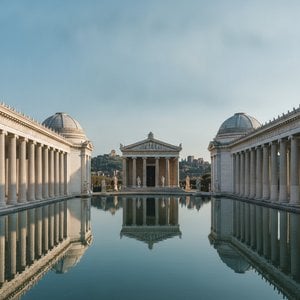
Discover the profound elegance of Neoclassicism. Explore how the pursuit of order, symmetry, and Greco-Roman ideals created a timeless aesthetic for collectors seeking grandeur and intellectual depth in fine art and architecture.

Explore the profound tension between Neoclassicism's rational order and Romanticism's emotional depth. An expert journey through the masters of art history, from David to Delacroix, perfect for collectors and enthusiasts seeking a deeper understanding of artistic evolution.

Explore the profound beauty of ancient ruins through fine art history. Discover how masters like Pannini captured Roman grandeur, and learn how to bring this timeless architectural majesty into your home with museum-quality, hand-painted oil reproductions.
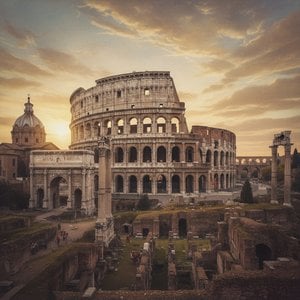
Explore the profound beauty of Roman architecture through art history. From Piranesi's evocative engravings to classical masterpieces, discover how the grandeur of ancient Rome continues to inspire collectors and art enthusiasts worldwide.

 Katso seinällä
 Lähetä
 Jaa
Jaa
 Tarkemmat tiedot
 Opas
Opas

 Lataa kuva
 Samanlaisia kohteita
 Röntgenkuvaus
 Diaesitys
 Tilastot

 Lue lisää







 Lasivaihtoehto on saatavilla vain alle 110 cm kokoisille teoksille


