

 AcrylicWallArtImpressionistic Realism
 1888High Medieval
 24.0 x 30.0 cm
 Isabella Stewart Gardnerin museo
Osta korkearesoluutioinen, parannettu digitaalikuva, joka on laadultaan huomattavasti parempi kuin verkkosivuston esikatselu.
Jokainen tiedosto valmistellaan huolellisesti omien asiantuntijoidemme toimesta käyttäen edistyneitä työkaluja ja ammattitaitoista manuaalista retusointia. Varmistamme, että jokaisessa kuvassa on poikkeuksellinen selkeys, tarkka värintoisto ja hienovaraiset yksityiskohdat.
Lopputiedosto toimitetaan sähköpostitse 72 tunnin kuluessa, ja se on optimoitu välittömään käyttöön ammattimaisissa, toimituksellisissa ja painoympäristöissä. Laatu on sama, johon huipputason suunnittelustudiot, kustantajat ja galleriat luottavat.
Lataa korkearesoluutioinen tiedosto henkilökohtaiseen näyttelyyn, tulostamiseen ja luoviin projekteihin. ( Vaihda tulosteeseen Tilaa käsinmaalattu jäljennös)
Kun valitset WahooArt.com-palvelun, et saa vain kuvaa – saat ammattimaisesti viimeistellyn digitaalisen taideteoksen, joka on luotu tarkkuudella ja jonka takaa tulee tyytyväisyystakuu. Tässä on kaikki, mitä tilauksesi sisältää, automaattisesti:

Saat korkearesoluutioisen digitaalisen kuvatiedostosi sähköpostiisi 72 tunnin kuluessa tilauksesta – valmiina käytettäväksi välittömästi.

Teoksesi on optimoitu ammattimaisesti edistyneiden tekoälytyökalujen ja manuaalisen jälkikäsittelyn avulla, mikä takaa maksimaalisen yksityiskohtaisuuden, selkeyden ja väritarkkuuden.

Oletko vahingossa poistanut tai kadottanut tiedostosi? Ei hätää – lähetämme sen sinulle uudelleen milloin tahansa täysin maksutta.

Nauti taiteestasi välittömästi ilman tullimaksuja, veroja tai toimituskuluja – digitaaliset lataukset ovat aina verovapaita.

Varmistamme, että digitaalinen kuvasi vastaa alkuperäisiä värejä mahdollisimman tarkasti käyttämällä ammattilaistason työkaluja ja värinhallintaa.

Jos et ole tyytyväinen digitaaliseen kuvaasi, muokkaamme sitä tai palautamme 100% hinnan 100 päivän kuluessa – kysymystä ei esitetä.

Et ole tyytyväinen? Saat täyden hyvityksen 100 päivän kuluessa digitaalisen tiedostosi vastaanottamisesta – kysymystä ei esitetä.

Osta 3 kuvaa, säästä 10% - Osta 5, säästä 15% - Osta 10+, säästä 20%. Erinomainen valinta luoviin projekteihin, gallerioille ja toimistoille.
Edgar Degas's “Three Mounted Jockeys,” painted in 1888, isn’t merely a depiction of horsemen; it’s a carefully constructed tableau capturing a fleeting, almost ephemeral moment within the vibrant world of Parisian equestrian sport. This monochrome drawing, rendered with meticulous detail and a distinctly Impressionistic sensibility, invites us into a scene brimming with quiet observation and understated elegance – a far cry from the grand narratives often favored by Degas's contemporaries. The work’s power lies not in dramatic action or overt emotion, but rather in its ability to distill a complex atmosphere of anticipation and casual activity into a remarkably intimate composition.
Degas’s genius resides in his ability to capture the essence of a scene through subtle details and masterful technique. The drawing's foundation is built upon an extensive use of hatching and cross-hatching, techniques that skillfully mimic the texture of horsehair, fabric, and skin. Varying line weights create a remarkable sense of volume and depth, guiding the viewer’s eye across the canvas and emphasizing the physicality of the figures. The deliberate flatness of the composition, characteristic of Degas's style, avoids the illusion of spatial depth, instead prioritizing the arrangement of forms and the interplay of lines to convey mood and atmosphere. The absence of color further intensifies this effect, forcing us to focus on the nuances of texture and form.
To fully appreciate “Three Mounted Jockeys,” it’s crucial to understand the social and cultural context in which Degas was working. Equestrian sport, particularly racing and jockeys, held a prominent place in 19th-century Parisian society – a world of wealth, leisure, and spectacle. Degas wasn't simply documenting a sporting event; he was exploring the dynamics of this social milieu, capturing the interactions between riders, horses, and the surrounding environment. The inclusion of the man reading while mounted is particularly intriguing, adding an element of narrative complexity to the scene – perhaps suggesting a moment of respite amidst the excitement or highlighting the contrast between formal leisure and casual observation.
Further research reveals that Degas’s fascination with jockeys stemmed from his early years. He spent time in Italy studying Renaissance art, particularly the works of Michelangelo and Raphael, which profoundly influenced his approach to drawing and composition. This classical training is evident in the meticulous rendering of the horses' musculature and the figures' poses, while simultaneously informing Degas’s unique style – a blend of realism and Impressionistic observation. The image was part of a larger series of drawings depicting horse racing, reflecting Degas’s deep engagement with this subject matter.
While “Three Mounted Jockeys” lacks overt symbolism, it resonates deeply through its portrayal of human interaction within a specific environment. The scene evokes a sense of quiet observation – the reader’s posture suggests contemplation, while the jockeys embody a blend of skill and controlled energy. The small object at the bottom right corner—likely a cup or bowl—adds a touch of domesticity to the scene, grounding it in everyday life. More than simply a record of a sporting event, the drawing captures a moment of human connection within a larger social context.
Ultimately, “Three Mounted Jockeys” is a testament to Degas’s extraordinary ability to capture fleeting moments and distill complex emotions into simple lines and forms. It's an invitation to slow down, observe carefully, and appreciate the beauty in the ordinary—a timeless work that continues to captivate viewers with its quiet elegance and insightful portrayal of human experience.

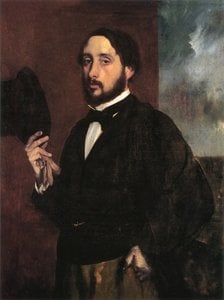
1834 - 1917 , Ranska

 Katso seinällä
 Lähetä
 Jaa
Jaa
 Tarkemmat tiedot
 Opas
Opas

 Lataa kuva
 Samanlaisia kohteita
 Röntgenkuvaus
 Diaesitys
 Tilastot
 Lue lisää


