

Käsinmaalattu öljyväri kankaalle haluamassasi koossa ja kehyksissä, taiteilijoidemme valmistamana tilauksesta. ( Vaihda tulosteeseen Siirry digitaaliseen kuvaan)





























Valitse valmiista mitoistamme sellaiset, jotka vastaavat teoksen alkuperäisiä mittasuhteita.

Voit syöttää omat mitat sopimaan tiettyyn kehykseen tai tilaan. Jos valitsemasi koko ei vastaa alkuperäisen kuvan mittasuhteita, rajaamme taideteoksen tai jatkamme maalausta käsin maalatuilla elementeillä. Digitaalinen esikatselu lähetetään hyväksyttäväksi ennen tuotannon aloittamista.
Huomioithan, että näytöllä oleva esikatselu ei vastaa todellista rajausta tai jatkamista. Vain digitaalinen mallikuva näyttää lopullisen sommittelun tarkasti.
Vaikka mittatilaustyöt ovat mahdollisia, suosittelemme valitsemaan mitan ennalta määritetystä listasta alkuperäisten mittasuhteiden säilyttämiseksi.
Maailmanlaajuinen toimitus () 3–4 viikossa tavallisen 5 viikon sijaan. (24 syyskuu). Laadusta ei tingitä.


reclinnning nude back
Replikaatin koko
Henri Matisse’s “Reclinnning Nude Back,” a captivating exploration of form and color, embodies the very essence of Fauvist aesthetics. Painted around 1910-1912, during his pivotal shift towards radical experimentation, this work offers a glimpse into a world where the objective representation of reality is deliberately abandoned in favor of subjective sensation. The painting depicts a woman reclining on her side, a pose frequently employed by Matisse to investigate the expressive potential of color and line. Unlike traditional depictions of the nude that prioritized anatomical accuracy, here, the figure exists primarily as a vibrant arrangement of hues – a testament to Matisse’s desire to capture not what he *saw*, but what he *felt*.
While seemingly straightforward in its depiction, “Reclinnning Nude Back” is rich with symbolic undertones. The reclining pose itself has a long history in Western art, often associated with themes of leisure, vulnerability, and contemplation. Here, however, it’s imbued with Matisse's personal exploration of the female form – a recurring motif throughout his oeuvre. The woman’s relaxed posture suggests a state of blissful repose, inviting the viewer to share in her tranquility. The inclusion of surrounding objects—the chairs, table, vase—adds to the sense of intimacy and domesticity, further emphasizing the painting's focus on human experience.
Matisse’s work emerged during a period of profound artistic change in early 20th-century France. Fauvism, meaning "wild beasts," was a short-lived but hugely influential movement that challenged the established conventions of Impressionism and Post-Impressionism. Artists like Matisse, André Derain, and Maurice de Vlaminck sought to liberate color from its descriptive function, using it instead as an expressive tool. “Reclinnning Nude Back” stands as a prime example of this revolutionary approach, foreshadowing the development of Abstract Expressionism in later decades. It represents a pivotal moment in art history – a bold assertion of artistic freedom and a testament to the power of color to evoke emotion and transform perception.


1869 - 1954 , Ranska

Tutustu 10 rohkeaan mestariteokseen, jotka huokuvat voimaa ja tunnetta! Picasso, Munch, Van Gogh & muut taiteen ikonit. Löydä inspiraatiota kotiisi WahooArt.com:ista – korkealaatuiset taideprintit ja julisteet.

Tutustu Henri Matissen 25 mestariteokseen – värien ja muodon lumoava maailma! Lue taiteen historiaa, fauvismin syntyä ja löydä inspiraatiota sisustukseesi. Korkealaatuiset taideprintit WahooArt.com:ssa.

Tutustu Roy Lichtensteinin 25 ikonisimpaan taideteokseen! Pop-taiteen mestarit, värikkäät sarjakuvatyyliset maalaukset ja inspiroivat sisustusideat. Löydä Look Mickey & muut WahooArt.com:sta – korkealaatuiset taideprintit kotiisi.
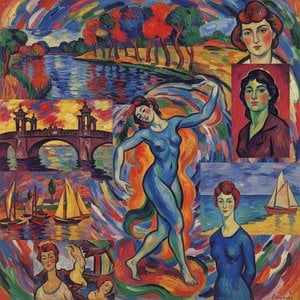
Tutustu fauvismin 10 mestariteokseen! Uppoudu Henri Matissen, André Derainin ja muiden taiteilijoiden värien vallankumoukseen. Löydä inspiraatiota kotiisi – korkealaatuiset taideprintit WahooArt.comista. Tutustu kokoelmaan verkossa!
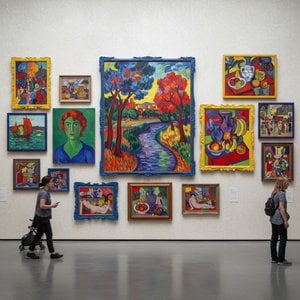
Tutustu fauvismin 10 ikonista mestariteosta! Uppoudu Henri Matissen, André Derainin ja muiden taiteilijoiden värikylläiseen maailmaan. Löydä inspiraatiota kotiisi WahooArt.com:sta – laadukkaat taidekopiokset ja sisustusideat odottavat!

 Katso seinällä
 Lähetä
 Jaa
Jaa
 Tarkemmat tiedot
 Opas
Opas

 Lataa kuva
 Samanlaisia kohteita
 Röntgenkuvaus
 Diaesitys
 Tilastot

 Lue lisää







 Lasivaihtoehto on saatavilla vain alle 110 cm kokoisille teoksille


