

Käsinmaalattu öljyväri kankaalle haluamassasi koossa ja kehyksissä, taiteilijoidemme valmistamana tilauksesta. ( Vaihda tulosteeseen Siirry digitaaliseen kuvaan)





























Valitse valmiista mitoistamme sellaiset, jotka vastaavat teoksen alkuperäisiä mittasuhteita.

Voit syöttää omat mitat sopimaan tiettyyn kehykseen tai tilaan. Jos valitsemasi koko ei vastaa alkuperäisen kuvan mittasuhteita, rajaamme taideteoksen tai jatkamme maalausta käsin maalatuilla elementeillä. Digitaalinen esikatselu lähetetään hyväksyttäväksi ennen tuotannon aloittamista.
Huomioithan, että näytöllä oleva esikatselu ei vastaa todellista rajausta tai jatkamista. Vain digitaalinen mallikuva näyttää lopullisen sommittelun tarkasti.
Vaikka mittatilaustyöt ovat mahdollisia, suosittelemme valitsemaan mitan ennalta määritetystä listasta alkuperäisten mittasuhteiden säilyttämiseksi.
Maailmanlaajuinen toimitus () 3–4 viikossa tavallisen 5 viikon sijaan. (21 syyskuu). Laadusta ei tingitä.


Blue Nude IV
Replikaatin koko
Henri Matisse's "Blue Nude IV," created in 1952, isn’t merely a depiction of the human form; it’s an immersive experience—a vibrant testament to the artist’s evolving mastery and his profound exploration of color, line, and the very essence of being. Produced during a pivotal period in his career, following a debilitating surgery that curtailed his traditional painting practice, this work represents a radical shift towards paper cutouts, a technique he embraced with an almost childlike enthusiasm and astonishing results. The piece stands as a cornerstone within the “Blue Nudes” series, a collection that offers a poignant glimpse into Matisse’s final artistic journey – a period of intense introspection and creative rebirth.
The heart of "Blue Nude IV" lies in its audacious use of color. Dominated by various shades of blue—ranging from deep indigo to delicate cerulean—the painting immediately captivates the viewer with its chromatic intensity. This deliberate choice wasn’t arbitrary; Matisse, deeply influenced by his travels to Tahiti and Africa, recognized the expressive potential of single-color fields. He understood that a unified hue could evoke volume, distance, and even emotion far more effectively than a complex palette. The blue itself isn't simply a color; it becomes a character in the composition, lending an ethereal quality to the nude figure and creating a sense of serene detachment from the surrounding space.
To grasp the significance of “Blue Nude IV,” one must appreciate Matisse’s groundbreaking technique—paper cutouts. Prior to 1942, Matisse primarily worked with oil paints, adhering to established conventions and striving for meticulous realism. However, following a serious abdominal operation that severely limited his mobility and artistic capabilities, he embarked on an unprecedented experiment: transferring his vision onto paper, meticulously sketching out the composition before painstakingly cutting along the lines with scissors. This process liberated him from the constraints of traditional painting, allowing for an astonishing level of spontaneity and fluidity.
The resulting image possesses a remarkable sense of movement – a subtle vibration created by the overlapping shapes and the careful consideration given to each element’s placement. It's as if the figure is caught in a perpetual state of graceful repose, suspended between stillness and motion. Unlike his earlier Fauvist works characterized by bold, arbitrary colors and distorted forms, this technique demanded precision and control, resulting in an image imbued with remarkable clarity and balance.
Matisse's artistic sensibilities were profoundly shaped by his experiences abroad, particularly his visits to Tahiti and Africa. These journeys instilled in him a fascination for vibrant colors and simplified forms—elements that would become central to his later style. The influence of African sculpture is palpable in “Blue Nude IV,” evident in the stylized depiction of the nude figure and the deliberate reduction of detail.
This stylistic choice wasn’t merely aesthetic; it reflected Matisse's belief that art could communicate emotion more powerfully than literal representation. He sought to capture the essence of human experience—the serenity, vulnerability, and beauty inherent in the natural world—translating these observations into a visual language that transcended cultural boundaries.
"Blue Nude IV" transcends its formal qualities to convey a profound emotional resonance. The dominant hue—blue—symbolizes tranquility, contemplation, and distance – mirroring Matisse’s own inner state during the period of creation. The pose itself—a seated or kneeling position—suggests humility and acceptance, embodying a spirit of resilience amidst physical limitations.
Ultimately, “Blue Nude IV” serves as a poignant reminder that artistic innovation can emerge from adversity. It solidified paper cutouts as a viable art form, influencing countless artists who followed Matisse’s pioneering path. Reproductions of this masterpiece continue to inspire awe and admiration, capturing the enduring beauty and complexity of Matisse's vision—a symphony in blue that speaks to the timeless human desire for peace and contemplation.


1869 - 1954 , Ranska

Discover the breathtaking allure of Art Deco. Explore the era's iconic geometry, legendary designers like Erté, and timeless glamour. Perfect for discerning collectors seeking to infuse their spaces with sophisticated modernist elegance and historical prestige.
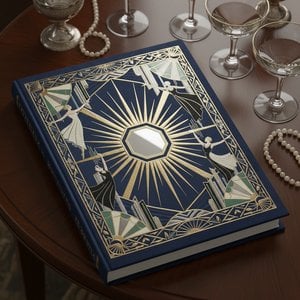
Discover the allure of Art Deco through a curated guide to its most iconic masterpieces. Explore the elegance of Erté and the innovation of Jean Dunand, perfect for collectors seeking timeless glamour and sophisticated design inspiration.
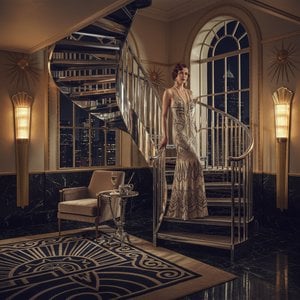
Discover the allure of Art Deco style with our expert guide to luxury interiors. Explore iconic influences from Erté to Jean Dunand and learn to curate a sophisticated space filled with timeless glamour and geometric elegance.

Discover the unparalleled elegance of Art Deco through the lens of Erté. Explore a masterclass in linear precision, theatrical costume design, and high-fashion illustration that continues to define modern luxury and sophisticated interior aesthetics.

 Katso seinällä
 Lähetä
 Jaa
Jaa
 Tarkemmat tiedot
 Guide
Guide

 Lataa kuva
 Samanlaisia kohteita
 Röntgenkuvaus
 Diaesitys
 Tilastot

 Lue lisää







 Lasivaihtoehto on saatavilla vain alle 110 cm kokoisille teoksille


