Katso seinällä Esikatsele AR-tilassa Tilaa käsinmaalattu jäljennös Siirry digitaaliseen kuvaan Lähetä
Tarkemmat tiedot Opas Lisää suosikkeihin Lataa kuva Samanlaisia kohteita Röntgenkuvaus Diaesitys Tilastot

untitled (5500)

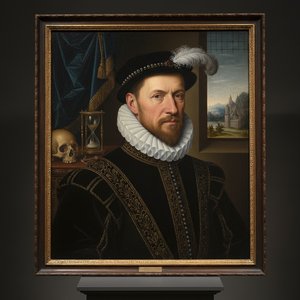
Hans Holbein's "Untitled (5500)" depicts Jesus and his disciples sharing a meal, rich with symbolism & detail. Explore the masterpiece’s religious & humanist themes through stunning realism.

Hans Holbein nuorempi (1497–1543): Pohjoisen renessanssin realistisen muotokuvauksen mestari, joka tunnetaan Tudor-hovin jäsenistä, kuten Henrik VIII:sta, sekä poikkeuksellisesta yksityiskohtaisuudestaan.

Giclée- ja taideprintit

Museolaatuisia giclée- tai kankaitaulun tulosteita nopealla tuotannolla ja joustavilla viimeistelyvaihtoehdoilla. ( Tilaa käsinmaalattu jäljennös Siirry digitaaliseen kuvaan)

Corner sample of the P118B picture frame: valettu polystyreeni, 5 cm wide and 3 cm thick
P118B €10
Corner sample of the P118H picture frame: valettu polystyreeni, 5 cm wide and 3 cm thick
P118H €10
Corner sample of the P118W picture frame: valettu polystyreeni, 5 cm wide and 3 cm thick
P118W €10
Corner sample of the P438Z picture frame: valettu polystyreeni, 5.5 cm wide and 3.5 cm thick
P438Z €10
Corner sample of the P508JH picture frame: valettu polystyreeni, 7 cm wide and 3.5 cm thick
P508JH €12
Corner sample of the P508YH picture frame: valettu polystyreeni, 7 cm wide and 3.5 cm thick
P508YH €12
Corner sample of the P805H picture frame: valettu polystyreeni, 5 cm wide and 3.5 cm thick
P805H €10
Corner sample of the P805Z picture frame: valettu polystyreeni, 5 cm wide and 3.5 cm thick
P805Z €10
Corner sample of the P919BZ picture frame: valettu polystyreeni, 7 cm wide and 3.5 cm thick
P919BZ €10
Corner sample of the P919G picture frame: valettu polystyreeni, 7 cm wide and 3.5 cm thick
P919G €10
Corner sample of the P919XJ picture frame: valettu polystyreeni, 7 cm wide and 3.5 cm thick
P919XJ €10
Corner sample of the P959ZH picture frame: valettu polystyreeni, 5 cm wide and 3 cm thick
P959ZH €10
Corner sample of the P968JZ picture frame: valettu polystyreeni, 6 cm wide and 4 cm thick
P968JZ €12
Corner sample of the W106C picture frame: massiivipuu, 5 cm wide and 3 cm thick
W106C €8
Corner sample of the W218G picture frame: massiivipuu, 5 cm wide and 3 cm thick
W218G €10
Corner sample of the W218JH picture frame: massiivipuu, 5 cm wide and 3 cm thick
W218JH €8
Corner sample of the W218Y picture frame: massiivipuu, 5 cm wide and 3 cm thick
W218Y €10
Corner sample of the W307PJ picture frame: massiivipuu, 6 cm wide and 3 cm thick
W307PJ €10
Corner sample of the W316G picture frame: massiivipuu, 6 cm wide and 3 cm thick
W316G €10
Corner sample of the W316PJ picture frame: massiivipuu, 6 cm wide and 3 cm thick
W316PJ €8
Corner sample of the W316Y picture frame: massiivipuu, 6 cm wide and 3 cm thick
W316Y €10
Corner sample of the W398PJ picture frame: massiivipuu, 5 cm wide and 3 cm thick
W398PJ €8
Corner sample of the W4111J picture frame: massiivipuu, 6.5 cm wide and 3.5 cm thick
W4111J €10
Corner sample of the W500HY picture frame: massiivipuu, 7 cm wide and 5 cm thick
W500HY €15
Corner sample of the W500JH picture frame: massiivipuu, 7 cm wide and 5 cm thick
W500JH €15
Corner sample of the W692G picture frame: massiivipuu, 8 cm wide and 4 cm thick
W692G €12
Corner sample of the W849H picture frame: massiivipuu, 5 cm wide and 3 cm thick
W849H €8
Corner sample of the W940BG picture frame: massiivipuu, 7.5 cm wide and 4.5 cm thick
W940BG €15
Corner sample of the W953PJ picture frame: massiivipuu, 6 cm wide and 3.5 cm thick
W953PJ €8

Vakiokoko
mittatilaustyö
CM
INCH

Valitse valmiista mitoistamme sellaiset, jotka vastaavat teoksen alkuperäisiä mittasuhteita.

leveys
korkeus

Kirjoita tarvitsemasi leveys ja korkeus, jotta tuloste sopii kehyskokoon tai seinällesi. Tulostetta voidaan vain leikata, sitä ei voi koskaan tehdä suuremmaksi kuin alkuperäinen kuva, joten eri muotoinen koko aiheuttaa osan kuvasta katoamisen. Lähetämme sinulle digitaalisen mallikuvan hyväksyttäväksi ennen kuin aloitamme tulostuksen. Tällä sivulla näkyvä kuva ei näytä lopullista leikkausta — vain mallikuva näyttää sen.

Maailmanlaajuinen toimitus () 2 viikossa tavallisen 4–5 viikon sijaan. (24 lokakuu)

Ilmainen pikatoimitus ympäri maailman
Korkealaatuinen pellavakangas
Kattava kuljetusvakuutus
Tulliveron palautustakuu
Takuu täydellisestä värien vastaavuudesta
100 päivän palautusoikeus valmistusvirhetapauksissa
100% rahat takaisin -takuu
Määräalennus saatavilla

Kokonaishinta

€ 60

untitled (5500)

Giclée- ja taideprintit

Replikaatin koko

-

Kokonaishinta

€ 60

Pikaista tietoa

  • Subject or theme: Religious scene, feast
  • Title: untitled (5500)
  • Medium: Oil on panel
  • Artistic style: Realistic portraiture

Taidevisakysely

Jokaisessa kysymyksessä on vain yksi oikea vastaus.

Kysymys 1:
What is the primary subject depicted in ‘untitled (5500)’?
Kysymys 2:
According to the description, how many people are depicted in the painting?
Kysymys 3:
What is a prominent feature on the dining table that suggests symbolic meaning?
Kysymys 4:
Hans Holbein the Younger is known for his expertise in which artistic style?
Kysymys 5:
The inclusion of the anamorphic skull in ‘untitled (5500)’ most likely represents:

A Window into Tudor Intrigue: Hans Holbein’s “Untitled (5500)”

Hans Holbein the Younger's "Untitled (5500)" is not merely a group portrait; it’s a meticulously crafted tableau of power, faith, and subtle symbolism—a frozen moment within the opulent world of 16th-century England. This remarkable painting, depicting Jesus surrounded by his disciples at a shared meal, transcends simple representation to offer a profound glimpse into the political and religious currents of its time. The sheer scale of the composition – an unknown size but undoubtedly commanding – immediately draws the viewer in, inviting them to become part of this intimate scene. Holbein’s mastery is evident not just in his astonishingly realistic depiction of each figure, but also in the way he uses light and shadow to create a palpable sense of depth and atmosphere, reminiscent of the masterful works of Jan van Eyck.

The painting unfolds around a richly appointed dining table, laden with bowls, knives, and various instruments of learning – a deliberate arrangement that speaks volumes about the intellectual climate of the Tudor court. Three bowls are strategically placed, hinting at shared sustenance and fellowship, while the knife suggests both practicality and perhaps, a subtle undercurrent of tension. The figures themselves are rendered with an almost unsettling level of detail; each face is etched with individual character, reflecting not just likeness but also personality and status. The seated disciples, ranging from the youthful to the seasoned, embody a diverse group united by their devotion to Jesus. Notably, Jesus himself is positioned at the head of the table, asserting his central role within this community.

Renaissance Realism and Psychological Depth

Holbein’s artistic genius lies in his ability to capture not just outward appearances but also the inner lives of his subjects. This painting exemplifies his signature style – a blend of meticulous observation and psychological insight. He was renowned for his portraits, particularly those commissioned by Henry VIII and Anne Boleyn, and this work demonstrates his skill at conveying character through subtle gestures, expressions, and clothing choices. The use of oil paints allowed him to achieve an unprecedented level of detail and luminosity, capturing the textures of fabrics, the sheen of metal, and the nuances of skin tones with remarkable accuracy.

The technical brilliance is further enhanced by Holbein’s innovative approach to perspective and composition. He masterfully employs atmospheric perspective – creating a sense of distance through variations in color and detail – to draw the viewer's eye into the scene. The arrangement of figures around the table, with Jesus at its center, establishes a clear hierarchy while simultaneously fostering a feeling of intimacy and shared experience. It’s a carefully orchestrated visual narrative that invites contemplation.

Symbolism and Historical Context

Beyond its aesthetic qualities, “Untitled (5500)” is rich in symbolic meaning. The inclusion of scientific instruments – globes, sundials, and quadrants – reflects the burgeoning interest in astronomy and navigation during the Renaissance, a period marked by both exploration and intellectual curiosity. The reference to Rome through the Cosmati pavement pattern, likely incorporated as a gift for Anne Boleyn, subtly alludes to the political tensions between England and the Papal States. The lute with its broken string is a potent symbol of discord, perhaps representing the religious divisions that were fracturing Europe at the time.

The presence of Martin Luther’s hymnbook, open on facing pages referencing Law and Grace, adds another layer of complexity to the painting's interpretation. It suggests a dialogue between faith and reason, tradition and reform – themes that were central to the Protestant Reformation. Even the seemingly simple act of sharing a meal becomes imbued with significance, representing not just sustenance but also fellowship, community, and spiritual nourishment.

A Timeless Masterpiece: Reproduction Possibilities

WahooArt offers meticulously crafted hand-painted reproductions of Hans Holbein’s “Untitled (5500),” allowing you to bring this extraordinary artwork into your home or office. Our skilled artisans replicate Holbein's intricate details, vibrant colors, and atmospheric depth with unparalleled precision. Whether you are an art collector, a design enthusiast, or simply someone who appreciates the beauty of Renaissance art, our reproduction provides a stunning and authentic representation of this iconic masterpiece. Explore the available sizes and canvas options to find the perfect way to experience the power and allure of “Untitled (5500).”

Kysymykset ja vastaukset

Miten Hans Holbein Nuorempi:n "untitled (5500)" yhdistää Northern Renaissance-suuntauksen taiteilijan kotimaahan?

"untitled (5500)" yhdistää Northern Renaissance-suuntauksen Saksa-maahan teoksen luojan syntymämaan kautta.

Missä asennossa Hans Holbein Nuorempi:n "untitled (5500)" on?

Teoksella Hans Holbein Nuorempi:n "untitled (5500)" on Portrait -muoto. Muoto kuvaa sommittelun mittasuhteita.

Onko teoksessa Hans Holbein Nuorempi:n "untitled (5500)" värit kylläisiä vai hillittyjä?

Teoksen Hans Holbein Nuorempi:n "untitled (5500)" värikylläisyys on Subtle Color.


Taiteilijan elämäkerta

Yksityiskohtiin kaiverrettu elämä: Hans Holbein nuoremman maailma

Saksassa, Augsburgin vilkkaassa taiteellisessa keskuksessa, syntyi noin vuonna 1497 lapsi, josta tuli pohjoisen renessanssin määrittelevä hahmo. Hans Holbein nuorempi nousi mestarilliseksi muotokuvamaalariksi, jonka työt resonoivat edelleen hämmästyttävän realismin ja psykologisen syvyyden kanssa. Hänen kasvunsa taiteellisesti lahjakkaan perheen syleilyssä loi pohjan poikkeukselliselle lahjakkuudelle; hänen isänsä, Hans Holbein vanhempi, oli arvostettu maalari ja grafiikan mestari, joka opetti nuorelle Hansille tarkkaa huomiota havaintoihin ja tekniikkaan. Tämä varhainen koulutus ei tarkoittanut pelkästään siveltimenvetojen hallintaa tai pigmenttien sekoittamista – se oli ennen kaikkea *näkemisen oppimista*, kykyä vangita ei vain ulkonäköä, vaan kohteen todellista olemusta. Holbeinin ensimmäiset taiteelliset kokeilut tapahtuivat isänsä työpajassa, jossa hän hioi taitojaan ennen matkaa, joka vei hänet Sveitsin halki lopulta Englannin hovin sydämeen.

Baselista Tudorien hoviin: Nouseva tähti

Oppipoikavuotensa jälkeen Holbein matkusti laajasti Sveitsissä ja vakiinnutti asemansa itsenäisenä taiteilijana, jonka maine kasvoi jatkuvasti. Hän vietti useita muovaavia vuosia Baselissa luoden paitsi vaikuttavia muotokuvia, myös uskonnollista taidetta ja monimutkaisia puupiirroksia – tunnetuimpana niistä pysyttävä karmiva *Kuolemantanssi*-sarja. Nämä varhaiset teokset paljastavat nousevan mestaruuden sommittelussa ja kehittyvän intohimon ihmisemotionien monimutkaisuuden vangitsemiseen. Vuonna 1526 kohtalo kuitenkin puuttui peliin ja veti Holbeinin Englantiin, tapahtuma, joka muutti hänen taiteellisen polkunsa peruuttamattomasti. Hän saapui maahan mukanaan kuuluisa humanisti Erasmus Rotterdamilaisen suosituskirje, joka avasi ovet Englannin vaikutusvaltaisiin piireihin. Hänen lahjakkuutensa vangitsi nopeasti merkkihenkilöitä, kuten Sir Thomas Moren, josta tuli sekä taiteilijan suojelija että useiden vaikuttavien muotokuvien malli. Tästä yhteydestä tuli ratkaiseva, johtaen Holbeinin nimittämiseen kuningas Henrik VIII:n hovimaalariksi vuonna 1536 – tehtävään, jota hän hoiti katkonaisin sinisin aina traagiseen kuolemaansa saakka vuonna 1543.

Havainnon taide: Tyyli ja mestariteokset

Holbeinin taiteellista tyyliä leimaa poikkeuksellinen omistautuminan realismille, joka saavutettiin huolellisella tarkkuudella tekstuurien, kankaiden ja kasvonpiirteiden hienovaraisten vivahteiden esittämisessä. Hän ei ainoastaan *maalannut* muotokuvia; hän rakensi niitä huolellisesti kerros kerrokselta vangiten paitsi fyysisen olemuksen, myös mallienssa persoonallisuuden ja sisäisen elämän. Hänen innovatiiviset sommittelunsa vahvistivat entisestään teosten vaikutusvoimaa, hyödyntäen usein symbolisia esineitä tai taustoja välittämään syvempää merkitystä. Lähetysten (1533) seisoo tämän lähestymistavan todistuksena – se on monimutkainen ja symbolisesti rikas kaksoismuotokuva, joka näyttää sekä Holbeinin teknisen loiston että älyllisen syvyyden. Maalaukseen hienovaraisesti upotettu anamorfinen kallo toimii karuna *memento mori* -muistutuksena kuoleman vääjäämättömyydestä. Hänen lukuisat muotokuvansa Henrik VIII:sta loivat pysyvän kuvan Tudorien vallasta, kun taas Erasmus Rotterdamilaisen kuvaus tavoittaa oppineen syvän älyllisen painoarvon. Muita merkittäviä teoksia ovat upea *Nikolaus Kratzerin muotokuva* (1528), joka on realismin ja tieteellisen tarkkuuden mestariteos.

Perintö ja vaikutus: Pitkäkestoinen jälki

Holbeinin taiteellinen matka muovautui eri vaikutteiden risteyksessä, yhdistäen saksalaisen taideperinteen tarkkuuden italaisen renessanssin sommitteluperiaatteisiin. Hän ihaili Albrecht Dürerin ja muiden saksalaisten mestareiden työtä, mutta opiskeli samalla italialaista taidetta matkoillaan, imien niiden tekniikat osaksi omaa ainutlaatuista tyyliään. Hänen perintönsä on syvä; Holbeinin muotokuvat asettivat uuden standardin realismille ja psykologiselle oivallukselle muotokuvataiteessa, vaikuttaen sukupolviin taiteilijoita, jotka seurasivat hänen jälkiään. Hänen kuvauksensa Tudor-kauden keskeisistä hahmoista tarjoavat korvaamattomia näkymiä niihin ihmisiin, jotka muovasivat Englannin historiaa. Hän ei ainoastaan tallentanut ulkonäköä – hän vangitsi hetkiä ajassa, säilyttäen ne jälkipolville. Hänen työnsä toimii voimakkaana todistuksena taiteen kestävästä kyvystä dokumentoida, tulkita ja valaista menneisyyttä.

Viimeinen siveltimenveto: Historiallinen merkitys

Hans Holbein nuorempi kuoli Lontoossa vuonna 1543 jättäen jälkeensä teoskokonaisuuden, joka kiehtoo yleisöä vuosisatoja myöhemmin. Hänen muotokuvansa ovat enemmän kuin vain kauniita kuvia; ne ovat historiallisia dokumentteja, jotka tarjoavat kurkistuksia Tudor-ajan poliittisiin juonitteluiin, uskonnollisiin mullistuksiin ja kulttuurisiin muutoksiin.
  • • Hänen kuvauksensa Henrik VIII:sta tulivat kuninkaallisen vallan ikonisiksi symboleiksi.
  • • Hänen muotokuvauksensa tarjoavat ikkunan merkittävien humanistien, kuten Erasmuse ja Moren, elämään.
  • • Hänen innovatiivinen symboliikan käytönsä tuo teoksiinsa kerroksellisuutta, kutsuen katsojaa pohtimaan syvempiä teemoja.
Holbeinin taiteellisuus ylittää pelkän teknisen taidon; se on älyllisen uteliaisuuden, taiteellisen innovaation ja ihmisyyden syvän ymmärryksen ruumiillistuma. Hän säilyy yhtenä ihailluimmista ja tutkituimmista renessanssin maalarista – mestarina, jonka perintö jatkaa inspiroimista ja lumoamista.
Hans Holbein Nuorempi

Hans Holbein Nuorempi

1497 - 1543 , Saksa

Tietoa taiteilijasta

  • Artistic Movement Or Style: Renessanssi
  • Artists Or Movements Influenced By This Artist: ['Myöhemmän maalarien tyyli']
  • Artists Who Influenced This Artist: ['Albrecht Dürer']
  • Date Of Birth: c. 1497
  • Date Of Death: October or November 1543
  • Full Name: Hans Holbein der Jüngere
  • Nationality: Saksa-Suomi
  • Notable Artworks:
    • Lähettiläät
    • Kaikkien aikojen maalari: Hans Holbein nuorempi
    • Jakob Meyerin madonna
  • Place Of Birth: Augsburg, Germany
Tutustu teoksiin, jotka on järjestetty aiheiden, tyylien ja ominaisuuksien mukaan.