Katso seinällä Esikatsele AR-tilassa Vaihda tulosteeseen Siirry digitaaliseen kuvaan Lähetä
Tarkemmat tiedot Opas Lisää suosikkeihin Lataa kuva Samanlaisia kohteita Röntgenkuvaus Diaesitys Tilastot

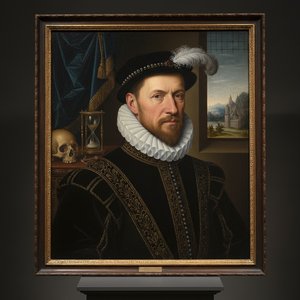
Count Philip

Experience the rich Northern Renaissance portrait of Count Philip by Hans Baldung, featuring masterful chiaroscuro and vibrant detail; own this masterpiece today.

Hans Baldung (1485-1545): Saksan renessanssimaalari, tunnettu synkistä kuvistaan, noituuden ja kuoleman teemoista sekä Albrecht Dürerin vaikutuksesta. Uppoutu kiehtovaan taiteeseen!

Käsinmaalattu öljyvärinen jäljennös

Käsinmaalattu öljyväri kankaalle haluamassasi koossa ja kehyksissä, taiteilijoidemme valmistamana tilauksesta. ( Vaihda tulosteeseen Siirry digitaaliseen kuvaan)

Corner sample of the P118B picture frame: valettu polystyreeni, 5 cm wide and 3 cm thick
P118B €10
Corner sample of the P118H picture frame: valettu polystyreeni, 5 cm wide and 3 cm thick
P118H €10
Corner sample of the P118W picture frame: valettu polystyreeni, 5 cm wide and 3 cm thick
P118W €10
Corner sample of the P438Z picture frame: valettu polystyreeni, 5.5 cm wide and 3.5 cm thick
P438Z €10
Corner sample of the P508JH picture frame: valettu polystyreeni, 7 cm wide and 3.5 cm thick
P508JH €12
Corner sample of the P508YH picture frame: valettu polystyreeni, 7 cm wide and 3.5 cm thick
P508YH €12
Corner sample of the P805H picture frame: valettu polystyreeni, 5 cm wide and 3.5 cm thick
P805H €10
Corner sample of the P805Z picture frame: valettu polystyreeni, 5 cm wide and 3.5 cm thick
P805Z €10
Corner sample of the P919BZ picture frame: valettu polystyreeni, 7 cm wide and 3.5 cm thick
P919BZ €10
Corner sample of the P919G picture frame: valettu polystyreeni, 7 cm wide and 3.5 cm thick
P919G €10
Corner sample of the P919XJ picture frame: valettu polystyreeni, 7 cm wide and 3.5 cm thick
P919XJ €10
Corner sample of the P959ZH picture frame: valettu polystyreeni, 5 cm wide and 3 cm thick
P959ZH €10
Corner sample of the P968JZ picture frame: valettu polystyreeni, 6 cm wide and 4 cm thick
P968JZ €12
Corner sample of the W106C picture frame: massiivipuu, 5 cm wide and 3 cm thick
W106C €8
Corner sample of the W218G picture frame: massiivipuu, 5 cm wide and 3 cm thick
W218G €10
Corner sample of the W218JH picture frame: massiivipuu, 5 cm wide and 3 cm thick
W218JH €8
Corner sample of the W218Y picture frame: massiivipuu, 5 cm wide and 3 cm thick
W218Y €10
Corner sample of the W307PJ picture frame: massiivipuu, 6 cm wide and 3 cm thick
W307PJ €10
Corner sample of the W316G picture frame: massiivipuu, 6 cm wide and 3 cm thick
W316G €10
Corner sample of the W316PJ picture frame: massiivipuu, 6 cm wide and 3 cm thick
W316PJ €8
Corner sample of the W316Y picture frame: massiivipuu, 6 cm wide and 3 cm thick
W316Y €10
Corner sample of the W398PJ picture frame: massiivipuu, 5 cm wide and 3 cm thick
W398PJ €8
Corner sample of the W4111J picture frame: massiivipuu, 6.5 cm wide and 3.5 cm thick
W4111J €10
Corner sample of the W500HY picture frame: massiivipuu, 7 cm wide and 5 cm thick
W500HY €15
Corner sample of the W500JH picture frame: massiivipuu, 7 cm wide and 5 cm thick
W500JH €15
Corner sample of the W692G picture frame: massiivipuu, 8 cm wide and 4 cm thick
W692G €12
Corner sample of the W849H picture frame: massiivipuu, 5 cm wide and 3 cm thick
W849H €8
Corner sample of the W940BG picture frame: massiivipuu, 7.5 cm wide and 4.5 cm thick
W940BG €15
Corner sample of the W953PJ picture frame: massiivipuu, 6 cm wide and 3.5 cm thick
W953PJ €8

Vakiokoko
mittatilaustyö
CM
INCH

Valitse valmiista mitoistamme sellaiset, jotka vastaavat teoksen alkuperäisiä mittasuhteita.

leveys
korkeus

Kirjoita tarvitsemasi leveys ja korkeus, jotta teos sopii kehyskehyksiisi tai seinällesi. Koska kyseessä on käsinmaalattu teos, taiteilija voi maalata hieman enemmän kuvan ympärille tai rajata sitä hieman, jos haluat eri muotoisen koon — valinta on sinun. Lähetämme sinulle digitaalisen mallikuvan hyväksyttäväksi ennen kuin maalaus alkaa. Tällä sivulla näkyvä kuva ei vastaa lopullista tulosta — vain mallikuva näyttää sen.

Esimerkkejä muokattavista asioista: Vaihda kasvot asiakkaan omaan valokuvaan; Lisää lemmikki (esim. korvaa kissa koiralla); Lisää taustalle piilotettu viesti; Muuta taustan maisemaa tai elementtejä.
Tilauksen jälkeen WahooArt.com -tiimi lähettää asiakkaalle sähköpostitse ohjeet ja esikatselukuvan.

Maailmanlaajuinen toimitus () 3–4 viikossa tavallisen 5 viikon sijaan. (22 lokakuu). Laadusta ei tingitä.

Ilmainen pikatoimitus ympäri maailman
Korkealaatuinen pellavakangas
Kattava kuljetusvakuutus
Tulliveron palautustakuu
Takuu täydellisestä värien vastaavuudesta
100 päivän palautusoikeus valmistusvirhetapauksissa
100% rahat takaisin -takuu
Määräalennus saatavilla

Kokonaishinta

€ 239

Count Philip

Reproduktiotapa

Replikaatin koko

-

Kokonaishinta

€ 239

Pikaista tietoa

  • Year: 1517
  • Medium: Oil on wood
  • Artist: Hans Baldung
  • Notable elements or techniques: Chiaroscuro, rich colors
  • Title: Count Philip

Taidevisakysely

Jokaisessa kysymyksessä on vain yksi oikea vastaus.

Kysymys 1:
What is the title of the artwork being described?
Kysymys 2:
In what year was Hans Baldung's 'Count Philip' painting created?
Kysymys 3:
Which artistic period does the 'Count Philip' painting belong to?
Kysymys 4:
What medium was the 'Count Philip' painting executed in?
Kysymys 5:
A key artistic technique visible in the painting, used to create depth through light and shadow, is known as:

The Regal Gaze of Count Philip

To stand before Hans Baldung's depiction of Count Philip is to encounter not merely a portrait, but a carefully constructed moment of aristocratic power frozen in time. This oil on wood painting, dating from 1517, immediately commands attention with its rich materiality and the palpable sense of authority emanating from the subject. The man, adorned in sumptuous fabrics—most notably the luxurious fur lining of his coat—gazes out at the viewer with an unnerving directness. His hand delicately supports his chin, a gesture that speaks volumes about contemplation, status, and perhaps a subtle, knowing amusement hinted at by the slight curve of his mouth. It is a masterpiece steeped in the gravitas of the Northern Renaissance.

Mastery of Light and Shadow

Baldung’s technical brilliance shines through every visible brushstroke. He employs chiaroscuro with breathtaking skill; light does not simply illuminate Count Philip, it sculpts him. Deep shadows pool around the folds of his magnificent red coat and beneath the heavy texture of his hat, lending an almost three-dimensional volume to the composition. This masterful handling of illumination serves to elevate the subject beyond a mere likeness, transforming him into an icon of Renaissance nobility. The vibrant interplay between the deep blues, rich reds, and the luminous highlights on his beard speaks to an artist deeply versed in both pigment and psychological depth.

A Window into Elite Life

Beyond its aesthetic appeal, Count Philip serves as a vital historical document. As a portrait of Count Palatine Philip the Warlike, it offers invaluable insight into the rigid social hierarchies and opulent tastes of Renaissance Europe. The attire itself—the cut of the coat, the quality of the fur, the very bearing of the man—are markers of immense wealth and entrenched power within the powerful Palatine dynasty. Owning a reproduction of this work allows one to connect intimately with the material culture and the elevated concerns of the European elite during that transformative era.

Echoes of the Northern Renaissance Spirit

Hans Baldung himself was an enigmatic figure, bridging scholarly pursuits with profound artistic expression. His style embodies the intellectual ferment of the German Renaissance—a period characterized by a revival of classical ideals tempered by deep regional character. The painting captures this tension: the formality of portraiture meeting the expressive intensity characteristic of Northern European art. It is a work that feels both meticulously controlled and emotionally charged, inviting the modern viewer to ponder the weight of status and the enduring nature of human ambition.

Bringing Renaissance Grandeur Home

For those seeking to infuse a space with the depth of history and the richness of Old Master painting, this reproduction offers an unparalleled opportunity. The combination of its striking composition, the palpable texture suggested by Baldung’s technique, and its compelling narrative presence ensures that it will become a focal point—a conversation starter that whispers tales of 16th-century courts and artistic genius.

Kysymykset ja vastaukset

Miten teoksen "Count Philip" tyyli suhteutuu sen tekijän aikakauteen?

Teoksessa Hans Baldung Grien:n "Count Philip" Northern Renaissance-suuntaus ja Renessanssi-aikakausi kohtaavat.

Mikä selittää teoksen Hans Baldung Grien:n "Count Philip" tekijänoikeustilanteen?

Teoksen "Count Philip" tekijänoikeustilanne - tekijänoikeusvapaa – sen tekijänoikeussuoja on päättynyt - perustuu taiteilijan kuolinvuoteen 1545.

Minkälaista tunnetta Northern Renaissance-tyylinen "Count Philip" välittää?

Northern Renaissance-suuntauksen sisällä teos "Count Philip" on tallennettu Powerful sävyllä.


Taiteilijan elämäkerta

A Swabian Enigma: The Life and Early Influences of Hans Baldung Grien

Hans Baldung Grien (n. 1485 – syyskuu 1545) oli saksalainen renessanssiajan taidemaalari. Baldung oli Saksan uskonpuhdistusajan suurimpia mestareita Matthias Grünewaldin ohella. Baldung teki alttaritauluja ja muotokuvia, joissa on dramaattista ilmaisua. Baldungin omalaatuinen mielikuvitus näkyy hyvin synkissä ja usein aistillisia aiheita kuvaavissa puupiirroksissa. Baldung syntyi Schwäbisch Gmündissä, muutti 1492 Strasbourgiin ja opiskeli vuosina 1503–1507 Albrecht Dürerin johdolla Münchenissä. Lisänimen Grien hän sai oletettavasti juuri siellä. Freiburg im Breisgaussa vietetyn ajanjakson jälkeen Baldung palasi vuonna 1517 Strasbourgiin, jonka valtuuston jäsenenä hän kuoli vuonna 1545.
  • Early Life and Family: Born into a prosperous family of doctors and lawyers who had migrated to Strasbourg from Swabia in the 1490s, Baldung’s upbringing was markedly different from that of many Renaissance artists who followed established family crafts. His father, Johann Baldung, a respected jurist serving the Bishopric of Strasbourg, initially envisioned a similar path for his son – university studies. However, young Hans chose the brush and burin, embarking on an artistic journey that would distinguish him as one of the most distinctive figures of the German Renaissance. This decision wasn’t a rejection of his upbringing but rather a redirection of intellectual curiosity—a characteristic that permeated his entire oeuvre.
  • Early Training: Baldung's early training commenced around 1500 in the Upper Rhineland with an artist from Strasbourg, providing him with a foundational understanding of draftsmanship and composition. This initial period instilled within him a solid base for the rigorous artistic environment that awaited him in Nuremberg.

Under Dürer’s Wing and Forging an Individual Style

The pivotal moment in Baldung's development arrived in 1503 when he became a workshop apprentice to Albrecht Dürer in Nuremberg. This period proved profoundly formative, exposing him to the meticulous detail, intellectual rigor, and innovative printmaking techniques that defined Dürer’s style. The two artists developed a close relationship; Baldung even managed Dürer's workshop during his master’s sojourn to Venice. However, while deeply influenced by Dürer—evident in early works showcasing precise draftsmanship and Northern realism—Baldung quickly began to forge his own artistic identity. He absorbed the lessons of the Renaissance masters but infused them with a uniquely German sensibility, characterized by expressive color, imaginative compositions, and an increasingly unsettling psychological depth. This divergence from Dürer’s more classical approach would become a hallmark of Baldung's mature style. His time in Venice, overseeing Dürer’s affairs, also exposed him to the burgeoning Italian Renaissance art scene, broadening his artistic horizons and subtly influencing his palette and compositional choices. He returned from Italy with a heightened sense of color and a willingness to experiment with spatial arrangements that set him apart from his contemporaries.
  • Dürer’s Influence: Baldung's early works demonstrate a clear debt to Dürer, particularly in terms of draftsmanship and compositional structure.
  • Emergence of a Distinct Style: Despite the influence of his master, Baldung quickly developed a distinctive style characterized by dramatic lighting, unsettling imagery, and a focus on psychological intensity.

A Master of Many Mediums: Themes and Techniques

Hans Baldung Grien was an artist of remarkable versatility, proficient in painting, printmaking—particularly woodcuts and engravings—drawing, tapestry design, and even stained glass work. His paintings often feature small-scale works brimming with puzzling allegories and mythological narratives, rendered with a vibrant palette and a distinctive sense of spatial ambiguity. He excelled at portraiture, capturing the likenesses of his patrons with both realism and psychological insight. However, it is perhaps for his woodcuts that Baldung is most widely recognized today. These prints are characterized by their dramatic compositions, intricate detail, and often macabre subject matter. A recurring theme throughout his work is a fascination with witchcraft, death, and the supernatural—a reflection of the anxieties and beliefs prevalent in 16th-century Germany. His depictions of witches are particularly striking, portraying them not as stereotypical hags but as complex, even alluring figures, embodying both fear and fascination. *The Bewitched Groom*, for example, is a chillingly evocative work that encapsulates this preoccupation with the darker side of human experience. Baldung’s technique in woodcut was masterful; he exploited the medium's capacity for stark contrasts and intricate detail to create images that were both visually arresting and psychologically unsettling.
  • Painting: Baldung’s paintings are known for their dramatic lighting, expressive color palettes, and often allegorical or mythological subjects.
  • Printmaking: His woodcuts and engravings are characterized by intricate detail, dynamic compositions, and frequently macabre themes.

Reformation Currents and Lasting Legacy

Baldung’s career unfolded during a period of immense religious and political upheaval, marked by the rise of the Protestant Reformation. While not overtly aligned with any particular faction, his work often reflects the changing spiritual landscape of Germany. His monumental high altar for the city of Münster, completed in 1531, is a testament to this engagement, showcasing support for the reformation movement through its iconography and stylistic choices. In 1545, Baldung died in Strasbourg, leaving behind a body of work that continues to captivate and intrigue viewers today. His influence can be seen in the works of later German artists, and his unique blend of Renaissance technique, Northern expressionism, and allegorical complexity secures his place as a significant figure in art history. He remains an artist whose work invites contemplation, challenging us to confront the darker aspects of human nature and the mysteries of the unseen world. His exploration of themes like witchcraft and mortality continues to resonate with contemporary audiences, making him a timeless and compelling figure in the pantheon of Renaissance masters.
  • Religious Context: Baldung’s work reflects the anxieties and uncertainties of the Reformation era.
  • Lasting Influence: His distinctive style has influenced subsequent generations of German artists.

Museums and Collections

Baldung’s works can be found in prominent museums across Europe and North America:
  • Gemäldegalerie Alte Meister, Dresden, Germany: This renowned museum houses a significant collection of European paintings from the 15th to the 18th centuries, providing valuable context for understanding Baldung’s artistic milieu.
  • National Gallery of Art, Washington D.C.: The NGA holds several important woodcuts and drawings by Baldung, offering insights into his printmaking techniques and artistic process.
  • The J. Paul Getty Museum, Los Angeles: Features works that showcase the breadth of Baldung’s talent.
  • Kunstmuseum Basel, Switzerland: A museum with a rich collection spanning various periods, offering a broader understanding of Renaissance art in Europe.
These institutions provide opportunities to experience firsthand the captivating artistry and enduring legacy of Hans Baldung Grien.
Hans Baldung Grien

Hans Baldung Grien

1485 - 1545 , Saksa

Tietoa taiteilijasta

  • Artistic Movement Or Style: Renessanssi, Mannerismi
  • Artists Or Movements Influenced By This Artist: ['Myöhemmät saksalaiset taiteilijat']
  • Artists Who Influenced This Artist: ['Albrecht Dürer']
  • Date Of Birth: c. 1485
  • Date Of Death: 1545
  • Full Name: Hans Baldung Grien
  • Nationality: Saksa
  • Notable Artworks:
    • Bewitched Groom
    • Kolme naisen ikää
  • Place Of Birth: Schwäbisch Gmünd, Saksa
Tutustu teoksiin, jotka on järjestetty aiheiden, tyylien ja ominaisuuksien mukaan.