Käsinmaalattu öljyväri kankaalle haluamassasi koossa ja kehyksissä, taiteilijoidemme valmistamana tilauksesta. ( Vaihda tulosteeseen Siirry digitaaliseen kuvaan)





























Valitse valmiista mitoistamme sellaiset, jotka vastaavat teoksen alkuperäisiä mittasuhteita.

Voit syöttää omat mitat sopimaan tiettyyn kehykseen tai tilaan. Jos valitsemasi koko ei vastaa alkuperäisen kuvan mittasuhteita, rajaamme taideteoksen tai jatkamme maalausta käsin maalatuilla elementeillä. Digitaalinen esikatselu lähetetään hyväksyttäväksi ennen tuotannon aloittamista.
Huomioithan, että näytöllä oleva esikatselu ei vastaa todellista rajausta tai jatkamista. Vain digitaalinen mallikuva näyttää lopullisen sommittelun tarkasti.
Vaikka mittatilaustyöt ovat mahdollisia, suosittelemme valitsemaan mitan ennalta määritetystä listasta alkuperäisten mittasuhteiden säilyttämiseksi.
Maailmanlaajuinen toimitus () 3–4 viikossa tavallisen 5 viikon sijaan. (21 syyskuu). Laadusta ei tingitä.


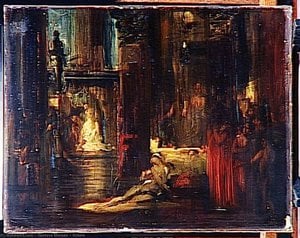
Moïse exposé sur le Nil
Replikaatin koko
Gustave Moreau’s “Moïse exposé sur le Nil” (Moses Exposed on the Nile) is not merely a depiction of a biblical narrative; it's an immersion into a world of potent symbolism and dreamlike atmosphere, characteristic of the artist’s profound engagement with the tenets of Symbolism. Painted during a period of intense intellectual and artistic ferment in late 19th-century Paris, this work exemplifies Moreau’s deliberate rejection of Realist and Impressionistic trends, opting instead to delve into the realms of myth, religion, and the subconscious. The painting's power resides not in photographic accuracy but in its ability to evoke a deeply felt emotional response through carefully constructed imagery and an almost hallucinatory quality.
Moreau’s artistic vision was deeply rooted in the Symbolist movement, a reaction against the perceived materialism and superficiality of academic art. He sought to represent not what he *saw*, but what he *felt* – the spiritual and emotional resonance of biblical stories. The figures within “Moïse exposé sur le Nil” are rendered with an almost classical grace, yet their expressions are ambiguous, hinting at a deeper psychological complexity. The horse in the background, a recurring motif in Moreau’s work, symbolizes power, chaos, and perhaps even the destructive forces of the world, providing a stark contrast to the serene image of the infant Moses.
Created between 1890 and 1894, “Moïse exposé sur le Nil” reflects the broader cultural anxieties of the late 19th century – a period marked by rapid industrialization, social upheaval, and a growing interest in psychology and spirituality. Moreau’s work can be seen as an attempt to grapple with these complex issues through the lens of myth and symbolism. His meticulous research into ancient Egyptian art and religion informed his artistic choices, adding another layer of meaning to the painting's already rich iconography.
Artist Biography Snippet: Gustave Moreau (1826-1898) was a pivotal figure in the Symbolist movement, known for his evocative depictions of mythological and religious subjects. His work profoundly influenced subsequent generations of artists, including Maurice Denis and Odilon Redon."Moïse exposé sur le Nil" transcends a simple biblical illustration; it’s an intensely emotional experience. The painting's evocative atmosphere, combined with Moreau’s masterful technique, creates a powerful sense of wonder and mystery. A hand-painted reproduction offers the opportunity to bring this extraordinary artwork into your home or office, adding a touch of timeless beauty and intellectual depth to any space. This piece is not just decoration; it’s an investment in art history and a testament to Gustave Moreau's visionary genius.

1826 - 1898 , Ranska

Master the nuances of Giclée printing with our expert guide. Discover how pigment-based inks and museum-grade substrates create fade-resistant, high-fidelity art reproductions designed for discerning collectors seeking unparalleled quality and longevity.
Transform your digital artistry into a prestigious global brand with WahooArt’s premium Giclée prints. Experience museum-quality archival excellence and seamless on-demand fulfillment designed for the modern creative entrepreneur seeking to build a lasting artistic legacy.

 Katso seinällä
 Lähetä
 Jaa
Jaa
 Tarkemmat tiedot
 Guide
Guide

 Lataa kuva
 Samanlaisia kohteita
 Röntgenkuvaus
 Diaesitys
 Tilastot
 Lue lisää







 Lasivaihtoehto on saatavilla vain alle 110 cm kokoisille teoksille