

 Oil On CopperBaroque Landscape
 24.0 x 19.0 cm
 Museo del Prado
Käsinmaalattu öljyväri kankaalle haluamassasi koossa ja kehyksissä, taiteilijoidemme valmistamana tilauksesta. ( Vaihda tulosteeseen Siirry digitaaliseen kuvaan)





























Valitse valmiista mitoistamme sellaiset, jotka vastaavat teoksen alkuperäisiä mittasuhteita.

Kirjoita tarvitsemasi leveys ja korkeus, jotta teos sopii kehyskehyksiisi tai seinällesi. Koska kyseessä on käsinmaalattu teos, taiteilija voi maalata hieman enemmän kuvan ympärille tai rajata sitä hieman, jos haluat eri muotoisen koon — valinta on sinun. Lähetämme sinulle digitaalisen mallikuvan hyväksyttäväksi ennen kuin maalaus alkaa. Tällä sivulla näkyvä kuva ei vastaa lopullista tulosta — vain mallikuva näyttää sen.
Maailmanlaajuinen toimitus () 3–4 viikossa tavallisen 5 viikon sijaan. (15 lokakuu). Laadusta ei tingitä.
Landscape
Replikaatin koko
Gillis van Coninxloo’s “Landscape,” a captivating oil on copper panel, transports the viewer to a realm of serene contemplation within a meticulously rendered Flemish forest. Painted around 1598, this work stands as a pivotal example of the artist’s mastery in capturing the atmospheric depth and intricate detail characteristic of the early 16th-century Golden Age. More than just a depiction of nature, it's an invitation to lose oneself within a carefully constructed world of light, shadow, and subtle symbolism – a testament to van Coninxloo’s profound understanding of both landscape painting and the human experience.
The scene unfolds before us with remarkable realism. A dense thicket of trees dominates the foreground, their leaves rendered with an almost obsessive attention to detail; each vein, each curl of bark, is painstakingly observed and faithfully reproduced. These trees aren’t merely static elements; they create a palpable sense of depth, drawing the eye into the heart of the forest. Beyond them, a modest collection of buildings – likely farmhouses or small dwellings – nestles amongst the foliage, suggesting a quiet rural existence. The architecture is understated yet solid, reflecting a pragmatic approach to building within this natural setting. In the distance, a formidable castle rises above the horizon, its imposing silhouette anchoring the composition and hinting at notions of power, protection, and perhaps even isolation.
Van Coninxloo’s technical skill is immediately apparent in his masterful use of oil on copper. This medium allowed for a remarkable level of detail and luminosity – the surface retains a subtle sheen that enhances the richness of the colors and creates an almost three-dimensional effect. The artist employs a technique known as “chiaroscuro,” skillfully manipulating light and shadow to sculpt the forms and create a dramatic sense of depth. Notice how the sunlight filters through the trees, dappling the ground in pools of brightness while simultaneously casting deep shadows beneath the foliage. This interplay of light and dark isn’t merely decorative; it imbues the scene with a palpable atmosphere – a feeling of both tranquility and mystery.
Stylistically, “Landscape” aligns itself with the Flemish tradition of landscape painting, yet van Coninxloo departs from some of the more rigid conventions of the time. While influenced by the Northern Mannerist style—characterized by its emphasis on detail and symbolic imagery—he introduces a greater sense of naturalism and emotional resonance. The composition is carefully balanced, creating a harmonious whole that invites contemplation. The muted color palette – dominated by greens, browns, and grays – contributes to the overall feeling of serenity and timelessness.
To fully appreciate “Landscape,” it’s important to consider its historical context. Painted during a period of religious upheaval and political instability in the Netherlands, this work reflects both the anxieties and the enduring values of the era. The castle, for instance, can be interpreted as a symbol of authority – whether representing secular power or divine protection. The humble dwellings nestled within the forest suggest a connection to the land and a reverence for rural life. Furthermore, the dense woodland itself has long been associated with themes of solitude, introspection, and the spiritual realm.
Interestingly, this painting was originally housed in the Museo del Prado in Madrid, Spain, a testament to its enduring appeal across national boundaries. The artist’s biography reveals a fascinating journey – from Antwerp to Germany and eventually Amsterdam—reflecting the shifting political landscape of the time. His work served as a bridge between artistic styles, incorporating elements of Mannerism while embracing the burgeoning realism of the Dutch Golden Age.
Reproductions of “Landscape” capture only a fraction of its original impact. The subtle nuances of light, texture, and atmosphere are difficult to replicate fully, but WahooArt’s hand-painted reproductions strive to honor the artist's vision with remarkable fidelity. This piece offers an exceptional opportunity for interior designers seeking to evoke a sense of tranquility and connection to nature – imagine it adorning a study or a living room, providing a focal point that invites contemplation. Collectors will find “Landscape” to be a valuable addition to any art collection, representing a significant moment in the history of Flemish landscape painting.
For further exploration, we encourage you to visit the linked resources:
Teoksella "Landscape" on lisätyn todellisuuden esikatselu: teoksen AR-esikatselu -sivu näyttää sen omassa tilassasi yhteensopivalla laitteella.
Alkuperäinen Gillis Van Coninxloo:n "Landscape" on Oil On Copper-teos, jonka mitat ovat 24 x 19 cm. Tekniikka ja koko kuvaavat alkuperäistä teosta.
Baroque Landscape-suuntauksen sisällä teoksella "Landscape" on Recognized suosio.

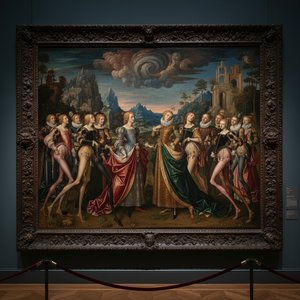
Explore the dramatic evolution of Northern Mannerism. Discover how masters like Bosch and Grünewald transitioned from Renaissance harmony to profound, elegant distortion through an expert analysis of symbolism, emotional intensity, and artistic innovation.

 Katso seinällä
 Lähetä
 Jaa
Jaa
 Tarkemmat tiedot
 Opas
Opas

 Lataa kuva
 Samanlaisia kohteita
 Röntgenkuvaus
 Diaesitys
 Tilastot
 Lue lisää









 Lasivaihtoehto on saatavilla vain alle 110 cm kokoisille teoksille


