Katso seinällä Esikatsele AR-tilassa Vaihda tulosteeseen Tilaa käsinmaalattu jäljennös Lähetä
Tarkemmat tiedot Opas Lisää suosikkeihin Lataa kuva Samanlaisia kohteita Röntgenkuvaus Diaesitys Tilastot

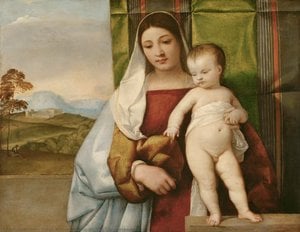
The Rest on the Flight into Egypt

Gerard David’s serene ‘The Rest on the Flight into Egypt’ captures the tender intimacy of Mary and Jesus amidst a luminous Flemish landscape—a masterpiece from 1510 showcasing masterful detail and spiritual contemplation. Explore this iconic artwork and bring its beauty home.

"meta_description": "Gerard David (1460-1523) oli merkittävä renessanssin aikainen flaamilaismainen taidemaalari, tunnettu kirkollisista maalauksistaan ja innovatiivisista maisemista. Hänen tyylinsä yhdistää idän ja lännen vaikutteita."

Osta korkearesoluutioinen, parannettu digitaalikuva, joka on laadultaan huomattavasti parempi kuin verkkosivuston esikatselu.

Jokainen tiedosto valmistellaan huolellisesti omien asiantuntijoidemme toimesta käyttäen edistyneitä työkaluja ja ammattitaitoista manuaalista retusointia. Varmistamme, että jokaisessa kuvassa on poikkeuksellinen selkeys, tarkka värintoisto ja hienovaraiset yksityiskohdat.

Lopputiedosto toimitetaan sähköpostitse 72 tunnin kuluessa, ja se on optimoitu välittömään käyttöön ammattimaisissa, toimituksellisissa ja painoympäristöissä. Laatu on sama, johon huipputason suunnittelustudiot, kustantajat ja galleriat luottavat.

Digitaalinen kuva

Lataa korkearesoluutioinen tiedosto henkilökohtaiseen näyttelyyn, tulostamiseen ja luoviin projekteihin. ( Vaihda tulosteeseen Tilaa käsinmaalattu jäljennös)

Kokonaishinta

$ 24,90

Sisältyy jokaiseen digitaalisen kuvan tilaukseen

Asiantunteva digitaalinen toimitus, laatu taattu

Kun valitset WahooArt.com-palvelun, et saa vain kuvaa – saat ammattimaisesti viimeistellyn digitaalisen taideteoksen, joka on luotu tarkkuudella ja jonka takaa tulee tyytyväisyystakuu. Tässä on kaikki, mitä tilauksesi sisältää, automaattisesti:

shipping_icon
Nopea sähköpostitoimitus

Saat korkearesoluutioisen digitaalisen kuvatiedostosi sähköpostiisi 72 tunnin kuluessa tilauksesta – valmiina käytettäväksi välittömästi.

canvas_icon
Tekoälyllä optimoitu digitaalinen tiedosto

Teoksesi on optimoitu ammattimaisesti edistyneiden tekoälytyökalujen ja manuaalisen jälkikäsittelyn avulla, mikä takaa maksimaalisen yksityiskohtaisuuden, selkeyden ja väritarkkuuden.

insurance_icon
Ilmainen elinikäinen uudelleenlähetys

Oletko vahingossa poistanut tai kadottanut tiedostosi? Ei hätää – lähetämme sen sinulle uudelleen milloin tahansa täysin maksutta.

tax_icon
Ei tuontimaksuja – koskaan

Nauti taiteestasi välittömästi ilman tullimaksuja, veroja tai toimituskuluja – digitaaliset lataukset ovat aina verovapaita.

color_icon
Värintoiston tarkkuustakuu

Varmistamme, että digitaalinen kuvasi vastaa alkuperäisiä värejä mahdollisimman tarkasti käyttämällä ammattilaistason työkaluja ja värinhallintaa.

return_icon
100 päivän tyytyväisyystakuu

Jos et ole tyytyväinen digitaaliseen kuvaasi, muokkaamme sitä tai palautamme 100% hinnan 100 päivän kuluessa – kysymystä ei esitetä.

guarantee_icon
100% Rahat takaisin -takuu

Et ole tyytyväinen? Saat täyden hyvityksen 100 päivän kuluessa digitaalisen tiedostosi vastaanottamisesta – kysymystä ei esitetä.

discount_icon
Suurtilaaja-alennukset

Osta 3 kuvaa, säästä 10% - Osta 5, säästä 15% - Osta 10+, säästä 20%. Erinomainen valinta luoviin projekteihin, gallerioille ja toimistoille.

Pikaista tietoa

  • Influences: Medieval Art
  • Medium: Oil paint
  • Movement: Early Netherlandish Renaissance
  • Artist: Gerard David
  • Notable elements or techniques: Detailed depiction of figures; Use of light and shadow
  • Year: 1510
  • Subject or theme: Biblical Narrative

Taidevisakysely

Jokaisessa kysymyksessä on vain yksi oikea vastaus.

Kysymys 1:
What is the primary subject matter of ‘The Rest on the Flight into Egypt’?
Kysymys 2:
What color dominates the background landscape in the painting?
Kysymys 3:
Gerard David was a prominent figure in which artistic center during the Renaissance?
Kysymys 4:
What type of material is used to depict the moss covering the rocky outcrop where Mary and Jesus sit?
Kysymys 5:
The painting incorporates elements of symbolism, notably the donkey and the tree. What might these symbols represent?

A Sanctuary of Serenity: The Soul of Gerard David’s Masterpiece

In the quietude of a rocky ledge, far from the reach of pursuing shadows, lies a moment of profound stillness captured by the Flemish master Gerard David. The Rest on the Flight into Egypt is not merely a depiction of a biblical journey; it is an intimate window into a sanctuary of familial devotion. As the Holy Family pauses during their perilous escape to Egypt, the painting invites us to witness a tender tableau where the weight of the world seems to lift, replaced by the soft light of divine protection. The Virgin Mary sits cradling the infant Jesus, her presence radiating a maternal grace that anchors the entire composition. Around them, the landscape breathes with life—a lush, meticulously detailed world where every mossy stone and fluttering bird contributes to a sense of eternal peace amidst earthly uncertainty.

The brilliance of this work lies in David’s mastery of the Flemish Primitive style, a technique that eschews the dramatic distortions of Mannerism in favor of an almost breathtaking naturalism. Through the expert application of oil glazes, David achieves a luminous depth that makes the textures of the scene feel tangible to the touch. One can almost sense the coolness of the damp stone and the delicate softness of the fabric draped around Mary. This layering of translucent pigments allows light to penetrate the surface, creating an inner glow that illuminates the faces of the figures with a gentle, spiritual radiance. It is this technical precision—the ability to render the minute details of foliage and the subtle nuances of expression—that transforms a religious narrative into a living, breathing reality.

Symbolism and the Language of Devotion

Every element within this square composition serves as a silent messenger, enriching the viewer's spiritual experience. The birds perched near the Holy Family are far more than mere ornaments; they represent peace and the presence of divine grace, echoing the celestial announcements of Jesus’ birth. Even the humble donkey, resting nearby, acts as a symbol of pastoral simplicity and the profound connection between the sacred and the natural world. A basket placed within the scene hints at the necessity of provision and the quiet providence that sustains the family through their exile. Through these subtle symbols, David weaves a complex tapestry of meaning that rewards deep contemplation, making the painting an ideal centerpiece for those who appreciate art that speaks in whispers rather than shouts.

For the discerning collector or interior designer, this reproduction offers more than just aesthetic beauty; it provides an emotional anchor for any space. The painting’s historical context—rooted in the humanist ideals of the High Renaissance in Bruges—brings a sense of intellectual and cultural depth to a room. It is a piece that commands attention through its quiet strength, offering a meditative focal point that can transform a modern interior into a gallery of timeless reflection. To possess such a work is to invite a moment of frozen time into one's home, a permanent reminder of the beauty found in resilience, faith, and the enduring power of love.


Taiteilijan elämäkerta

A Master of Flemish Light: The Enigmatic World of Gerard David

Gerard David, a name that resonates with the brilliance of early Netherlandish painting, remains an artist shrouded in intriguing mystery. Born around 1460 in Oudewater, Netherlands, his life story is pieced together from fragmented archival records and the eloquent testimony of his art. Unlike some contemporaries whose lives are richly documented, David’s personal narrative is sparse, allowing his paintings to speak volumes where biographical details fall silent. What is known suggests a remarkably successful career, likely managing workshops in both Antwerp and Bruges – centers of artistic innovation during the Renaissance. His reputation experienced an ebb in the 17th century, only to be gloriously resurrected by 19th-century art historians who recognized his unique contributions to the Northern Renaissance. He was inducted as a free master into the Corporation of Imagemakers and Saddlers in Bruges in 1484, marking a pivotal moment in his ascent. His later involvement with the Antwerp guild in 1515 further solidifies his standing within the artistic community.

Formative Influences and Artistic Development

David’s artistic journey began under influences that shaped the very foundation of his style. Early works reveal a clear debt to painters like Jacob Janszoon, Dieric Bouts, and Geertgen tot Sint Jans – masters who instilled in him a meticulous attention to detail and a sensitivity to religious narrative. It is believed he spent time in Haarlem absorbing these lessons before relocating to Bruges, a vibrant hub of artistic exchange attracting talent from across Europe. Here, David encountered the masterpieces of Jan van Eyck, Rogier van der Weyden, and Hans Memling, absorbing their techniques while forging his own distinct path. He didn’t merely imitate; he synthesized these influences into something uniquely his own – a style characterized by luminous color, serene compositions, and an increasingly sophisticated understanding of landscape. His early paintings demonstrate this evolution, moving from the doll-like figures reminiscent of Haarlem traditions towards more sculptural forms grounded in their environment. Consider *Christ Nailed to the Cross*; it’s not simply a depiction of suffering but a study in human anatomy and emotional expression, reflecting Bouts' influence while retaining David’s own distinctive color palette. This transition is visible in works like *The Marriage of St. Catherine*, where the influence of Bouts’ spatial construction blends with David’s emerging coloristic sensibility.

Innovation in Landscape and Religious Narrative

Gerard David’s artistic signature lies in his innovative approach to both landscape and religious subject matter. He wasn't simply depicting backgrounds; he was creating immersive environments that enhanced the emotional resonance of his scenes. His landscapes are not merely decorative, but integral components of the narrative, often imbued with symbolic meaning. This fascination with natural settings – dense forests, rolling hills, expansive skies – set him apart from many of his contemporaries and foreshadowed the development of landscape painting as an independent genre. Consider *View in a Forest*, outer wing of a triptych; it’s not simply a backdrop but a world unto itself, rendered with meticulous detail and atmospheric perspective. Within his religious works, David demonstrated a remarkable ability to convey both profound spirituality and human emotion. Paintings like *The Marriage of St. Catherine* exemplify this skill. The scene is rendered with exquisite detail, yet it's the subtle expressions on the figures’ faces – their piety, contemplation, or gentle joy – that truly captivate the viewer. He possessed a gift for imbuing his sacred subjects with a sense of quiet dignity and relatable humanity. The *Triptych of the Madonna Enthroned and Saints* in Genoa showcases this mastery, presenting a harmonious composition filled with vibrant color and delicate detail. His *Virgin Among the Virgins*, donated to the Carmelite nuns of Sion at Bruges, is another testament to his skill, featuring a self-portrait within the painting itself – a rare and intimate gesture from an artist of his time. This self-portrait, subtly integrated into the scene, speaks volumes about David’s confidence and artistic ambition.

Major Achievements and Artistic Style

David's most celebrated works include *The Marriage of St. Catherine*, renowned for its dramatic composition and emotional intensity; *The Adoration of the Magi*, a complex and richly detailed depiction of the biblical event; and *The Virgin Among the Virgins*, a groundbreaking painting that broke with traditional conventions by including a self-portrait within the scene. His style is characterized by several key elements: an exceptional command of color, creating luminous and atmospheric effects; a meticulous attention to detail, evident in his rendering of fabrics, textures, and facial features; and a masterful use of perspective, particularly in his landscapes. He was also one of the first Northern Renaissance painters to incorporate realistic details into his depictions of nature, moving beyond stylized representations towards more naturalistic portrayals. His work reflects a deep understanding of human psychology and emotion, as evidenced by the expressive faces and gestures of his figures. David’s ability to seamlessly blend religious symbolism with psychological realism cemented his place as one of the leading artists of his time.

Legacy and Enduring Influence

Though his fame waned for a period after his death in 1523, Gerard David’s influence on subsequent generations of artists is undeniable. His innovative use of color, his masterful handling of light and shadow, and his pioneering approach to landscape all left an indelible mark on the development of Flemish painting. He paved the way for artists who would further explore the expressive potential of natural settings, such as Jacob Patinir and Jacob van Ruisdael.
  • A Bridge Between Traditions: David successfully bridged the gap between the late medieval tradition and the emerging Renaissance style.
  • Influence on Landscape Painting: His detailed and atmospheric landscapes foreshadowed the development of landscape as a distinct genre.
  • Masterful Colorist: He was renowned for his vibrant palette and skillful use of color to create emotional impact.
Today, David’s works are celebrated in museums and collections around the world, including the Groeninge Museum in Bruges, which houses an impressive collection of his paintings. His art continues to inspire awe and admiration, offering a glimpse into the spiritual and artistic landscape of the Northern Renaissance. Exploring his oeuvre is not merely studying art history; it’s entering a world of luminous beauty, profound contemplation, and enduring human emotion – a testament to the genius of Gerard David, a master of Flemish light.

Exploring Further

  • WahooArt.com: Discover an extensive collection of Gerard David’s paintings, including *The Adoration of the Magi*.
  • View in a Forest: Explore this stunning Northern Renaissance landscape painting.
  • The Early Netherlandish Art Movement: Delve deeper into the artistic context of David’s work.
Gerard David

Gerard David

1450 - 1523 , Alankomaat

Pähkinänkuoressa

  • Artistic Movement Or Style: Varhinen Hollannin taide
  • Artists Or Movements Influenced By This Artist:
    • Jan van Eyck
    • Rogier van der Weyden
  • Artists Who Influenced This Artist:
    • Jacob Janszoon
    • Dieric Bouts
    • Geertgen tot Sint Jans
  • Date Of Birth: c. 1460
  • Date Of Death: 1523
  • Full Name: Gerard David
  • Nationality: Alankomainen
  • Notable Artworks:
    • Avioliitto Katriinan kanssa
    • Madonäytävä Pyhä Neitsyt
    • Metsänäkymä
  • Place Of Birth: Oudewater, Alankomaat