Osta korkearesoluutioinen, parannettu digitaalikuva, joka on laadultaan huomattavasti parempi kuin verkkosivuston esikatselu.
Jokainen tiedosto valmistellaan huolellisesti omien asiantuntijoidemme toimesta käyttäen edistyneitä työkaluja ja ammattitaitoista manuaalista retusointia. Varmistamme, että jokaisessa kuvassa on poikkeuksellinen selkeys, tarkka värintoisto ja hienovaraiset yksityiskohdat.
Lopputiedosto toimitetaan sähköpostitse 72 tunnin kuluessa, ja se on optimoitu välittömään käyttöön ammattimaisissa, toimituksellisissa ja painoympäristöissä. Laatu on sama, johon huipputason suunnittelustudiot, kustantajat ja galleriat luottavat.
Lataa korkearesoluutioinen tiedosto henkilökohtaiseen näyttelyyn, tulostamiseen ja luoviin projekteihin. ( Vaihda tulosteeseen Tilaa käsinmaalattu jäljennös)
Kun valitset WahooArt.com-palvelun, et saa vain kuvaa – saat ammattimaisesti viimeistellyn digitaalisen taideteoksen, joka on luotu tarkkuudella ja jonka takaa tulee tyytyväisyystakuu. Tässä on kaikki, mitä tilauksesi sisältää, automaattisesti:

Saat korkearesoluutioisen digitaalisen kuvatiedostosi sähköpostiisi 72 tunnin kuluessa tilauksesta – valmiina käytettäväksi välittömästi.

Teoksesi on optimoitu ammattimaisesti edistyneiden tekoälytyökalujen ja manuaalisen jälkikäsittelyn avulla, mikä takaa maksimaalisen yksityiskohtaisuuden, selkeyden ja väritarkkuuden.

Oletko vahingossa poistanut tai kadottanut tiedostosi? Ei hätää – lähetämme sen sinulle uudelleen milloin tahansa täysin maksutta.

Nauti taiteestasi välittömästi ilman tullimaksuja, veroja tai toimituskuluja – digitaaliset lataukset ovat aina verovapaita.

Varmistamme, että digitaalinen kuvasi vastaa alkuperäisiä värejä mahdollisimman tarkasti käyttämällä ammattilaistason työkaluja ja värinhallintaa.

Jos et ole tyytyväinen digitaaliseen kuvaasi, muokkaamme sitä tai palautamme 100% hinnan 100 päivän kuluessa – kysymystä ei esitetä.

Et ole tyytyväinen? Saat täyden hyvityksen 100 päivän kuluessa digitaalisen tiedostosi vastaanottamisesta – kysymystä ei esitetä.

Osta 3 kuvaa, säästä 10% - Osta 5, säästä 15% - Osta 10+, säästä 20%. Erinomainen valinta luoviin projekteihin, gallerioille ja toimistoille.
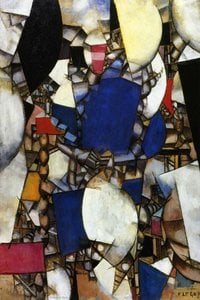
Fernand Léger's "The Men in the City," painted around 1916, is more than just a depiction of two figures; it’s a vibrant declaration of modernity itself. Emerging from the fertile artistic landscape of early 20th-century Paris, Léger was a key figure in bridging the gap between representational art and the burgeoning abstract movements. This work exemplifies his unique approach – a bold synthesis of Cubist fragmentation with an undeniable fascination for industrial forms and the dynamism of urban life. The painting immediately draws the eye to its geometric composition: the figures are rendered as blocky, almost machine-like shapes, their bodies simplified into angular planes that echo the structures surrounding them. This deliberate distortion wasn’t a rejection of realism but rather a new way of perceiving and representing the world – one shaped by the rise of industry and the increasingly dominant role of technology.
Léger's artistic journey began with a profound connection to his rural upbringing near Argentan, Normandy. This early exposure to the physicality of agricultural labor – the rhythms of the land, the textures of wood and stone – profoundly influenced his later work. He initially studied architecture, a discipline that instilled in him an appreciation for structure and form. However, it was his encounter with Post-Impressionist painters like Cézanne and Gauguin, coupled with the revolutionary ideas circulating within the Cubist movement, that truly ignited his artistic vision. Cubism, championed by Picasso and Braque, offered a radical new way of seeing – breaking down objects into their constituent parts and reassembling them in abstract compositions. Léger adopted this technique but infused it with his own distinctive vocabulary, prioritizing the visual impact of geometric shapes over strict representational accuracy.
Beyond its formal qualities, “The Men in the City” is rich in symbolic meaning. The two figures, rendered as almost identical blocks, could be interpreted as representing humanity itself – reduced to essential forms within the overwhelming context of the modern city. The umbrella held by one man becomes a poignant detail, suggesting protection and perhaps a yearning for refuge amidst the chaos of urban life. The inclusion of the bird adds an unexpected layer of symbolism; often associated with freedom and spirituality, it subtly contrasts with the rigid geometry of the scene, hinting at a desire for transcendence within a mechanized world. The overall atmosphere is one of quiet observation, inviting the viewer to contemplate their own place in this rapidly changing landscape.
Léger’s technique involved applying paint in thick, layered strokes, creating a tactile surface that emphasizes the three-dimensional quality of his forms. His color palette is deliberately restrained – primarily consisting of earthy tones like ochre, brown, and gray, punctuated by occasional bursts of vibrant blue and red. These bold colors aren't used for decorative effect but rather to accentuate the geometric shapes and create visual impact. The artist’s meticulous attention to detail—the precise rendering of each plane and angle—demonstrates a remarkable command of his medium and a deep understanding of the principles of Cubist composition. The result is a powerfully expressive work that captures both the beauty and the alienation of modern urban life.


1881 - 1955 , Ranska

 Katso seinällä
 Lähetä
 Jaa
Jaa
 Tarkemmat tiedot
 Opas
Opas

 Lataa kuva
 Samanlaisia kohteita
 Röntgenkuvaus
 Diaesitys
 Tilastot

 Lue lisää