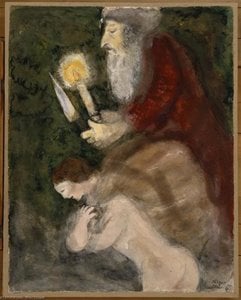
Osta korkearesoluutioinen, parannettu digitaalikuva, joka on laadultaan huomattavasti parempi kuin verkkosivuston esikatselu.
Jokainen tiedosto valmistellaan huolellisesti omien asiantuntijoidemme toimesta käyttäen edistyneitä työkaluja ja ammattitaitoista manuaalista retusointia. Varmistamme, että jokaisessa kuvassa on poikkeuksellinen selkeys, tarkka värintoisto ja hienovaraiset yksityiskohdat.
Lopputiedosto toimitetaan sähköpostitse 72 tunnin kuluessa, ja se on optimoitu välittömään käyttöön ammattimaisissa, toimituksellisissa ja painoympäristöissä. Laatu on sama, johon huipputason suunnittelustudiot, kustantajat ja galleriat luottavat.
Lataa korkearesoluutioinen tiedosto henkilökohtaiseen näyttelyyn, tulostamiseen ja luoviin projekteihin. ( Vaihda tulosteeseen Tilaa käsinmaalattu jäljennös)
Kun valitset WahooArt.com-palvelun, et saa vain kuvaa – saat ammattimaisesti viimeistellyn digitaalisen taideteoksen, joka on luotu tarkkuudella ja jonka takaa tulee tyytyväisyystakuu. Tässä on kaikki, mitä tilauksesi sisältää, automaattisesti:

Saat korkearesoluutioisen digitaalisen kuvatiedostosi sähköpostiisi 72 tunnin kuluessa tilauksesta – valmiina käytettäväksi välittömästi.

Teoksesi on optimoitu ammattimaisesti edistyneiden tekoälytyökalujen ja manuaalisen jälkikäsittelyn avulla, mikä takaa maksimaalisen yksityiskohtaisuuden, selkeyden ja väritarkkuuden.

Oletko vahingossa poistanut tai kadottanut tiedostosi? Ei hätää – lähetämme sen sinulle uudelleen milloin tahansa täysin maksutta.

Nauti taiteestasi välittömästi ilman tullimaksuja, veroja tai toimituskuluja – digitaaliset lataukset ovat aina verovapaita.

Varmistamme, että digitaalinen kuvasi vastaa alkuperäisiä värejä mahdollisimman tarkasti käyttämällä ammattilaistason työkaluja ja värinhallintaa.

Jos et ole tyytyväinen digitaaliseen kuvaasi, muokkaamme sitä tai palautamme 100% hinnan 100 päivän kuluessa – kysymystä ei esitetä.

Et ole tyytyväinen? Saat täyden hyvityksen 100 päivän kuluessa digitaalisen tiedostosi vastaanottamisesta – kysymystä ei esitetä.

Osta 3 kuvaa, säästä 10% - Osta 5, säästä 15% - Osta 10+, säästä 20%. Erinomainen valinta luoviin projekteihin, gallerioille ja toimistoille.

Ferdinand Olivier, born Johann Heinrich Ferdinand Olivier on April 1st, 1785, in Dessau, Germany, was a painter whose soul was deeply entwined with the spiritual and aesthetic revivalism of his era. A prominent figure within the Nazarene movement, Olivier sought to transcend the decorative frivolity of the Rococo style, looking instead toward the profound sincerity and meticulous detail of the Northern Renaissance masters. His artistic lineage is a tapestry of disciplined study and wandering inspiration; his early education under Carl Wilhelm Kolbe provided a foundation in drawing, while collaborations with craftsmen like Christian Haldenweg and Johann Friedrich Unger allowed him to refine his technical precision within the vibrant artistic landscape of Dresden.
The trajectory of Olivier’s life was marked by a profound connection to both historical grandeur and the quiet majesty of nature. His formative years in Dresden were defined by an immersive study of the Old Masters at the Gemäldegalerie Alte Meister, where he practiced the sacred art of copying, a method that allowed him to internalize the techniques of legends such as Jan van Eyck and Hans Memling. This period of intense observation instilled in him a lifelong fascination with capturing the spiritual depth of biblical narratives and landscapes imbued with heavy symbolic weight. His travels also brought him into contact with the titans of German Romanticism, including Caspar David Friedrich and Philipp Otto Runge, whose works likely informed his ability to infuse natural scenery with a sense of the divine.
Between 1807 and 1810, Olivier’s life took an unexpected turn toward the political stage when he served as a diplomatic aide in Paris. Working in the service of Prince Leopold Friedrich Franz von Anhalt-Dessau, he found himself at the heart of a continent in upheaval. It was during this Parisian residency that he encountered Napoleon Bonaparte, an encounter that left an indelible mark on his creative psyche. This period of exposure to the grandeur of the Louvre and the dramatic shifts of European power inspired him to undertake monumental projects, most notably a powerful portrait of Napoleon on horseback. Such works exemplify Olivier’s ability to marry historical precision with a sense of theatrical lighting and compositional drama, capturing not just a likeness, but the very essence of authority.
As his career progressed, Olivier’s work began to reflect a unique synthesis of human history and the natural world. His time spent exploring the Harz Mountains alongside his brother Friedrich deepened his intimacy with the German wilderness, leading to landscapes that felt less like mere scenery and more like living, breathing characters in a larger spiritual drama. Whether depicting the serene vistas of the Loisach Valley or the hauntingly atmospheric scenes of biblical antiquity, Olivier’s brushwork remained dedicated to an evocative realism that sought to stir the viewer's conscience.
Perhaps the most enduring testament to Olivier’s technical brilliance lies in his mastery of printmaking and his ability to manipulate light. His monumental achievement, Sieben Gegenden aus Salzburg und Berchtesgaden (Seven Places in Salzburg and Berchtesgaden), stands as a pinnacle of early German lithography. This ambitious series, which he painstakingly developed over five years, utilized an extraordinary technique involving additional tint stones to create "golden shadows" and luminous highlights. By allowing the white of the paper to act as a source of light, he achieved a level of subtlety and precision that astonished his contemporaries.
The significance of Olivier’s oeuvre extends beyond mere technical skill; it resides in his ability to weave complex allegories into the fabric of his art. His works often serve as meditations on the cycle of life, death, and salvation, using landscapes to mirror the internal struggles of the human spirit. Through his Nazarene lens, the following themes remain central to his legacy:
Though he passed away in Munich in 1841, Ferdinand Olivier remains a vital figure for those seeking to understand the intersection of Romanticism and religious revival. His ability to capture the "haunting beauty" of a world caught between historical upheaval and eternal spiritual truths ensures his place as a master of the Nazarene vision.

1785 - 1841 , Germany

 Katso seinällä
 Lähetä
 Jaa
Jaa
 Tarkemmat tiedot
 Guide
Guide

 Lataa kuva
 Samanlaisia kohteita
 Röntgenkuvaus
 Diaesitys
 Tilastot
 Lue lisää

![Abraham Ja Isaac [1634] — Rembrandt Van Rijn, Dutch Golden Age](/media/artworks/images-thumb/fa/04/fa04cd1cdd67cba84cc1c0aba3c3e7ab.jpg)