

 Akryyli kankaalleSeinätaideNeoclassical Style
 1783
1783 84.0 x 48.0 cm
 Château de Versailles
Museolaatuisia giclée- tai kankaitaulun tulosteita nopealla tuotannolla ja joustavilla viimeistelyvaihtoehdoilla. ( Tilaa käsinmaalattu jäljennös Siirry digitaaliseen kuvaan)





























Valitse valmiista mitoistamme sellaiset, jotka vastaavat teoksen alkuperäisiä mittasuhteita.

Voit syöttää omat mitat sopiaksesi tiettyyn kehykseen tai tilaan. Jos valittu koko ei vastaa alkuperäisen kuvan mittasuhteita, rajaamme teosta tai laajennamme kuvaa peilatulla tai yhtenäisellä reunalla. Digitaalinen mallikuva lähetetään hyväksyttäväksi ennen tuotannon aloittamista.
Huomaathan, että näytöllä näkyvä esikatselu ei vastaa lopullista rajausta tai laajennusta. Vain mallikuva näyttää lopullisen sommittelun tarkasti.
Vaikka räätälöityjä kokoja on saatavilla, suosittelemme valitsemaan mitat valmiista listasta alkuperäisten mittasuhteiden säilyttämiseksi.
Maailmanlaajuinen toimitus () 2 viikossa tavallisen 4–5 viikon sijaan. (21 syyskuu)


Marie Antoinette, kuningatar Ranskassa
Replikaatin koko
Félix Lecomte’s depiction of Marie Antoinette, Queen of France (1783), transcends mere portraiture; it embodies the opulent grandeur of the Bourbon monarchy juxtaposed against the simmering discontent that would ultimately engulf Europe. Executed in white marble – a material chosen for its purity and luminosity – the sculpture captures the queen at her zenith, embodying both regal dignity and palpable vulnerability.
Lecomte’s artistic vision firmly anchors itself within the Rococo movement, characterized by asymmetrical compositions, delicate ornamentation, and a celebration of sensual beauty. However, subtle nods to classical ideals are evident in the meticulous drapery – reminiscent of ancient Greek sculptures – and the idealized portrayal of Marie Antoinette herself. The sculptor skillfully blends these influences to create an image that is simultaneously captivating and intellectually stimulating.
The choice of white marble speaks volumes about Lecomte’s craftsmanship and artistic sensibilities. Marble, prized for its ability to capture light and convey texture, demanded considerable skill and patience from the sculptor. The surface finish achieved is remarkably smooth, reflecting the meticulous attention to detail that defines Lecomte's oeuvre. Furthermore, the sculpture’s stability – crucial for preserving its form over centuries – underscores the enduring legacy of classical sculptural traditions.
Created during Louis XVI’s reign, Marie Antoinette’s statue reflects the grandeur of Versailles—the epicenter of royal power and aristocratic culture. The palace itself served as a symbol of France's perceived superiority, reinforcing the image of Marie Antoinette as a figure of refined elegance and unwavering confidence. Yet, beneath this veneer of splendor lurked anxieties about social unrest and the looming threat of revolution – anxieties that would tragically foreshadow the queen’s fate.
The sculpture is replete with symbolic elements reflecting the iconography of French monarchy. The fleur-de-lis, a lily adorned with three petals representing Christ’s Passion, dominates the mantle draped around Marie Antoinette's shoulders—a deliberate assertion of royal authority and divine legitimacy. Similarly, ermine – white fur symbolizing purity and nobility – lines her robe, reinforcing the queen’s status as an exemplar of aristocratic virtue. These visual cues powerfully communicate Lecomte’s intention to portray Marie Antoinette not merely as a woman but as an embodiment of French national identity.
Despite its formal elegance, Marie Antoinette's statue possesses a profound emotional resonance. The queen’s gaze – serene yet subtly melancholic—suggests awareness of the turbulent times surrounding her. Lecomte succeeds in conveying not only beauty but also an unspoken sense of vulnerability—a poignant reminder that even the most powerful figures are susceptible to human emotion and ultimately subject to historical forces beyond their control.

Félix Lecomte, a name that resonates with the quiet dignity of late 18th-century French artistry, stands as a profound figure in the evolution of European sculpture. Born in the vibrant heart of Paris in 1737, Lecomte’s life unfolded during an era of immense cultural transition, where the exuberant flourishes of the Rococo period began to yield to the disciplined, rational clarity of Neoclassicism. His journey was one of deep-rooted tradition and rigorous academic pursuit, shaped by a lineage of craftsmanship and a lifelong devotion to the classical ideals that sought to revive the grandeur of antiquity. Through his hands, cold marble and bronze were transformed into breathing narratives of myth, history, and human emotion.
The foundations of Lecomte’s mastery were laid through a unique blend of familial mentorship and institutional excellence. His early development was guided by the tutelage of his namesake and mentor, also Félix Lecomte, a connection that provided him with an intimate understanding of the sculptor's craft from a young age. This early immersion in the technical nuances of marble carving and anatomical precision prepared him for the rigors of the École des Beaux-Arts de Paris. It was here that his talent truly began to crystallize, leading to his most significant early triumph: winning the prestigious Prix de Rome in 1758. This scholarship served as a transformative gateway, transporting him to the eternal city of Rome, where the physical remnants of classical civilization acted as both his classroom and his greatest inspiration.
Lecomte’s body of work is characterized by an extraordinary versatility that allowed him to navigate between the intimate and the epic. While he was equally adept at capturing the delicate nuances of portraiture—rendering the likenesses of the era's nobility with a sensitive touch—he found his most profound expression in the dramatic reinterpretation of classical mythology. His sculptures often possess a theatrical vitality, where every sinew, fold of drapery, and expressive gesture is calculated to evoke a sense of movement and psychological depth. In works such as Oedipus et Phorbas, one can witness his ability to weave complex mythological tension into static stone, creating a sense of suspended animation that captivates the viewer.
The technical brilliance of Lecomte’s oeuvre lies in his meticulous attention to detail and his command over light and shadow. His approach to sculpture was not merely about replicating form, but about capturing the essence of the subject's spirit. This is evident in several key aspects of his technique:
As the 18th century drew to a close, Lecomte’s role in the artistic landscape became increasingly pivotal. He acted as a vital bridge between two worlds, maintaining the decorative elegance of the previous century while embracing the emerging Neoclassical emphasis on order, reason, and moral gravity. His ability to synthesize these opposing aesthetics allowed his work to remain relevant during a period of intense political and social upheaval in France. By grounding his contemporary sensibilities in the timeless language of Greek and Roman myth, he contributed to a visual vocabulary that would influence generations of sculptors to follow.
Today, the legacy of Félix Lecomte is found in the enduring power of his compositions. He remains a testament to the era of the great masters, an artist who could command the monumental scale of history while never losing sight of the delicate human truth. His contributions to French sculpture helped define the aesthetic transition of his age, ensuring that the grandeur of the past would continue to inform the artistic innovations of the future.

1737 - 1817 , France
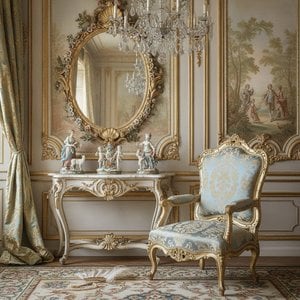
Discover the exquisite allure of Rococo art. Explore a curated guide to 18th-century French masterpieces, from Watteau to Fragonard, and learn how hand-painted oil reproductions can bring timeless elegance and luxury to your sophisticated interior design collection.

 Katso seinällä
 Lähetä
 Jaa
Jaa
 Tarkemmat tiedot
 Guide
Guide

 Lataa kuva
 Samanlaisia kohteita
 Röntgenkuvaus
 Diaesitys
 Tilastot
 Lue lisää







 Lasivaihtoehto on saatavilla vain alle 110 cm kokoisille teoksille


