Museolaatuisia giclée- tai kankaitaulun tulosteita nopealla tuotannolla ja joustavilla viimeistelyvaihtoehdoilla. ( Tilaa käsinmaalattu jäljennös Siirry digitaaliseen kuvaan)





























Valitse valmiista mitoistamme sellaiset, jotka vastaavat teoksen alkuperäisiä mittasuhteita.

Kirjoita tarvitsemasi leveys ja korkeus, jotta tuloste sopii kehyskokoon tai seinällesi. Tulostetta voidaan vain leikata, sitä ei voi koskaan tehdä suuremmaksi kuin alkuperäinen kuva, joten eri muotoinen koko aiheuttaa osan kuvasta katoamisen. Lähetämme sinulle digitaalisen mallikuvan hyväksyttäväksi ennen kuin aloitamme tulostuksen. Tällä sivulla näkyvä kuva ei näytä lopullista leikkausta — vain mallikuva näyttää sen.
Maailmanlaajuinen toimitus () 2 viikossa tavallisen 4–5 viikon sijaan. (23 lokakuu)
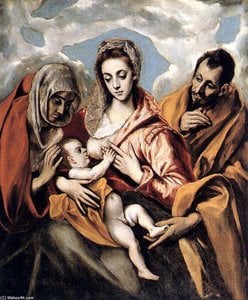
Altarpiece
Replikaatin koko
Doménikos Theotokópoulos, universally known as El Greco, was not merely a painter; he was a visionary who sculpted light and emotion onto the canvas. His masterpiece, “Altarpiece,” created in 1597 for the Capilla de San José in Toledo, Spain, stands as a testament to his singular genius – a vibrant synthesis of Byzantine spirituality, Venetian artistry, and the burgeoning spirit of the Spanish Baroque. This isn’t simply a religious painting; it's an immersive experience, a journey into a world where faith and drama intertwine with breathtaking beauty.
The heart of the altarpiece lies in its composition: a meticulously structured scene centered around a grand altar, flanked by ornate paneling and sculpted figures. While the framing initially appears intimate, it draws the viewer irresistibly into a realm of profound reverence and opulent detail. El Greco’s genius resides not just in depicting biblical narratives but in imbuing them with an intensely personal and emotional resonance. The elongated figures, characteristic of his style, seem to flow and twist with a life of their own, radiating a palpable energy that transcends the static nature of traditional religious art.
“Altarpiece” is firmly rooted in the Spanish Baroque period, yet it possesses an unmistakable individuality. El Greco’s artistic journey – from his native Crete to Venice and Rome – shaped a style that defied easy categorization. He masterfully blended Byzantine traditions—inherited from his early training—with the Renaissance influences of Titian and Michelangelo, creating a uniquely powerful visual language. This altarpiece exemplifies this synthesis: it retains the solemnity and symbolic richness of Byzantine iconography while embracing the dynamism and dramatic lighting favored by Venetian artists. The work reflects the religious fervor and artistic innovation that defined Spain during the late 16th century – a time when faith was not merely observed but passionately experienced.
Executed primarily in oil paint on wood panel, “Altarpiece” showcases El Greco’s unparalleled technical skill. The smooth surfaces and intricate rendering suggest painstaking attention to detail, a testament to his dedication as a master craftsman. However, it's the masterful manipulation of color that truly captivates. Deep blues, vibrant reds, and shimmering golds create an atmosphere of both solemnity and ecstatic joy. Crucially, El Greco employed lavish application of gold leaf, adding a luminous quality that elevates the entire scene to a realm of divine splendor – reflecting the importance of gold in religious art as a symbol of God’s glory.
The use of marble or stone for the altar's base further contributes to the altarpiece’s grandeur and solidity. The meticulous layering of paint, combined with the reflective surfaces, creates an illusion of depth and volume, drawing the viewer into the heart of the sacred space. It is a testament to El Greco’s ability to transform humble materials into objects of profound beauty and spiritual significance.
Every element within “Altarpiece” carries profound symbolic weight. Halos illuminate the figures of saints, signifying their holiness; crosses denote faith and sacrifice; and depictions of biblical scenes invite contemplation. The overall effect is a powerful expression of Christian devotion—designed to inspire awe and reverence in worshippers. Beyond its technical brilliance, the altarpiece evokes a deep emotional response. El Greco’s dramatic use of lighting – casting strong shadows and highlighting reflective surfaces – creates an atmosphere of mystery and spiritual intensity. The dynamic composition and expressive figures convey a sense of movement and energy, drawing the viewer into the heart of the sacred narrative.
Considering El Greco's commission for the church of Santo Domingo el Antiguo in Toledo—beginning with “The Assumption of the Virgin” (1577-1579)—it is reasonable to assume this altarpiece shares a similar devotional purpose and stylistic approach. Both works demonstrate his ability to blend Italian Renaissance principles with a uniquely Spanish sensibility, solidifying his place as one of the most influential artists of the era. A reproduction of “Altarpiece” would serve as a stunning focal point in any interior space, bringing a touch of Baroque splendor and spiritual depth – a timeless reminder of faith, beauty, and artistic genius.
El Greco:n "Altarpiece" kuuluu Spanish Baroque-suuntaukseen. Tämä tyylisuunta antaa teokselle sen tyylillisen kontekstin.
"Altarpiece" on El Greco:n luoma teos. Tällä sivulla olevat tiedot kuvaavat El Greco:n alkuperäistä työtä.
"Altarpiece" on El Grecon luoma teos, joka edustaa Spanish Baroque-tyyliä. Taiteilija ja tyylisuunta määrittelevät teoksen perinteet.


1541 - 1614 , Kreikka

Luo kotiisi barokin ajatonta eleganssia. WahooArt tarjoaa eksklusiivisia, käsinmaalattuja öljyvärireproduktioita mestariteoksista. Ammattitaitoiset taiteilijamme vangitsevat valon ja draaman täydellisesti. Laadukas käsityö, personoidut tilaustyöt ja 100 % tyytyväisyystakuu.

 Katso seinällä
 Lähetä
 Jaa
Jaa
 Tarkemmat tiedot
 Opas
Opas

 Lataa kuva
 Samanlaisia kohteita
 Röntgenkuvaus
 Diaesitys
 Tilastot


 Lue lisää









 Lasivaihtoehto on saatavilla vain alle 110 cm kokoisille teoksille