
Museolaatuisia giclée- tai kankaitaulun tulosteita nopealla tuotannolla ja joustavilla viimeistelyvaihtoehdoilla. ( Tilaa käsinmaalattu jäljennös Siirry digitaaliseen kuvaan)





























Valitse valmiista mitoistamme sellaiset, jotka vastaavat teoksen alkuperäisiä mittasuhteita.

Voit syöttää omat mitat sopiaksesi tiettyyn kehykseen tai tilaan. Jos valittu koko ei vastaa alkuperäisen kuvan mittasuhteita, rajaamme teosta tai laajennamme kuvaa peilatulla tai yhtenäisellä reunalla. Digitaalinen mallikuva lähetetään hyväksyttäväksi ennen tuotannon aloittamista.
Huomaathan, että näytöllä näkyvä esikatselu ei vastaa lopullista rajausta tai laajennusta. Vain mallikuva näyttää lopullisen sommittelun tarkasti.
Vaikka räätälöityjä kokoja on saatavilla, suosittelemme valitsemaan mitat valmiista listasta alkuperäisten mittasuhteiden säilyttämiseksi.
Maailmanlaajuinen toimitus () 2 viikossa tavallisen 4–5 viikon sijaan. (11 lokakuu)
Harvest
Replikaatin koko
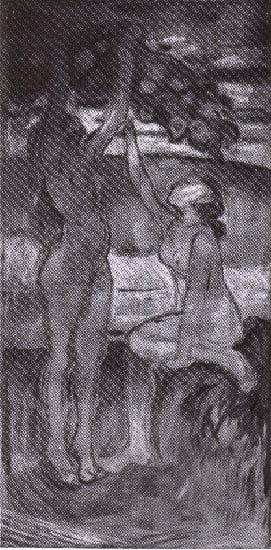
In the quiet, evocative depths of Edvard Munch's 1909 masterpiece, "Harvest," we encounter a world where the boundaries between the physical landscape and the human psyche begin to dissolve. This striking black and white canvas serves as more than a mere depiction of a pastoral moment; it is a profound meditation on the cyclical nature of life, loss, and the enduring embrace of the natural world. As an exemplar of Expressionism, the painting eschews the objective clarity of realism to instead prioritize the visceral, emotional truth of the scene. Through a deliberate use of tonal variation and gestural brushwork, Munch invites the viewer into a space of quiet contemplation, where the rustle of leaves and the stillness of the figures suggest a moment suspended in time.
The composition is masterfully centered around two female figures positioned within a grove of trees. There is an intimate, almost voyeuristic quality to their placement, as if we have stumbled upon a private vigil. Munch employs a flattened perspective that heightens this sense of intimacy, bringing the background foliage into a closer, more pressing relationship with the subjects. The trees themselves, rendered with loose and spontaneous lines, reach upward like skeletal fingers, partially obscuring the sky and creating a sense of enclosure. This lack of rigid geometric structure allows for a dynamic portrayal of movement, where the organic shapes of the women's forms blend seamlessly into the irregular, textured contours of the landscape.
To behold "Harvest" is to feel the weight of Munch’s personal history. The artist’s life was profoundly shaped by the shadows of mortality, specifically the premature deaths of his mother and sister from tuberculosis. These early traumas infused his work with a haunting preoccupation with grief and the fragility of existence. In this piece, the monochromatic palette—a spectrum of somber grays and deep blacks—acts as a visual echo of such sorrow. The absence of vibrant color strips away any superficial distractions, forcing the eye to focus on the impasto technique, where thick, layered applications of paint create a rugged, tactile surface. This textural richness mirrors the weathered landscape, suggesting that even in decay, there is a profound, textured beauty.
For the discerning collector or interior designer, "Harvest" offers an unparalleled emotional depth that can anchor a room with its quiet intensity. The painting does not demand attention through loud colors but commands it through atmospheric resonance. It functions as a window into the soul of Expressionism, making it an ideal centerpiece for spaces designed for reflection and intellectual engagement. Whether viewed as a study in light and shadow or as a symbolic narrative of life's fleeting nature, the artwork provides a sophisticated layer of storytelling to any curated collection.
Ultimately, Munch’s "Harvest" remains a timeless exploration of the human condition. It captures the tension between the vulnerability of the individual and the indomitable strength of nature. By embracing imperfection through his gestural strokes and avoiding the trap of photographic precision, Munch achieves a level of emotional resonance that continues to captivate modern audiences. It is a piece that does not merely sit upon a wall; it breathes with the heavy, beautiful rhythm of memory and the eternal cycle of the earth.
Teoksen "Harvest" tekijä on Edvard Munch, ja se on vuodelta 1909.
Edvard Munch käytti tekniikkana Oil On Canvas-tekniikkaa teoksessa "Harvest". Tekniikka määrittelee alkuperäisen teoksen materiaalisen luonteen.
Teoksen "Harvest" silmiinpistävin väri on Espresso (#3c3539). Hallitseva väri on hyödyllinen, kun teosta sovitetaan sisustukseen.
Edvard Munch oli 46 vuotias luodessaan teoksen "Harvest" vuonna 1909. Ikä on laskettu taiteilijan syntymävuodesta 1863.
Teos Edvard Munch:n "Harvest" on luokiteltu tyypiksi WallArt. Luokitus kertoo, minkä tyyppinen alkuperäisteos on kyseessä.
Teoksen "Harvest" taiteilija on Edvard Munch. Teos on luetteloitu Edvard Munch nimellä.
Edvard Munch:n "Harvest" on luotu vuonna 1909.

Edvard Munch, vuonna 1863 Norjan karussa maisemassa syntynyt taiteilija, nousi tunnetuksi modernin ajan ahdistuksen ja emotionaalisen myllerryksen symbolina. Hänen elämänsä oli syvästi leimattu menetyksestä ja läpitunkevan melankolian tunteesta, mikä toimi hänen voimakkaan ilmaisullisen taiteensa lähteenä. Lapsuusvuodet varjostivat varhaiset kuolemat – äiti ja sisko menehtyivät tuberkuloosiin – ja Munchille kehittyi painava huoli kuolevaisuudesta, sairaudesta ja ihmiselämän hauraudesta. Nämä kokemukset eivät olleet pelkkiä elämäkertatietoja; ne muodostivat hänen taiteellisen visionsa ytimen, ruokkien lakkaamatonta pyrkimystä tutkia sisäistä maisemaa täynnä pelkoa, surua ja kaipuuta. Isän tiukat uskonnolliset vakaumukset ja Munchin omat mielenterveyskamppailut lisäsivät synkkyyden tunnetta hänen maailmassaan, muokaten paitsi henkilökohtaista elämäänsä myös maalaustensa symbolikieltä. Hän ei pelkästään kuvannut kohtauksia; hän ulkoisti sisäisen tilan, kääntäen psyykkistä ahdinkoa visuaaliseen muotoon.
Munchin taiteellinen matka alkoi muodollisella koulutuksella Kristianian (Oslo) kuninkaallisessa taide- ja suunnittelukoulussa, mutta todellisen luovuuden kipinän sytytti kohtaaminen boheemien piirien kanssa sekä Hans Jægerin nihilistinen filosofia. Jæger rohkaisi Munchia hylkäämään tavanomaiset akateemiset tyylit ja sukeltamaan sen sijaan oman subjektiivisen kokemusmaailmansa syvyyksiin, konsepti, jota hän kutsui ”sielun maalaukseksi”. Tämä ratkaiseva käänne merkitsi Munchin omaleimaisen tyylin alkua – tyyliä, jolle oli tunnusomaista raaka tunteellisuus, vääristyneet muodot ja luonnonmukaisen esityksen hylkääminen. Matkat Pariisiin 1890-luvulla altistivat hänet kukoistavalle postimpressionismille, jossa hän imi vaikutteita Paul Gauguinin, Vincent van Goghin ja Henri de Toulouse-Lautrecin taiteilijoista. Näiden mestareiden rohkea värien käyttö, ilmeikäs siveltötyöskentely ja psykologinen intensiteetti resonoi syvästi Munchin omien taiteellisten pyrkimysten kanssa. Hän ei pelkästään jäljitellyt heidän tekniikoitaan; hän syntetisoi ne ainutlaatuiseksi kieleksi, joka kykeni välittämään ihmisen syvimmät ja levottomimmat tunteet. Aika Berliinissä osoittautui myös ratkaisevaksi, tuoden hänet kosketuksiin näytelmäkirjailija August Strindbergin kanssa, jonka psykologisten teemojen tutkiminen ruokki entisestään Munchin taiteellisia pyrkimyksiä.
Munchin tuotanto on täynnä kuvia, jotka ovat juurtuneet kollektiiviseen tietoisuuteen. Huuto, ehkä hänen tunnetuin teoksensa, ylittää maalauksen aseman ja nousee universaaliksi eksistentiaalisen ahdistuksen symboliksi. Pyörteilevä, liekehtivä maisema ja hahmon vääristynyt kasvot ilmentävät alkukantaista huutoa maailmankaikkeuden välinpitämättömyyttä vastaan. Madonna, kiistanalainen ja syvästi henkilökohtainen teos, tutkii seksuaalisuutta, äitiyttä ja kuolevaisuutta häiritsevällä avoimuudella. Toistuvat motiivit, kuten Sairas lapsi – inspiroitunut sisarensa Sophien menetyksestä – muistuttavat koskettavasti Munchin lapsuuden traumaa ja kuoleman jatkuvaa uhkaa. Melankolia I & II, voimakkaat kuvaukset syvästä surusta ja eristäytymisestä, paljastavat haavoittuvuutta, joka on sekä henkilökohtaista että yleismaailmallisesti samaistuttavaa. Nämä teokset eivät ole pelkästään ulkoisen todellisuuden esityksiä; ne ovat ikkunoita taiteilijan sieluun, tarjoten katsojille häikäilemättömän vilkauksen ihmismielen synkimpiin sopukoihin. Munch ei pyrkinyt luomaan kauniita kuvia; hän halusi välittää totuuden – vaikka se olisikin tuskallista ja levotonta.
Edvard Munchin panos modernille taiteelle on mittaamaton. Hän seisoo keskeisenä hahmona ekspressionismin kehityksessä, tasoittaen tietä taiteilijoille, jotka priorisoivat subjektiivista tunnetta objektiivisen esityksen sijaan. Hänen häikäilemätön tutkimus universaaleista ihmiskokemuksista – rakkaudesta menetykseen, ahdistukseen ja kuolemaan – resonoi edelleen nykyajan yleisöjen kanssa, vahvistaen hänen paikkansa yhtenä vaikutusvaltaisimmista ja kestävämmistä hahmoista taidehistoriassa. Hänen työnsä vaikutti syvästi myöhempiin sukupolviin taiteilijoita, inspiroiden liikkeitä kuten saksalainen ekspressionismi ja sen jälkeen. Hän uskalsi kohdata ihmisen olemuksen synkimmät puolet, haastaen tavanomaiset käsitykset kauneudesta ja taiteellisesta esittämisestä. Vaikka hän saavutti mainetta ja tunnustusta – huipentuen Munch-museon perustamiseen Oslossa – hänen henkilökohtainen elämänsä pysyi myrskyisänä, leimattuna mielenterveyden epävakauden ja eristäytymisen jaksoilla. Silti hän jatkoi luomista, jättäen jälkeensä teoskokonaisuuden, joka edelleen provosoi, haastaa ja inspiroi. Munchin perintö ei perustu pelkästään maalauksiin; se koskee rohkeutta kohdata ihmisen olemassaolon monimutkaisuutta ja kääntää nämä kokemukset taiteeksi, joka puhuttelee syvimpiä osiamme.

1863 - 1944 , Ruotsi

Explore the profound artistry of black and white photography. From historical mastery to the interplay of light and shadow, discover how monochrome captures timeless emotion and form through a sophisticated lens of art history.

Elevate your most cherished memories with WahooArt’s bespoke service. We transform your personal photos into breathtaking, hand-painted black & white oil masterpieces. Experience museum-quality craftsmanship and timeless elegance for your private collection. Discover the art of legacy.

 Katso seinällä
 Lähetä
 Jaa
Jaa
 Tarkemmat tiedot
 Opas
Opas

 Lataa kuva
 Samanlaisia kohteita
 Röntgenkuvaus
 Diaesitys
 Tilastot

 Lue lisää









 Lasivaihtoehto on saatavilla vain alle 110 cm kokoisille teoksille


