
 CharcoalWallArtRomanticism
 188119th Century
 69.0 x 50.0 cm
Käsinmaalattu öljyväri kankaalle haluamassasi koossa ja kehyksissä, taiteilijoidemme valmistamana tilauksesta. ( Vaihda tulosteeseen Siirry digitaaliseen kuvaan)





























Valitse valmiista mitoistamme sellaiset, jotka vastaavat teoksen alkuperäisiä mittasuhteita.

Voit syöttää omat mitat sopimaan tiettyyn kehykseen tai tilaan. Jos valitsemasi koko ei vastaa alkuperäisen kuvan mittasuhteita, rajaamme taideteoksen tai jatkamme maalausta käsin maalatuilla elementeillä. Digitaalinen esikatselu lähetetään hyväksyttäväksi ennen tuotannon aloittamista.
Huomioithan, että näytöllä oleva esikatselu ei vastaa todellista rajausta tai jatkamista. Vain digitaalinen mallikuva näyttää lopullisen sommittelun tarkasti.
Vaikka mittatilaustyöt ovat mahdollisia, suosittelemme valitsemaan mitan ennalta määritetystä listasta alkuperäisten mittasuhteiden säilyttämiseksi.
Maailmanlaajuinen toimitus () 3–4 viikossa tavallisen 5 viikon sijaan. (24 syyskuu). Laadusta ei tingitä.


Desdemona
Replikaatin koko
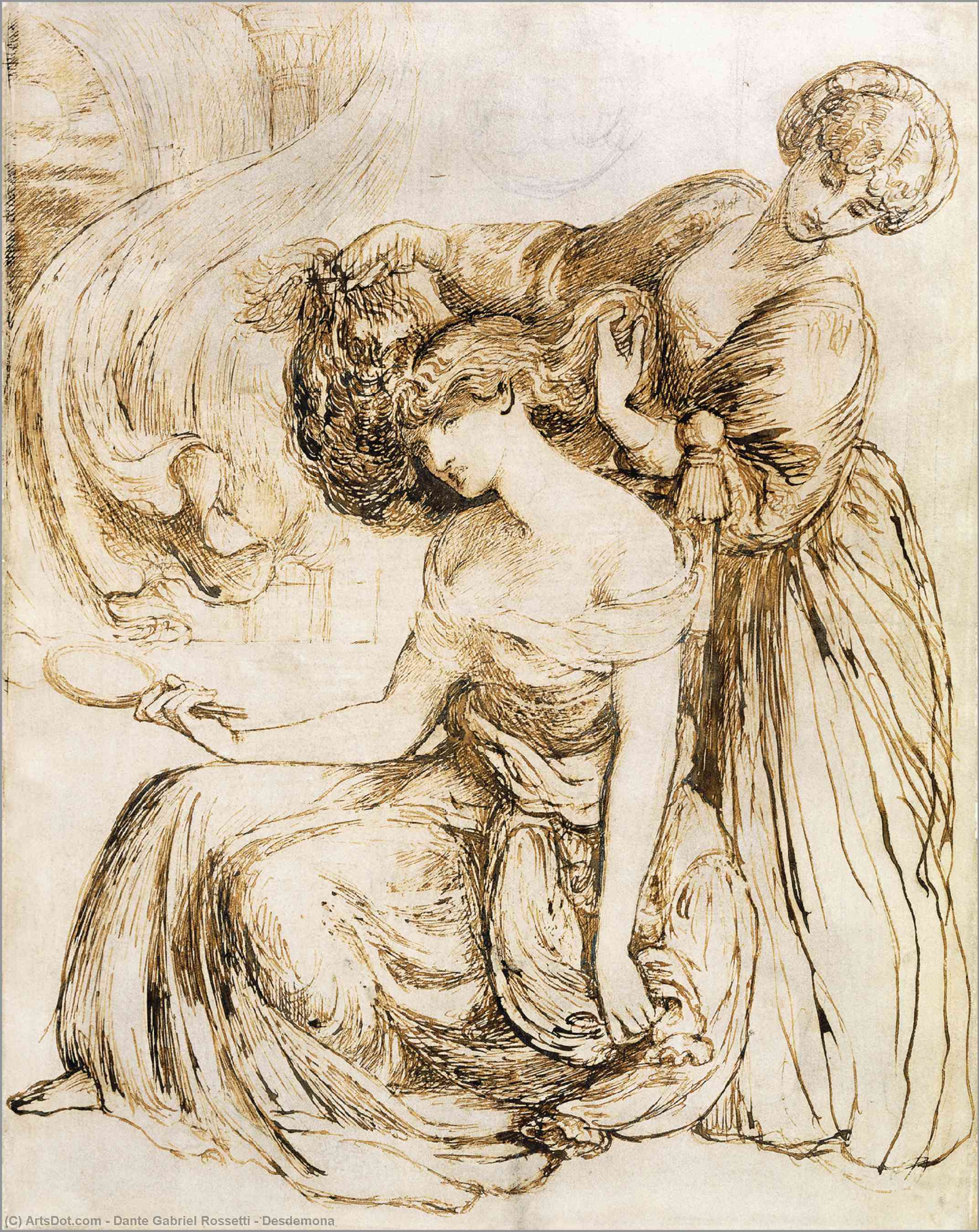
Dante Gabriel Rossetti's “Desdemona,” painted in 1881, is more than a simple depiction of Shakespearean tragedy; it’s a profoundly moving exploration of grief, vulnerability, and the quiet desperation at the heart of human experience. Executed with remarkable sensitivity and technical skill, this artwork offers a poignant glimpse into the anxieties and emotional currents that defined Victorian England, while simultaneously showcasing Rossetti's mastery of evocative line work and his ability to translate complex psychological states onto canvas.
The scene itself is deceptively simple: Desdemona, seated with a posture radiating sorrow, occupies the central focus. Her face, rendered with delicate charcoal strokes, conveys an overwhelming sense of sadness – not a dramatic outburst, but rather a quiet, internalized grief. Behind her stands another figure, likely Emilia, offering a gesture of comfort or perhaps simply bearing witness to Desdemona’s pain. The ambiguity of this secondary presence adds layers of complexity to the narrative, suggesting themes of loyalty, compassion, and the burden of shared sorrow.
Rossetti's style here leans heavily into the tenets of Pre-Raphaelite aesthetics – a movement characterized by an intense focus on detail, rich color palettes (though in this case, restrained to a monochromatic scheme), and a rejection of academic conventions. The artwork’s strength lies not in polished realism but in its expressive use of line. Rossetti employs rapid, flowing lines to capture the texture of Desdemona's hair and garments, creating a sense of movement and dynamism that belies the scene’s inherent stillness. The hatching and cross-hatching techniques used to build up form are particularly effective, lending a remarkable three-dimensionality to the figures despite the sketch-like quality of the piece.
This isn't a finished masterpiece; it’s clearly a preparatory study – a ‘sketches’ as the Pre-Raphaelites would have called it. This unfinished quality actually enhances its emotional impact, inviting the viewer to participate in the creation of meaning and to contemplate the raw vulnerability of the subject.
“Desdemona” is, of course, drawn from William Shakespeare’s *Othello*, a play renowned for its exploration of jealousy, betrayal, and the destructive power of unfounded suspicion. Desdemona’s tragic fate – murdered by her husband after being falsely accused of infidelity – resonates deeply within the artwork. The scene depicted captures a pivotal moment in the play, likely shortly before her death, emphasizing her helplessness and despair.
The Victorian era was one grappling with anxieties surrounding gender roles, social expectations, and the fragility of human relationships. Rossetti’s choice to focus on Desdemona – a woman perceived as weak and vulnerable within the patriarchal structure of Shakespeare's world – speaks to these broader societal concerns. The artwork can be interpreted as a commentary on the limited agency afforded to women during this period.
"Desdemona" transcends its origins as a preparatory sketch, becoming a powerful meditation on human suffering. Its enduring appeal lies in its ability to evoke empathy and contemplation. The artwork’s delicate execution, combined with the profound subject matter, makes it a compelling piece for collectors seeking works that possess both aesthetic beauty and emotional depth. A hand-painted reproduction of this evocative study offers an exceptional opportunity to bring Rossetti's masterful technique and poignant vision into your home or office – a testament to the enduring power of Shakespeare’s tragedy and the genius of one of Victorian England’s most celebrated artists.


1828 - 1882 , Iso-Britannia

Explore the profound beauty of Angel Gabriel in art history. From Renaissance masterpieces to Baroque splendor, our expert guide delves into the sacred iconography and timeless techniques of these divine messengers for the discerning art enthusiast.

 Katso seinällä
 Lähetä
 Jaa
Jaa
 Tarkemmat tiedot
 Opas
Opas

 Lataa kuva
 Samanlaisia kohteita
 Röntgenkuvaus
 Diaesitys
 Tilastot
 Lue lisää







 Lasivaihtoehto on saatavilla vain alle 110 cm kokoisille teoksille


