

Museolaatuisia giclée- tai kankaitaulun tulosteita nopealla tuotannolla ja joustavilla viimeistelyvaihtoehdoilla. ( Tilaa käsinmaalattu jäljennös Siirry digitaaliseen kuvaan)
Valitse valmiista mitoistamme sellaiset, jotka vastaavat teoksen alkuperäisiä mittasuhteita.

Voit syöttää omat mitat sopiaksesi tiettyyn kehykseen tai tilaan. Jos valittu koko ei vastaa alkuperäisen kuvan mittasuhteita, rajaamme teosta tai laajennamme kuvaa peilatulla tai yhtenäisellä reunalla. Digitaalinen mallikuva lähetetään hyväksyttäväksi ennen tuotannon aloittamista.
Huomaathan, että näytöllä näkyvä esikatselu ei vastaa lopullista rajausta tai laajennusta. Vain mallikuva näyttää lopullisen sommittelun tarkasti.
Vaikka räätälöityjä kokoja on saatavilla, suosittelemme valitsemaan mitat valmiista listasta alkuperäisten mittasuhteiden säilyttämiseksi.
Maailmanlaajuinen toimitus () 2 viikossa tavallisen 4–5 viikon sijaan. (24 syyskuu)


Two Cheeseburgers, with Everything (Dual Hamburgers)
Replikaatin koko
In the vibrant landscape of twentieth-century art, few works possess the immediate, mouth-watering charm of Claes Oldenburg’s “Two Cheesebusters, with Everything (Dual Hamburgers).” Created in 1962, this sculpture serves as a delicious intersection of Pop Art audacity and sculptural innovation. At first glance, the viewer is presented with a familiar sight: two juicy, meticulously layered cheeseburgers resting side by side. Yet, through Oldenburg’s transformative lens, these everyday objects are stripped of their disposable nature and elevated to the status of icons. The piece captures a moment of frozen abundance, where the bright reds of tomato, the vivid yellows of cheese, and the earthy browns of the bun demand attention, inviting the observer to linger on the textures of a shared cultural ritual.
The brilliance of this work lies in its ability to turn the gaze toward the commonplace. By magnifying the details of a simple meal, Oldenburg forces us to confront the beauty within the banal. For the collector or the interior designer, this piece offers more than just visual interest; it provides a conversational centerpiece that challenges the boundaries between high art and low culture. It is a work that breathes life into a room, injecting a sense of playful irony and nostalgic warmth that resonates deeply with the modern aesthetic.
To understand the visceral impact of these burgers, one must look closely at the artist's pioneering use of materials. Moving away from the rigid traditions of marble and bronze, Oldenburg embraced a much more tactile and experimental approach. The construction of “Two Cheeseburgers” is a masterclass in texture, utilizing chicken wire encased in plaster to create a robust yet strangely organic framework. This structural foundation allowed the artist to layer surfaces that mimic the succulent reality of food.
The surface is meticulously finished with burlap soaked in plaster and painted with vibrant enamels, creating a finish that feels both substantial and surprisingly soft. Every element—from the crinkled appearance of the lettuce to the smooth, heavy slices of tomato—is rendered with a deliberate thickness that defies the actual fragility of food. This technique creates a sensory illusion; one can almost feel the weight and the slight resistance of the materials. For those seeking a high-quality reproduction, it is this interplay of light and texture that defines the piece, making it an essential acquisition for those who appreciate art that engages both the eye and the imagination.
Historically, this sculpture emerged from the feverish energy of “The Store,” Oldenburg’s groundbreaking 1961 project in Manhattan. This period marked a radical shift in the art world, as artists began to reject the abstract emotionalism of previous decades in favor of the tangible symbols of American consumerism. The cheeseburger, a ubiquitous emblem of post-war prosperity and fast-paced urban life, becomes a symbol of a shared, democratic experience. There is no elitism here; there is only the universal language of hunger and consumption.
Beyond its surface-level playfulness, the work carries a deeper, more subversive meaning. By presenting these burgers as "monuments," Oldenburg mocks the grandiosity of traditional sculpture while simultaneously celebrating the vitality of the everyday. The piece embodies the spirit of Dada and Surrealism, using absurdity to question our relationship with the objects we consume. It is an invitation to find wonder in the supermarket aisle and to recognize that even the most fleeting, disposable moments of our lives are worthy of being immortalized in art.

Claes Oldenburgin teosten kohtaaminen on todistus todellisuuden ihastuttavasta kääntämisestä päälaelleen, jossa arkipäiväisyys nostetaan monumentaaliseen mittakaavaan ja tuttu muuttuu oudon surrealistiseksi. Tukholmassa, Ruotsissa vuonna 1929 syntynyt Oldenburgilla oli ainutlaattinen kyky riisua tavallisilta asioilta niiden näkymättömyys. Hänen taiteellinen matkansa, josta tuli lopulta Pop Art -liikkeen määrittelevä osa, juuriroidui syvään kiehtovuuteen päivittäisen elämän tekstuureista ja muodoista. Olipa kyseessä kankaan pehmeä painuma esineen päällä tai valtavan keittiövälineen kohoava läsnäolo, Oldenburgin tuotanto haastoi katsojan pohtimaan uudelleen juuri niitä esineitä, jotka täyttävät kotimme ja kaupunkimaisemamme.
Hänen varhaisia vuosia leimasivat avantgarde-henkisyys sekä surrealismin ja dadan radikaalien voimien omaksuminen. Tämä perusta antoi hänelle mahdollisuuden lähestyä kuvanveistoa ei kiven tai pronssin jäykkänä muotona, vaan sujuvana kielenä, joka kykenee ilmaisemaan absurdia ja nokkeluutta. Muutettuaan New Yorkiin vuonna 1956 hänestä tuli keskeinen hahmo kaupungin kukoistavassa kokeellisessa taideskenessä. Hänen varhaiset installaationsa, kuten The Street (1960) ja The Store (1961), olivat tilan ja kaupankäynnin muuntavia esityksiä, joissa hyödynnettiin urbaania romua ja kulutustavaroiden kipsireplikoita hämärtämään rajaa korkeataiteen ja markkinapaikan karuuden välillä.
Yksi Oldenburgin pysyvimmistä perinnöistä on hänen uranuurtavansa pehmeän kuvanveiston kehittäminen. Hyödyntämällä joustavia materiaaleja, kuten polyuretaanivaahtoa ja raskaita kankaita, hän toi elottomille esineille haavoittuvuuden ja orgaanisen elämän tuntua. Nämä kovien esineiden "löysät" versiot – pyykkipojat, puhelimet tai jopa wc-istuimet – uhmasivat kuvanveiston perinteistä pysyvyyttä ja kutsuivat yleisöä taktiiliseen, lähes psykologiseen vuorovaikutukseen. Tämä tekniikka antoi hänelle mahdollisuuden vangita kulutuskulttuurin katoava olemus, esittäen teollisen maailman pehmeässä, antautuvassa levossa.
Uran edetessä Oldenburgin kunnianhimot laajenivat gallerian intiimistä mittakaavasta julkisen aukion suuren näyttämön ulottuvuuksiin. Yhteistyössä edesmenneen vaimonsa ja luovan kumppaninsa Coosje van Bruggenin kanssa hänen työnsä saavutti uuden arkkitehtonisen loiston tason. Yhdessä he hallitsivat monumentaalisuuden taidon luoden massiivisia installaatioita, jotka sulautuivat saumattomasti osaksi kaupunkirakennetta samalla kun ne haastoivat sitä. Heidän yhteistyöhenkensä puhalsi eloa ikonisiin teoksiin, jotka muuttivat kaupunkien siluetteja ja muuttivat julkiset tilat mielikuvituksen leikkikentiksi.
Claes Oldenburgin historiallista merkitystä ei voi korostaa liikaa; hän muutti perustavanlaatuisesti taiteen ja katsojan välistä suhdetta. Hänen työnsä säilyy 20. vuosisadan taidehistorian kulmakivenä useiden keskeisten saavutusten ansiosta:

1929 - 2022 , Ruotsi
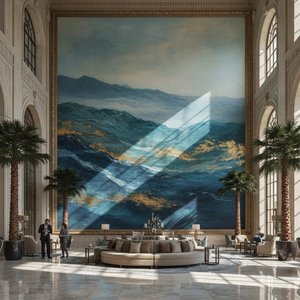
Elevate grand hospitality interiors with expert insights on large-format art. Discover how masterfully scaled landscapes and Impressionist reproductions create illusionary space, enhance atmospheric depth, and define luxury brand identity for discerning hotel designers.

Explore the profound impact of the Pop Art Revolution on modern aesthetics. From Lichtenstein’s dots to Warhol’s icons, gain expert insights into how this vibrant movement redefined culture through consumerism and mass media. A definitive guide for art lovers and collectors.

 Lähetä
 Jaa
Jaa
 Tarkemmat tiedot
 Opas
Opas

 Lataa kuva
 Samanlaisia kohteita
 Diaesitys
 Tilastot


 Lue lisää




































 Lasivaihtoehto on saatavilla vain alle 110 cm kokoisille teoksille


