Oil On CanvasWallArtBaroque
 1643Early Modern
 146.0 x 222.0 cm
 Louvren museo
Museolaatuisia giclée- tai kankaitaulun tulosteita nopealla tuotannolla ja joustavilla viimeistelyvaihtoehdoilla. ( Tilaa käsinmaalattu jäljennös Siirry digitaaliseen kuvaan)





























Valitse valmiista mitoistamme sellaiset, jotka vastaavat teoksen alkuperäisiä mittasuhteita.

Kirjoita tarvitsemasi leveys ja korkeus, jotta tuloste sopii kehyskokoon tai seinällesi. Tulostetta voidaan vain leikata, sitä ei voi koskaan tehdä suuremmaksi kuin alkuperäinen kuva, joten eri muotoinen koko aiheuttaa osan kuvasta katoamisen. Lähetämme sinulle digitaalisen mallikuvan hyväksyttäväksi ennen kuin aloitamme tulostuksen. Tällä sivulla näkyvä kuva ei näytä lopullista leikkausta — vain mallikuva näyttää sen.
Maailmanlaajuinen toimitus () 2 viikossa tavallisen 4–5 viikon sijaan. (26 lokakuu)
Pietà
Replikaatin koko
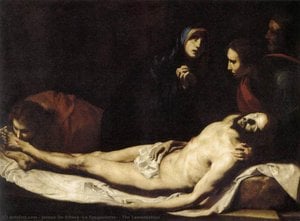
In the hallowed stillness of the Musée du Louvre, there exists a canvas that does more than merely depict a biblical event; it captures the very essence of human grief. Charles Le Brun’s Pietà, painted in 1643, is a monumental achievement of the Baroque era, serving as a profound meditation on sorrow, faith, and the weight of mortality. Originally commissioned for the Sainte-Chapelle in Paris—a sanctuary dedicated to the relics of Christ—this oil on canvas was designed to evoke spiritual contemplation through its sheer emotional gravity. As viewers encounter the work, they are not just observing a scene from the Passion; they are invited into a sacred space where the boundaries between the divine and the human dissolve.
The painting centers on the poignant aftermath of the crucifixion, presenting the Virgin Mary cradling the lifeless form of her son. Le Brun masterfully employs a pyramidal composition, a technique that provides a sense of structural stability to an otherwise turbulent emotional scene. This geometric arrangement directs the eye upward, guiding the observer from the heavy, slumped weight of Christ’s body toward the serene yet heartbroken countenance of Mary. The interplay of light and shadow, known as chiaroscuro, is utilized with breathtaking precision. A singular, dramatic light source illuminates the central figures against a dark, indistinct background, stripping away all worldly distractions to focus the soul entirely on the tragedy unfolding within the frame.
To understand the Pietà is to understand the hand of Charles Le Brun, a titan of French art who shaped the aesthetic standards of the age. His technique reflects the rigorous training he received under masters like Simon Vouet and his transformative years in Rome alongside Nicolas Poussin. In this work, Le Brun achieves a perfect balance between dramatic realism and idealized beauty. The texture of the painting is remarkably rich; one can almost feel the heavy, flowing drapery of Mary’s robes as they cascade around the figures, adding a sense of dynamic movement to the stillness of death. His brushwork captures the subtle nuances of skin, the limpness of muscle, and the intricate folds of fabric, all rendered with an exacting detail that speaks to his mastery of the medium.
Beyond its technical brilliance, the artwork serves as a profound symbolic vessel. The scene is steeped in Christian iconography, representing the ultimate sacrifice and the enduring devotion of the faithful. The presence of figures like Joseph of Arimathea and Mary Magdalene adds layers of communal mourning, yet the focus remains on the intimate bond between mother and son. For the collector or the lover of fine art, this piece offers more than just visual splendor; it provides a window into the 17th-century French soul. It is an ideal centerpiece for those seeking to infuse a space with historical depth, intellectual rigor, and a sense of timeless, quiet majesty.
Teoksen Charles Le Brun:n "Pietà" värit ilmentävät Softly Mixed Palette harmoniaa. Harmonia kuvaa sitä, miten värit suhteutuvat toisiinsa.
Charles Le Brun:n "Pietà" on tekijänoikeusvapaa – sen tekijänoikeussuoja on päättynyt. Tekijänoikeuden voimassaolo lasketaan taiteilijan kuolinvuodesta, joka oli 1690.
Charles Le Brun:n "Pietà" luokitellaan Iconic ja se kuuluu Baroque-tyylisuuntaan.

Charles Le Brun syntyi Pariisissa vuonna 1619, ja jo varhain osoitti lahjakkuuttata taiteessa. Kymmenen vuoden ikäisenä hän aloitti Simon Vouetin opastamana, kuninkaallisen hovimestarin Pierre Séguierin suosiossa. Le Brunin isä oli kuvanveistäjä Nicolas Le Brun, ja hänen veljensä olivat myös taiteilijoita – Nicolas ja Gabriel. Nuori Charles kiinnostui enemmän antiikin Rooman veistosten tutkimisesta kuin opettajansa opetuksista, mutta hän sai silti arvokkaan koulutuksen, joka loi pohjan tuleville töilleen.
Le Brunin ura alkoi Pariisin hovissa, jossa hän työskenteli kuninkaallisen kokoelmien piirtäjänä. Hän oppi tarkkailemaan ja jäljittelemään eri tyylisuuntia – myöhäisbarokkia, renessanssin varhaista vaihetta ja klassisia vaikutteita. Merkittävässä käännehetkessä Le Brun matkusti Italiaan vuonna 1642 Nicolas Poussinin kanssa, joka oli palannut Pariisista. Roomassa hän vietti neljä vuotta, jossa hän sai syvällisen opetuksen ja oppi tuntemaan italialaisen barokin vaikutuksen. Tämä kokemus muutti hänen taiteellista näkemystään merkittävästi.
Paluu Pariisiin vuonna 1646 oli Le Brunille uuden aikakauden alku. Hän nopeasti sai tunnustusta ja suosiota, ja hänestä tuli pian yksi Ranskan arvostetuimmista taidemaalareista. Varhaisessa tyylissään Le Brun säilytti Vouetin ja Poussinin vaikutuksen, mutta hän alkoi vähitellen kehittää omaa, persoonallisempaa tyyliään. Hänen taiteellinen kehityksensä keskittyi barokin dynaamisuuteen ja tunteiden ilmaisun voimaan.
Le Brunin tunnetuimpia teoksiaan ovat historialliset maalaukset, muotokuvat ja koristeelliset työt. Hän oli erityisen taitava luomaan dramaattisia komposiitioita, rikkaita värejä ja yksityiskohtia. Merkittävä osa hänen tuotostaan on Alexander Suuren sotaretkien historiaa käsittelevä sarja maalauksia, jotka osoittavat hänen kykyään yhdistää historiallinen kertomus taiteelliseen loistoon. Le Brunin tyyli kehittyi kohti barokkimaalausta, jossa tunteiden ja dramaattisuuden korostaminen oli keskeistä.
Le Brunin ura kukoisti Ludvig XIV:n hallitessa, jolloin hänestä tuli kuningas Henrikin ensimmäinen maalari vuonna 1664. Tämä asema antoi hänelle valtavan vaikutusvallan ranskalaiseen taiteeseen. Hän oli keskeisessä roolissa Versailles’n palatsin sisustamisessa, ja hänen johdollaan luotiin ikonisia teoksia, kuten Ambassadeurien portaikko (1671–78), Peilisaali (1679–84) ja Rauhan ja Sodan huoneet (1685–86). Nämä projektit vahvistivat hänen mainettaan mestarina ja suunnittelijana.
Le Brunin vaikutus ulottui myös muiden palatsien koristeluun, ja hän osallistui useisiin merkittäviin projekteihin. Hän perusti vuonna 1663 Kuninkaallisen taideakatemian (Académie Royale de Peinture et de Sculpture), joka oli keskeinen instituutio ranskalaiseen taiteeseen. Akatemia edusti uutta ajattelutapaa taiteen koulutuksessa ja tuotti standardeja, jotka vaikuttivat koko Ranskan taidemaailmaan.
Charles Le Brunin perintö on moniulotteinen. Hän oli merkittävä hahmo ranskalaiseen taiteeseen, ja hänen työnsä määritteli barokin tyylisuunnan Ranskassa. Hänen vaikutuksensa ulottui myös taidekoulutukseen ja teorian kehitykseen. Le Brunin suunnitelmat Versailles’n palatsissa asettivat standardin kuninkaallisille palatseille ympäri Eurooppaa.
Hänen työnsä on edelleen esillä Versailles’ssa ja muissa museoissa, ja se kertoo hänen taiteellisesta lahjakkuudestaan ja vaikutuksestaan ranskalaiseen kulttuuriin. Charles Le Brunin nimi tulee olemaan ikuisesti sidoksissa Ranskan taiteen kulta-aikaan.

1619 - 1690 , Ranska

Luo kotiisi barokin ajatonta eleganssia. WahooArt tarjoaa eksklusiivisia, käsinmaalattuja öljyvärireproduktioita mestariteoksista. Ammattitaitoiset taiteilijamme vangitsevat valon ja draaman täydellisesti. Laadukas käsityö, personoidut tilaustyöt ja 100 % tyytyväisyystakuu.

 Katso seinällä
 Lähetä
 Jaa
Jaa
 Tarkemmat tiedot
 Opas
Opas

 Lataa kuva
 Samanlaisia kohteita
 Röntgenkuvaus
 Diaesitys
 Tilastot
 Lue lisää









 Lasivaihtoehto on saatavilla vain alle 110 cm kokoisille teoksille