

 Tempera On PanelWallArtBaroque art
 1476Renaissance
 107.0 x 55.0 cm
 Szépművészeti Múzeum
Käsinmaalattu öljyväri kankaalle haluamassasi koossa ja kehyksissä, taiteilijoidemme valmistamana tilauksesta. ( Vaihda tulosteeseen Siirry digitaaliseen kuvaan)





























Valitse valmiista mitoistamme sellaiset, jotka vastaavat teoksen alkuperäisiä mittasuhteita.

Voit syöttää omat mitat sopimaan tiettyyn kehykseen tai tilaan. Jos valitsemasi koko ei vastaa alkuperäisen kuvan mittasuhteita, rajaamme taideteoksen tai jatkamme maalausta käsin maalatuilla elementeillä. Digitaalinen esikatselu lähetetään hyväksyttäväksi ennen tuotannon aloittamista.
Huomioithan, että näytöllä oleva esikatselu ei vastaa todellista rajausta tai jatkamista. Vain digitaalinen mallikuva näyttää lopullisen sommittelun tarkasti.
Vaikka mittatilaustyöt ovat mahdollisia, suosittelemme valitsemaan mitan ennalta määritetystä listasta alkuperäisten mittasuhteiden säilyttämiseksi.
Maailmanlaajuinen toimitus () 3–4 viikossa tavallisen 5 viikon sijaan. (22 syyskuu). Laadusta ei tingitä.


Virgin and Child Enthroned
Replikaatin koko
In the quiet sanctity of the late 15th century, few artists could command the eye with as much decorative splendor and spiritual intensity as Carlo Crivelli. His masterpiece, "Virgin and Child Enthroned," completed around 1476, stands as a breathtaking portal into the Late Gothic soul. This is not merely a painting; it is an immersive experience of divine presence. As one gazes upon this exquisite work, the viewer is immediately struck by a sense of profound majesty. The Virgin Mary, crowned and richly dressed as the Queen of Heaven, sits regally upon a marble throne, cradling the Christ Child in her arms. The composition radiates a celestial calm, yet it is charged with a meticulous, almost hyper-real detail that pulls the observer into a world where the sacred and the material intersect.
Crivelli’s unique artistic journey provides the essential backdrop for such a captivating creation. Born in Venice around 1435, he was steeped in the Venetian tradition, absorbing the luminous color palettes and linear precision of masters like Vivarini and Mantegna. However, as he moved toward the Marche region, his style evolved into something entirely singular. While his contemporaries in Florence were embracing the sweeping humanism of the High Renaissance, Crivulously embraced a more conservative, decorative Late Gothic aesthetic. This choice allowed him to master the trompe l’oeil technique—a skillful manipulation of perspective that creates an illusion of three-dimensional reality. Through thin, layered glazes of tempera on wood, he achieved a textural depth so profound that the viewer can almost feel the weight of the crown and the smoothness of the marble throne.
Every element within this composition serves a higher theological purpose, woven into a tapestry of symbolic meaning. The presence of the apples, positioned with deliberate care near the edges of the frame, acts as a poignant reminder of the Fall of Man, contrasting sharply with the purity of the Virgin and the promise of salvation embodied by the Christ Child. This interplay between sin and redemption is central to the emotional impact of the piece. Crivelli’s attention to detail—from the intricate patterns on the garments to the subtle shadows cast by the figures—creates a sense of "materiality" that makes the divine feel tangibly present in our own world.
For the discerning collector or interior designer, this artwork offers more than just historical significance; it provides a focal point of unparalleled elegance. The painting’s ability to balance heavy, ornamental detail with a serene, meditative atmosphere makes it a versatile choice for sophisticated spaces. Whether placed in a gallery-style setting or as a centerpiece in a classically designed room, a high-quality reproduction of this work brings with it an aura of timelessness and intellectual depth. It is a piece that invites long periods of contemplation, rewarding the viewer with new discoveries of light and shadow upon every encounter.

Italialainen renessanssimaalari Carlo Crivelli syntyi Venetsiaan noin vuosina 1430–1435. Hän kasvoi maalaajaperheessä ja sai taiteellisen muotonsa Venetsiassa sekä Paduassa. Uskotaan, että Crivellin varhaiset opit tapahtuivat Jacobello del Fioren alaisuudessa, joka oli vielä toiminnassa vuonna 1ään36. Hän opiskeli myös Venetsian Vivarinin koulussa.
Crivelli vietti nuoruusvuotensa Veneto-alueella, missä hän imi vaikutteita Vivarinilta, Squarcionelta ja Mantegna. Vuoteen 1458 mennessä hän jätti Veneton ja vietti suurimman osan urastaan Anconan maakunnassa. Täällä hän kehitti omintakeisen tyylin, joka eroaa selvästi hänen venetsialaisen aikalaisensa, Giovanni Bellinin, tyylistä. Crivellin teoksia leimaa konservatiivinen myöhäisgotiikan koristeellisuus, jolle on ominaista lineaarisuus, äärimmäinen yksityiskohtien tarkkuus sekä silmänlumetta luova "trompe l'oeil" -tekniikka.
* Carlo Crivellin maalaus "Madonna ja lapsi valtaistuimella" (106 x 55 cm, Budapestin taidemuseo, Unkari) on hänen tyylinsä erinomainen esimerkki. * Hän teki useita yhteistyöprojekteja nuoremman veljensä Vittorio Crivellin kanssa. * Pietro Alemanno, maalaaja joka muutti Anconan maakuntaan Saksasta tai Itävallasta, oli hänen oppilaansa ja yhteistyökumppaninsa.
* Milanossa, Italiassa sijaitseva Pinacoteca di Brera esittelee useita Crivellin teoksia, mukaan lukien "Pietà" (128 x 241 cm). * Venetsiassa, Italiassa sijaitseva Museo San Giovanni in Bragora pitää yllään kokoelmaa eri aikakausien ja tyylien taideteoksia, joista osa on liitetty Crivelliin.
Crivellin perintö jatkaa inspiroimista taiteen ystäviä ja tutkijoita, ja hänen työnsä säilyy todistuksena myöhäisgotiikan koristeellisen herkkyyden kestävästä voimasta.

1435 - 1495 , Italia
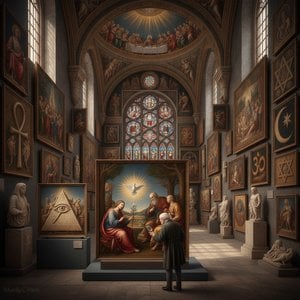
Explore the profound power of religious symbolism in art history. From Renaissance masterpieces to sacred iconography, uncover the hidden meanings behind divine details in a deep dive into classical art excellence.

Explore the profound beauty of Marian iconography through an art historian's lens. Discover iconic masterpieces by Raphael and Renaissance masters, celebrating the divine grace and timeless elegance of the Virgin Mary in classical fine art.
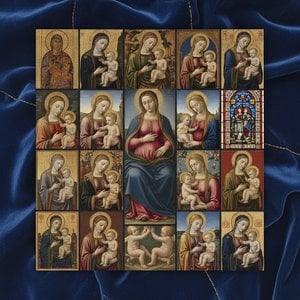
Embark on a sophisticated journey through art history with our curated guide to the most iconic Madonna and Child masterpieces. Discover the profound beauty, theological depth, and enduring legacy of these sacred Renaissance treasures.

Embark on a profound journey through art history with our exploration of the most iconic depictions of the Virgin Mary. Discover the divine grace, symbolism, and masterful techniques found in Renaissance masterpieces and sacred iconography.
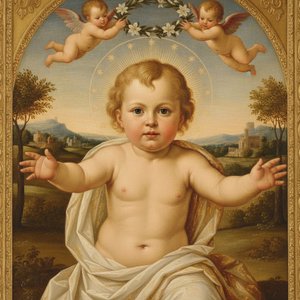
Explore the profound beauty of Baby Jesus in fine art history. From Raphael's Renaissance masterpieces to symbolic light, discover how classical painters captured divine innocence through masterful technique and sacred iconography.

 Katso seinällä
 Lähetä
 Jaa
Jaa
 Tarkemmat tiedot
 Opas
Opas

 Lataa kuva
 Samanlaisia kohteita
 Röntgenkuvaus
 Diaesitys
 Tilastot
 Lue lisää







 Lasivaihtoehto on saatavilla vain alle 110 cm kokoisille teoksille


