

 Oil On CanvasWallArtFauvism
 1906
1906 81.0 x 100.0 cm
Museolaatuisia giclée- tai kankaitaulun tulosteita nopealla tuotannolla ja joustavilla viimeistelyvaihtoehdoilla. ( Tilaa käsinmaalattu jäljennös Siirry digitaaliseen kuvaan)





























Valitse valmiista mitoistamme sellaiset, jotka vastaavat teoksen alkuperäisiä mittasuhteita.

Kirjoita tarvitsemasi leveys ja korkeus, jotta tuloste sopii kehyskokoon tai seinällesi. Tulostetta voidaan vain leikata, sitä ei voi koskaan tehdä suuremmaksi kuin alkuperäinen kuva, joten eri muotoinen koko aiheuttaa osan kuvasta katoamisen. Lähetämme sinulle digitaalisen mallikuvan hyväksyttäväksi ennen kuin aloitamme tulostuksen. Tällä sivulla näkyvä kuva ei näytä lopullista leikkausta — vain mallikuva näyttää sen.
Maailmanlaajuinen toimitus () 2 viikossa tavallisen 4–5 viikon sijaan. (21 lokakuu)
Charing Cross Bridge
Replikaatin koko
“Charing Cross Bridge” is inextricably linked to the broader context of early 20th-century art. The Fauvist movement, emerging in France around 1905, represented a radical departure from Impressionism and Post-Impressionism. Artists like Derain, Matisse, and Maurice de Wilde rejected traditional color harmonies and sought to create paintings that were purely subjective and emotionally charged. This was a time of immense social and technological change, and the Fauvist’s bold experimentation reflected a desire to break free from established conventions.
The painting's influence extends beyond its immediate aesthetic impact. It paved the way for subsequent movements like Expressionism, demonstrating the power of color to convey psychological states and subjective experiences. Derain's work is now housed in prestigious collections such as the Musée d’Orsay in Paris and the National Gallery of Art in Washington D.C., solidifying its place within art history.
Beyond its formal qualities, “Charing Cross Bridge” resonates with deeper symbolic meanings. The sunset, a recurring motif in art history, often represents the end of a cycle or the transition to a new phase. The bridge itself can be interpreted as a symbol of connection – connecting different parts of London, but also perhaps representing the connections between individuals and their environment.
Ultimately, “Charing Cross Bridge” is a painting that speaks to our primal emotions—our awe at the beauty of nature, our sense of wonder at the power of light, and our yearning for connection. It’s a testament to Derain's ability to translate these feelings into a powerfully expressive work of art.
Suositeltu käyttötapa teoksen "Charing Cross Bridge" painosteelle on Harmony.
Teos "Charing Cross Bridge" on yhdistetty André Derain.
Tekijänoikeuksien osalta teos "Charing Cross Bridge" on tekijänoikeusvapaa – sen tekijänoikeussuoja on päättynyt.


1880 - 1954 , Ranska
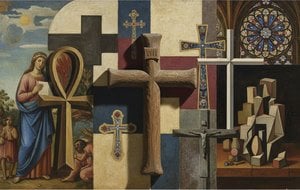
Delve into the profound symbolism of cross imagery in fine art history. From Renaissance masterpieces to sacred iconography, explore how religious motifs shape Western art through our expert cultural analysis and curated collection of museum-quality reproductions.

Explore the vibrant revolution of Fauvism. Discover how masters like Matisse liberated color to redefine modern art. Dive into an expert-led journey through the 'Wild Beasts' movement and learn how to bring this bold, expressive energy into your personal collection.

Embark on a visual journey through the golden hour. Discover how master painters capture the ethereal glow of sunsets, from Monet's Impressionism to the Hudson River School. Explore timeless techniques and bring the magic of twilight into your home with exquisite fine art reproductions.

Explore the vibrant world of Fauvism with our expert guide. Discover how Matisse and Derain revolutionized art through bold colors and expressive strokes. Perfect for classic art enthusiasts seeking to deepen their passion for modern masterpieces.

 Katso seinällä
 Lähetä
 Jaa
Jaa
 Tarkemmat tiedot
 Opas
Opas

 Lataa kuva
 Samanlaisia kohteita
 Röntgenkuvaus
 Diaesitys
 Tilastot
 Lue lisää









 Lasivaihtoehto on saatavilla vain alle 110 cm kokoisille teoksille


