

Museolaatuisia giclée- tai kankaitaulun tulosteita nopealla tuotannolla ja joustavilla viimeistelyvaihtoehdoilla. ( Tilaa käsinmaalattu jäljennös Siirry digitaaliseen kuvaan)





























Valitse valmiista mitoistamme sellaiset, jotka vastaavat teoksen alkuperäisiä mittasuhteita.

Voit syöttää omat mitat sopiaksesi tiettyyn kehykseen tai tilaan. Jos valittu koko ei vastaa alkuperäisen kuvan mittasuhteita, rajaamme teosta tai laajennamme kuvaa peilatulla tai yhtenäisellä reunalla. Digitaalinen mallikuva lähetetään hyväksyttäväksi ennen tuotannon aloittamista.
Huomaathan, että näytöllä näkyvä esikatselu ei vastaa lopullista rajausta tai laajennusta. Vain mallikuva näyttää lopullisen sommittelun tarkasti.
Vaikka räätälöityjä kokoja on saatavilla, suosittelemme valitsemaan mitat valmiista listasta alkuperäisten mittasuhteiden säilyttämiseksi.
Maailmanlaajuinen toimitus () 2 viikossa tavallisen 4–5 viikon sijaan. (24 syyskuu)


Adam And Eve
Replikaatin koko
Albrecht Dürer's "Adam And Eve," a seminal work of the Northern Renaissance, transcends mere depiction; it is an embodiment of humanity’s earliest story and a profound meditation on innocence, temptation, and the fall. Painted around 1507, this oil-on-canvas masterpiece captures a pivotal moment from Genesis – the presentation of the forbidden fruit to Adam and Eve by Satan, disguised as a serpent. The scene unfolds with an arresting realism, characteristic of Dürer’s meticulous observation and unparalleled technical skill. The figures, rendered in exquisite detail, possess a palpable vulnerability and nascent awareness, reflecting the very essence of their newly-acquired humanity. Dürer's masterful use of light and shadow – a hallmark of Northern Renaissance painting – dramatically emphasizes the textures of skin, fabric, and foliage, creating an intensely atmospheric effect that draws the viewer directly into the narrative.
Beyond the literal depiction of the biblical story, "Adam And Eve" is laden with symbolic meaning. The serpent, traditionally associated with cunning and deceit, represents the forces of evil tempting humanity away from divine grace. The fruit itself – often interpreted as the apple – symbolizes knowledge and transgression. The surrounding landscape, rendered with meticulous detail, suggests a primal paradise lost, a reflection of the human condition’s inherent vulnerability to temptation. Dürer's careful composition reinforces this symbolism; the figures are positioned in a way that emphasizes their isolation and dependence on each other, highlighting the consequences of disobedience.
"Adam And Eve" stands as a cornerstone of Northern Renaissance art, profoundly influencing generations of artists. Dürer’s work exemplifies the era's fascination with classical antiquity, humanism, and religious themes. It represents a pivotal moment in the development of European painting, bridging the gap between medieval artistic conventions and the burgeoning innovations of the High Renaissance. This reproduction offers an unparalleled opportunity to own a piece of art history – a testament to Dürer’s genius and a timeless exploration of fundamental human experiences. Its enduring appeal makes it a valuable addition to any discerning collection or a striking focal point for interior design.


1471 - 1528 , Saksa
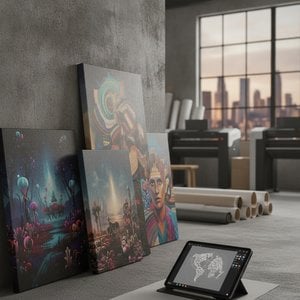
Transform your digital artistry into a prestigious global brand with WahooArt’s premium Giclée prints. Experience museum-quality archival excellence and seamless on-demand fulfillment designed for the modern creative entrepreneur seeking to build a lasting artistic legacy.

Master the nuances of Giclée printing with our expert guide. Discover how pigment-based inks and museum-grade substrates create fade-resistant, high-fidelity art reproductions designed for discerning collectors seeking unparalleled quality and longevity.

 Katso seinällä
 Lähetä
 Jaa
Jaa
 Tarkemmat tiedot
 Opas
Opas

 Lataa kuva
 Samanlaisia kohteita
 Röntgenkuvaus
 Diaesitys
 Tilastot

 Lue lisää







 Lasivaihtoehto on saatavilla vain alle 110 cm kokoisille teoksille


