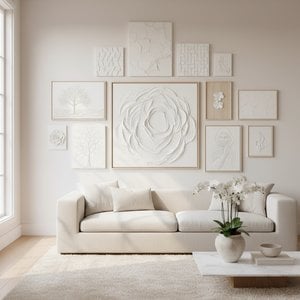
Katso seinällä Esikatsele AR-tilassa Tilaa käsinmaalattu jäljennös Siirry digitaaliseen kuvaan Lähetä
Tarkemmat tiedot Opas Lisää suosikkeihin Lataa kuva Samanlaisia kohteita Röntgenkuvaus Diaesitys Tilastot

The Tree

Agnes Martin (1912-2004) oli kanadalais-yhdysvaltalainen abstrakti taiteilija, joka tunnetaan minimalistisista, rauhallisuutta ja meditoinnia inspiroivista grid-maalaustensa ansiosta. Hänen tyylinsä vaikutti merkittävästi taiteen historiaan ja hän on edelleen arvostettu taiteilija.

Tällä sivulla esitettyä taideteosta suojaa tekijänoikeuslaki, mikä tarkoittaa, ettemme voi laillisesti luoda tai myydä täsmälleen samanlaista jäljennöstä. Tämä suoja toteutetaan kansainvälisten sopimusten, kuten esimerkiksi Berne-konventio ja kansallisilla laeilla, mukaan lukien niillä määritellyt Yhdysvaltain tekijänoikeuslaki – Luku 17. Kaikki oikeudet pidätetään. Luvaton kopiointi tai jäljittely on kielletty.

Tämä menetelmä noudattaa täysin tekijänoikeussäännöksiä, sillä se ei sisällä suojatun taideteoksen kopioimista tai jäljentämistä. Sen sijaan kyseessä on luova uudelleentulkinta – uusi maalaus, joka ammentaa vaikutteita alkuperäisestä, mutta ei ole sen identtinen kopio.

Giclée- ja taideprintit

Museolaatuisia giclée- tai kankaitaulun tulosteita nopealla tuotannolla ja joustavilla viimeistelyvaihtoehdoilla. ( Tilaa käsinmaalattu jäljennös Siirry digitaaliseen kuvaan)

Corner sample of the P118B picture frame: valettu polystyreeni, 5 cm wide and 3 cm thick
P118B €10
Corner sample of the P118H picture frame: valettu polystyreeni, 5 cm wide and 3 cm thick
P118H €10
Corner sample of the P118W picture frame: valettu polystyreeni, 5 cm wide and 3 cm thick
P118W €10
Corner sample of the P438Z picture frame: valettu polystyreeni, 5.5 cm wide and 3.5 cm thick
P438Z €10
Corner sample of the P508JH picture frame: valettu polystyreeni, 7 cm wide and 3.5 cm thick
P508JH €12
Corner sample of the P508YH picture frame: valettu polystyreeni, 7 cm wide and 3.5 cm thick
P508YH €12
Corner sample of the P805H picture frame: valettu polystyreeni, 5 cm wide and 3.5 cm thick
P805H €10
Corner sample of the P805Z picture frame: valettu polystyreeni, 5 cm wide and 3.5 cm thick
P805Z €10
Corner sample of the P919BZ picture frame: valettu polystyreeni, 7 cm wide and 3.5 cm thick
P919BZ €10
Corner sample of the P919G picture frame: valettu polystyreeni, 7 cm wide and 3.5 cm thick
P919G €10
Corner sample of the P919XJ picture frame: valettu polystyreeni, 7 cm wide and 3.5 cm thick
P919XJ €10
Corner sample of the P959ZH picture frame: valettu polystyreeni, 5 cm wide and 3 cm thick
P959ZH €10
Corner sample of the P968JZ picture frame: valettu polystyreeni, 6 cm wide and 4 cm thick
P968JZ €12
Corner sample of the W106C picture frame: massiivipuu, 5 cm wide and 3 cm thick
W106C €8
Corner sample of the W218G picture frame: massiivipuu, 5 cm wide and 3 cm thick
W218G €10
Corner sample of the W218JH picture frame: massiivipuu, 5 cm wide and 3 cm thick
W218JH €8
Corner sample of the W218Y picture frame: massiivipuu, 5 cm wide and 3 cm thick
W218Y €10
Corner sample of the W307PJ picture frame: massiivipuu, 6 cm wide and 3 cm thick
W307PJ €10
Corner sample of the W316G picture frame: massiivipuu, 6 cm wide and 3 cm thick
W316G €10
Corner sample of the W316PJ picture frame: massiivipuu, 6 cm wide and 3 cm thick
W316PJ €8
Corner sample of the W316Y picture frame: massiivipuu, 6 cm wide and 3 cm thick
W316Y €10
Corner sample of the W398PJ picture frame: massiivipuu, 5 cm wide and 3 cm thick
W398PJ €8
Corner sample of the W4111J picture frame: massiivipuu, 6.5 cm wide and 3.5 cm thick
W4111J €10
Corner sample of the W500HY picture frame: massiivipuu, 7 cm wide and 5 cm thick
W500HY €15
Corner sample of the W500JH picture frame: massiivipuu, 7 cm wide and 5 cm thick
W500JH €15
Corner sample of the W692G picture frame: massiivipuu, 8 cm wide and 4 cm thick
W692G €12
Corner sample of the W849H picture frame: massiivipuu, 5 cm wide and 3 cm thick
W849H €8
Corner sample of the W940BG picture frame: massiivipuu, 7.5 cm wide and 4.5 cm thick
W940BG €15
Corner sample of the W953PJ picture frame: massiivipuu, 6 cm wide and 3.5 cm thick
W953PJ €8

Vakiokoko
mittatilaustyö
CM
INCH

Valitse valmiista mitoistamme sellaiset, jotka vastaavat teoksen alkuperäisiä mittasuhteita.

leveys
korkeus

Type the width and the height you need, to fit your frame or your wall. A print can only be cut, never made bigger than the picture, so a size with a different shape loses a part of the image. We send you a digital mockup to approve before we print anything. The picture shown on this page does not show the real cut — only the mockup does.

Maailmanlaajuinen toimitus () 2 viikossa tavallisen 4–5 viikon sijaan. (14 lokakuu)

Ilmainen pikatoimitus ympäri maailman
Korkealaatuinen pellavakangas
Kattava kuljetusvakuutus
Tulliveron palautustakuu
Takuu täydellisestä värien vastaavuudesta
100 päivän palautusoikeus valmistusvirhetapauksissa
100% rahat takaisin -takuu
Määräalennus saatavilla

Kokonaishinta

€ 59

The Tree

Giclée- ja taideprintit

Replikaatin koko

-

Kokonaishinta

€ 59

Pikaista tietoa

  • Title: The Tree
  • Influences: Open landscapes
  • Artistic style: Grid painting, Abstract
  • Dimensions: 183 x 183 cm
  • Artist: Agnes Martin

Taidevisakysely

Jokaisessa kysymyksessä on vain yksi oikea vastaus.

Kysymys 1:
What is the dominant visual element of Agnes Martin’s ‘The Tree’?
Kysymys 2:
The artwork's minimalist style aligns with which broader artistic movement?
Kysymys 3:
According to the description, what is a key characteristic of the lines in ‘The Tree’?
Kysymys 4:
What does the repetitive nature of the lines in ‘The Tree’ likely evoke?
Kysymys 5:
In what year was ‘The Tree’ created?

A Quiet Resonance: Agnes Martin’s “The Tree” – A Study in Minimalism and Introspection

Agnes Martin's "The Tree," painted in 1964, isn’t a painting that shouts for attention; rather, it invites a slow, deliberate engagement. Measuring a substantial 183 x 183 cm, this work embodies the core tenets of Minimalist art – reduction to essential forms, an embrace of objectivity, and a profound exploration of space and perception. It's a piece that speaks volumes through its silence, offering a meditative experience for the viewer as much as it does a visual one.

The artwork’s foundation lies in a deceptively simple arrangement: horizontal lines, rendered in subtle variations of pale grey and white, stretch across the canvas. These aren't perfectly aligned or uniformly thick; instead, they possess a gentle irregularity, a slight wobble that imbues the composition with an organic quality despite its geometric structure. This deliberate imperfection is key to Martin’s approach – she sought to capture the essence of feeling rather than precise representation. The technique employed appears to be meticulous layering of thin paint, likely acrylic or oil, creating a surface that feels both smooth and subtly textured, hinting at the artist's hand in shaping this serene landscape.

The Roots of Minimalism: Context and Influences

To understand “The Tree,” it’s crucial to consider Agnes Martin’s artistic journey. Born in 1912 in Mackinaw City, Canada, her early life was marked by constant relocation following the death of her father. This nomadic upbringing fostered a sense of detachment and an appreciation for vast, open spaces – qualities that would become central to her art. Martin initially pursued education in English and art, eventually finding her voice within the burgeoning Minimalist movement of the 1960s. Influenced by artists like Sol LeWitt and Donald Judd, she rejected traditional representational painting, instead focusing on the fundamental elements of line, shape, and color to evoke emotional responses.

The period surrounding 1964 was a pivotal one for Minimalist art, characterized by a desire to strip away all extraneous detail and focus solely on the inherent qualities of materials and processes. Martin’s work aligns perfectly with this ethos, offering a quiet counterpoint to the more assertive and conceptual approaches of some of her contemporaries. The grid-like structure, reminiscent of early 20th-century geometric abstraction, subtly nods to the legacy of artists like Piet Mondrian, while simultaneously forging its own distinct path.

Decoding the Symbolism: Lines as Pathways

While “The Tree” resists overt interpretation, its formal elements invite contemplation. The repetitive horizontal lines can be seen as pathways or currents – perhaps representing the passage of time, the flow of experience, or even the vastness of the landscapes that shaped Martin’s early life. The subtle variations in tone and thickness create a sense of depth, not through perspective, but through a carefully orchestrated modulation of light and shadow. This is a painting about feeling, rather than seeing; it's an invitation to lose oneself within its quiet rhythm.

Martin herself often resisted assigning specific meanings to her work, preferring that viewers find their own interpretations. The simplicity of the composition allows for a deeply personal connection – each viewer brings their own experiences and emotions to bear on this understated masterpiece. The absence of a central focal point encourages a holistic viewing experience, demanding that we engage with the entire surface of the canvas.

A Timeless Appeal: Reproduction and Interior Design

"The Tree" by Agnes Martin is more than just a painting; it’s an embodiment of tranquility and introspection. WahooArt offers meticulously crafted hand-painted reproductions that faithfully capture the nuances of this iconic work, ensuring that its quiet resonance can be experienced in any setting. Its minimalist aesthetic makes it exceptionally versatile, lending itself beautifully to contemporary interiors – from serene living rooms to contemplative studies. The subtle tonal variations create a calming effect, while the irregular lines add a touch of organic warmth. Investing in a reproduction of “The Tree” is an investment in a piece of art that speaks directly to the soul, offering a moment of respite and reflection in our increasingly complex world.

Kysymykset ja vastaukset

Mitkä ovat alkuperäisen teoksen Agnes Martin:n "The Tree" mitat?

Teoksen Agnes Martin:n "The Tree" mitat ovat 183 x 183 cm. Vedoksia voi tilata muissa koossa säilyttäen samat mittasuhteet.

Mikä on teoksen "The Tree" formaatti ja koko?

Agnes Martin:n "The Tree" on Square-tyyppinen teos, jonka alkuperäiset mitat ovat 183 x 183 cm.

Mitä Agnes Martin:n "The Tree" tuo sisustukseen?

Agnes Martin:n "The Tree" -teoksen Calm tunnelma sopii täydellisesti sen suositeltuun tilaan: Living Room.


Taiteilijan elämäkerta

Agnes Martin

Agnes Bernice Martin (22. maaliskuuta 1912 Macklin, Saskatchewan, Kanada – 16. joulukuuta 2004 Taos, New Mexico, Yhdysvallat) oli yhdysvaltalainen taiteilija. Hän oli merkittävä abstraktin taiteen edustaja, joka tunnetaan erityisesti minimalistisista maalauksistaan ja niiden syvällisenä yhteydenä zeniläiseen filosofiaan. Martinin työ vaikutti voimakkaasti sekä abstrakteihin ekspressionisteihin että minimalistiseen liikkeeseen 1950- ja 1960-luvuilla, ja hänen henkilökohtainen elämänsä tarjoaa ainutlaatuisen näkökulman siihen, kuinka taiteilija voi kehittää oman tyylinsä. Hän oli yksi ensimmäisistä naisista Yhdysvalloissa, joka sai kansallisesti tunnustuksen taiteesta.

Early Life and the Seeds of Abstraction

Agnes Bernice Martin syntyi Macklinissa, Saskatchewanissa vuonna 1912. ”Grandparentsini molemmilta puolilta tulivat Skotlannista ja heidän piti muuttaa Prairielle kuorma-autoilla,” hän kertoi Archives of American Artille vuonna 1989. ”Vanhempani olivat myös pioneereja; he perustivat oman maatilan Saskatchewaniin, mutta isäni hallitsi myös vehnämyllyä ja jauhojalosta.” Martinin isä Malcolm Martin perusteli Mackliniin vuonna 1908 maanomistuksen jälkeen hän oli taistellut Boerin sodassa Etelä-Afrikassa. Hän palveltiin 5. Kanadan ratsuväkirykmentissä Portage la Prairessa vuonna 1902 ja oli yksinäinen; hän ei ollut naimisissa. Hän kuoli kesällä 1914, kun Martin oli vain kaksi vuotta vanha. Hänen äitinsä Margaret oli Robert Kinnonin tyttären tytär Lumsdenista Saskatchewanissa. Hänen äitinsä kuoli Martinin ollessa noin yksi vuosi vanha, mutta hänen isänsä eli vuoteen 1936. Martin kävi Dawson Public Schoolissa ja myöhemmin King George Secondary Schoolissa. Hän muutti Vancouveriin vuonna 1921 ja hän oli ensimmäinen naisyliopistossa opiskelija Pohjoismaissa. Hänen koulutuksensa jälkeen hän jatkoi opintojaan Berliinin musiikkiopiston konservatoriossa Ernst Joachimin johdolla ja Emanuel Wirthin sekä Joseph Joachimin kanssa. Hän sai myös palkinnon musiikin historiasta Philipp Spittalta. Vuonna 1989 Martin valittiin Yhdysvaltain taideakatemiaan (American Academy and Institute of Arts and Letters).

Zen Buddhism, Minimalism, and the Emergence of a Unique Style

Martinin henkilökohtainen filosofia oli vahvasti sidoksissa zeniläiseen buddhalaisuuteen. Hän ei nähnyt sitä uskonnollisena käytäntönä vaan filosofisena ohjeena elämälle – käytännöllisenä opettajana, joka korosti yksinkertaisuutta, mindfulnessia ja sisäistä rauhaa. Tämä filosofia vaikutti syvästi hänen taiteeseensa ja inspiroi häntä kehittämään oman tyylinsä. Zenin vaikutus näkyy erityisesti Martinin keskittyneisyytenä yksittäiseen tehtävään sekä hänen pyrkimyksenään poistaa kaikki ylimääräiset elementit työstä. Hän oli erityisen vaikuttunut Ad Reinhardtin minimalistisesta tyylistä ja yksivärimäälaauksista, jotka kannustivat häntä vähentämään taidetta sen olennaiseen muotoon. Tämä pyrkimys essenttiin johti siihen, että hän kehitti tunnusomaisen tyylinsä: yksinkertaiset ruudukko maalaukset, jotka koostuvat hienosti piirrettävistä viivoista ja joskus täytettynä vaaleilla väreillä – yleensä hunajankeltaisella, laventelilla tai vaalealla sinellä. Näiden ruudukoiden ei ollut tarkoitettu olevan jäykkiä rakenteita vaan pikemminkin hengittäviä kuvioita, jotka näyttivät liikkuvan sisäisen valon vaikutuksesta. Hän käytti usein vain muutaman värin yhdistelmää maalauksissaan ja pyrki luomaan yksinkertaisen mutta vaikuttavan kokemuksen katsojalle. Martinin työ oli erityisesti vaikuttavaa sen syvyydestä ja yksinkertaisuudesta sekä siitä, että hän sai aikaan tunteen rauhaa ja keskittymistä. Hän väitti, että taide voi olla väline hengelliseen kasvulle.

Major Achievements and Artistic Legacy

Martinin ura jatkui yli neljä vuosikymmentä, jonka aikana hän kehitti oman henkilökohtaisen tyylinsä ja sai tunnustusta maailmanlaajuisesti. Hän oli yksi ensimmäisistä naisista Yhdysvalloissa, joka sai kansallisesti tunnustuksen taiteesta. Hänen maalauksensa ovat tunnettuja yksinkertaisuudestaan sekä niiden kyvystään herättää katsojassa syviä tunteita ja pohdintaa. Martinin työ vaikutti merkittävästi abstraktiin ekspressionismiin ja minimalistiseen liikkeeseen 1950- ja 1960-luvuilla, ja hänen henkilökohtainen elämänsä tarjoaa ainutlaatuisen näkökulman siihen, kuinka taiteilija voi kehittää oman tyylinsä. Hänen työnsä jatkaa inspiroimistaan nuorempia taiteilijoita ympäri maailmaa ja hänestä on muodostunut yksi abstraktin taiteen keskeisistä henkilöistä. Martinin nimi tulee olemaan ikimuistoinen taiteen historiassa. Hän oli todellinen innovaattori, joka muutti käsitystä siitä mitä abstrakti taide voi olla. Hänen maalauksensa ovat pysyvästi osa maailman kulttuuriperintöä. ## Notable Works
  • Untitled no. - (1)
  • The tree
  • Untitled # 9
Agnes Martin

Agnes Martin

1912 - 2004 , Kanada

Tietoa taiteilijasta

  • Artistic Movement Or Style: Minimalismi
  • Artists Or Movements Influenced By This Artist: ['Contemporary artisti']
  • Artists Who Influenced This Artist: ['Ad Reinhardt']
  • Date Of Birth: March 22, 1912
  • Date Of Death: December 16, 2004
  • Full Name: Agnes Bernice Martin
  • Nationality: Kanadalainen
  • Notable Artworks:
    • Untitled no. - (1)
    • The tree
    • Untitled # 9
  • Place Of Birth: Macklin, Kanada