Vaata sisu Vaata AR-eelvaadet Telli käsitsi maalitud reproduktsioon Ülemineku digitaalse pildi müügi kanalisse Jaga teost
Detailid Õppekate juhend Lisa lemmikutesse Laadi alla Sarnased teosed Röntgenuuring Slaidietendus Statistika

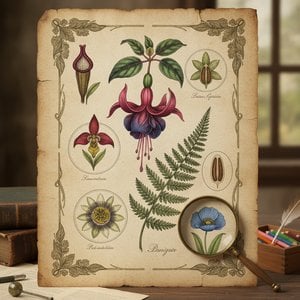
(Untitled--Flower Study)

Discover Mary Vaux Walcott’s exquisite watercolor ‘Untitled--Flower Study’ (1886). A delicate botanical masterpiece showcasing wildflowers, reflecting her pioneering spirit & Audubon-like talent.

Mary Vaux Walcott oli "Audubon loodusest", tuntud oma täiuslike lillevärvimuste ja loodusajaloo panuse eest. Leia uus kirje selle kunstniku kohta!

Giclée / Kunstiprint

Muuseumikvaliteediga giclée- või kangasprint kiire tootmisega ja paindlikud viimistlusvõimalused. ( Telli käsitsi maalitud reproduktsioon Ülemineku digitaalse pildi müügi kanalisse)

P118B $10
P118H $10
P118W $10
P438Z $10
P508JH $12
P508YH $12
P805H $10
P805Z $10
P919BZ $10
P919G $10
P919XJ $10
P959ZH $10
P968JZ $12
W106C $8
W218G $10
W218JH $8
W218Y $10
W307PJ $10
W316G $10
W316PJ $8
W316Y $10
W398PJ $8
W4111J $10
W500HY $15
W500JH $15
W692G $12
W849H $8
W940BG $15
W953PJ $8

Standardne suurus
kohandatud
CM
INCH

Vali meie eelmääratud suurused, mis vastavad teose algupärastele proportsioonidele.

laius
kõrgus

Saate sisestada oma mõõdud, et need sobiks konkreetse raami või ruumi sisse. Kui valitud suurus ei vasta originaalteose proportsioonidele, lõigame teose ära või laiendame pilti peegeldatud või ühtlase servaga. Enne tootmisprotsessi algust saadetakse Teie kinnitamiseks digitaalne näidis.
Palun märka, et ekraanil kuvatav eelvaade ei kajasta tegelikku lõigamist või laiendamist. Ainult näidis kujutab täpselt lõplikku kompositsiooni.
Kuigi erimõõdu on saadaval, soovitame originaaproportsioonide säilitamiseks valida mõõt ette määratud nimekirjast.

Ülemaailmne tarne () 2 nädala jooksul, tavalise 4/5 nädala asemel. (27 september)

why_choose_icon
Tasuta ekspresssaatmine üle maailma
why_choose_icon
Kõrgekvaliteediline lina-kangastest muld
why_choose_icon
Täielik transpordikindlustus
why_choose_icon
Tollimaksude tagastamise garantii
why_choose_icon
Värvitoime täpsuse garantii
why_choose_icon
100 päeva tagastusõigus (ainult defektide korral)
why_choose_icon
100% raha tagasi garantii
why_choose_icon
Hulgusoodustus

Kogu summa

$ 68

reproduction

(Untitled--Flower Study)

Giclée / Kunstiprint

Reproduktsiooni mõõtmed

-

Lõppsumma

$ 68

Teave teose kohta

  • Artistic style: Botanical illustration
  • Dimensions: 23 x 14 cm
  • Notable elements: Diverse floral bouquet
  • Influences: Audubon
  • Year: 1886
  • Title: Untitled--Flower Study
  • Artist: Mary Vaux Walcott

Kunstiteaduse kvartett

Iga küsimuse kohta on ainult üks õige vastus.

Küsimus 1:
What is the primary subject of this watercolor painting?
Küsimus 2:
According to the description, what type of flowers are prominently featured in the painting?
Küsimus 3:
Which of the following best describes Mary Vaux Walcott's artistic reputation?
Küsimus 4:
In what year was this painting created?
Küsimus 5:
The painting’s composition features the vase of flowers positioned towards which element?

A Moment Preserved: Mary Vaux Walcott’s “Untitled – Flower Study”

Mary Vaux Walcott's "Untitled – Flower Study," painted in 1886, is more than just a watercolor depiction of blossoms; it’s a poignant glimpse into the life and artistic vision of a pioneering naturalist and artist. Measuring a modest 23 x 14 cm, this intimate piece belies the depth of observation and meticulous detail that characterized Walcott's work – earning her the affectionate title “the Audubon of Botany.” The painting captures a vibrant bouquet, dominated by shades of purple, white, and delicate pink, arranged within a simple yet elegant vase. It’s a scene brimming with life, radiating an almost palpable sense of summer’s fleeting beauty.

Walcott's artistic journey began in Philadelphia during a time when women’s roles were largely confined to domesticity. Yet, from her early childhood fascination with wildflowers – a gift of watercolor paints at the tender age of eight – she forged a path that defied societal expectations. The painting itself speaks to this resilience and determination; each petal is rendered with astonishing precision, capturing not just their outward appearance but also the subtle textures and delicate veins that reveal their inherent structure. Her technique leans heavily on wet-on-wet watercolor washes, creating luminous layers of color and a soft, atmospheric quality that evokes the hazy light filtering through a summer garden.

The Botanist’s Eye: Scientific Observation and Artistic Expression

Walcott's work was deeply rooted in scientific observation. Her extensive travels throughout North America, particularly her expeditions to the Canadian Rockies alongside her husband, Charles Doolittle Walcott (himself a renowned paleontologist), provided her with unparalleled access to a vast array of wildflowers. These journeys weren’t merely recreational; they were meticulously documented through detailed botanical illustrations and field notes. “Untitled – Flower Study” exemplifies this approach—it's not simply a pretty picture, but a carefully recorded specimen, a testament to Walcott’s dedication to cataloging the natural world.

The arrangement of flowers within the vase is deliberate, suggesting a thoughtful composition rather than a random assortment. Notice how she groups similar blooms together – clusters of purple lupines and white daisies create visual harmony while highlighting their individual characteristics. This careful attention to detail reflects Walcott’s scientific rigor, but it also reveals an innate artistic sensibility—a desire to capture not just the *what* of the flowers, but also the *how* they interact with light and space.

A Pioneer in a Male-Dominated Field

Mary Vaux Walcott's story is one of remarkable perseverance in a field dominated by men. She faced considerable resistance to her artistic pursuits, particularly from her family who initially favored more traditional roles for women. Yet, she persisted, driven by an unwavering passion for botany and a desire to share her observations with the world. Her work was eventually recognized by the Smithsonian Institution, where it remains a treasured part of their collection – a testament to her enduring legacy as “the Audubon of Botany.”

The painting’s historical context is crucial to understanding its significance. During the late 19th century, there was growing interest in natural history and scientific illustration. Artists like Walcott were commissioned to document the flora and fauna of North America, contributing significantly to our knowledge of the region's biodiversity. Her work stands as a vital record of a bygone era, capturing the beauty and fragility of wildflowers before widespread environmental change threatened their existence.

Emotional Resonance: A Quiet Moment of Beauty

"Untitled – Flower Study" possesses a quiet emotional resonance that transcends its simple subject matter. The soft colors, delicate brushstrokes, and intimate scale create a sense of serenity and contemplation. It’s a reminder to pause, appreciate the beauty of the natural world, and reflect on the interconnectedness of all living things. The painting invites us into a private moment—a glimpse of summer's fleeting grace captured forever on paper.

WahooArt offers meticulously crafted hand-painted reproductions of this exquisite watercolor, allowing you to bring this captivating piece of art history into your home or office. Each reproduction is created with the same care and attention to detail as the original, ensuring that you experience the full beauty and emotional impact of Mary Vaux Walcott’s masterpiece.


Kunstniku elulugu

Mary Vaux Walcott (1860-1940): A Life Blossoming in Watercolor

Mary Vaux Walcott, born July 31, 1860, in Philadelphia, Pennsylvania, was an American artist and naturalist whose extraordinary talent cemented her place as “the Audubon of Botany.” Her life’s journey—from a childhood fascination with watercolor paints to a distinguished career documenting the breathtaking beauty of North America's wildflowers—stands as a testament to unwavering passion and intellectual curiosity. Little did anyone imagine that this early inclination would blossom into such an enduring legacy in both art and science.

Early Influences & Artistic Beginnings

Mary Morris Vaux’s artistic spirit ignited at age eight when she received a set of watercolor paints – a gift that irrevocably shaped her life's path. Growing up within Philadelphia’s Quaker society instilled values of simplicity, compassion, and intellectual rigor, profoundly influencing her worldview. Her parents, Sarah and George Vaux, were educators who fostered Mary’s love for learning and encouraged her exploration of diverse subjects. From an early age, she demonstrated a remarkable aptitude for observation and meticulous detail—skills that would prove invaluable in her subsequent botanical pursuits. The Quaker faith emphasized the importance of connecting with God through contemplation of creation, fostering a deep appreciation for the natural world that would become central to Mary’s artistic vision. Her initial watercolor studies focused on capturing the delicate hues and textures of wildflowers encountered during family excursions to the Rocky Mountains—a formative experience that established her lifelong fascination with alpine flora.

The Canadian Rockies: A Laboratory For Observation & Artistic Expression

The Canadian Rockies became Mary Vaux Walcott's primary artistic laboratory and scientific focus. Alongside her brothers, George and William, she embarked on annual summer expeditions to these majestic mountains, meticulously documenting the region’s geological formations and botanical diversity. These journeys weren’t merely scenic adventures; they were immersive investigations into glacial movements, mineralogy, and plant ecology—activities that demanded both physical stamina and intellectual rigor. During these expeditions, Mary honed her skills as a botanist, initially at the behest of scientists eager for accurate depictions of rare species. Her approach was revolutionary for its time: she rendered plants to scale, showcasing their intricate structures and vibrant colors with unparalleled precision. Unlike many floral paintings of the era, which often romanticized or stylized their subjects, Walcott’s work prioritized scientific accuracy alongside artistic expression—a harmonious blend that reflected her profound respect for both nature and art. Her determination to record the Rockies' flora was fueled by a conviction that beauty could serve as a catalyst for understanding—a belief that underpinned her entire artistic practice.

A Scientific Pioneer & The Pursuit of Accuracy

Mary Vaux Walcott’s groundbreaking contribution to botany extended beyond mere aesthetic appreciation; she championed scientific rigor and challenged prevailing assumptions about the natural world. Her meticulous observations and detailed drawings provided invaluable data for glacial research, furthering our understanding of climate change—a concern that resonated deeply with her throughout her life. She was among the first women to accomplish the over 10,000 feet ascent of Mount Stephen in Canada’s Yoho National Park—a feat that underscored her physical courage and unwavering dedication to exploration. Her collaborative spirit shone through her partnership with fellow artist Mary Schäffer Warren, who shared her passion for documenting the Rockies' landscapes. Walcott’s insistence on capturing plants at scale—rather than simplifying them for artistic effect—represented a radical departure from conventional botanical illustration techniques. This commitment to realism ensured that her paintings served as invaluable resources for scientists and wildflower enthusiasts alike.

Legacy & Recognition: “The Audubon of Botany” Endures

Mary Vaux Walcott’s legacy extends far beyond the beauty of her watercolor wildflowers; it resides in her pioneering spirit, her unwavering dedication to scientific inquiry, and her profound influence on the field of botanical illustration. Her five-volume *North American Wild Flowers* (1925)—featuring over 400 meticulously crafted illustrations accompanied by detailed descriptions—became a landmark publication, solidifying her reputation as “the Audubon of Botany.” This work stands as an enduring testament to her artistic skill and scientific rigor—a harmonious blend that continues to inspire artists and scientists today. Her unwavering belief in the transformative power of observation—combined with her commitment to preserving the natural world—remains a beacon of inspiration for generations to come. She died August 22, 1940, leaving behind an indelible mark on American art history and cementing her place as one of the most remarkable naturalist-artists of her time.
Mary Vaux Walcott

Mary Vaux Walcott

1860 - 1940 , USA

Lühikest infot

  • Artistic Movement Or Style: Botanical Illustration
  • Artists Who Influenced This Artist: ['John James Audubon']
  • Date Of Birth: July 31, 1860
  • Date Of Death: August 22, 1940
  • Full Name: Mary Vaux Walcott
  • Nationality: American
  • Notable Artworks:
    • Autumn Leaves
    • Gaillardia aristata
    • Rosa bourgeauiana
    • Dendromecon rigidum
    • Fremontodendron mexicanum
  • Place Of Birth: Philadelphia, USA