Vaata sisu Vaata AR-eelvaadet Lülita trükkitoodetele Ülemineku digitaalse pildi müügi kanalisse Jaga teost
Detailid Õppekate juhend Lisa lemmikutesse Laadi alla Sarnased teosed Röntgenuuring Slaidietendus Statistika

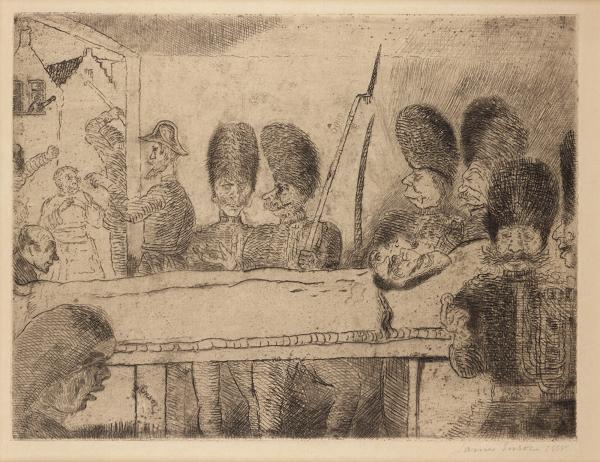
The Gendarmes

James Ensor’s ‘The Gendarmes’ – a haunting monochromatic etching depicting a crowded scene of soldiers & civilians. Explore Expressionism's unsettling style & social commentary.

James Ensor oli Belgia maalikunstnik ja graafik, kes tunnetaan erityisesti häikäisevästä groteskista kuvastuksestaan sekä karnevaalimaskeista että luurangosta. Hän oli ekspressionismi ja surrealismi liikkeen varhainen pioneeri ning jätkus kunstilinnakena maailmale suurteoseksi.

Käsitsi valmistatud õlimaalireproduktsioon

Meie kunstnike poolt tellimusel valmistatud käsitsi maalitud õli-kainaste teos teie soovitud suuruses ja raamis. ( Lülita trükkitoodetele Ülemineku digitaalse pildi müügi kanalisse)

Corner sample of the P118B picture frame: moulded polystyrene, 5 cm wide and 3 cm thick
P118B 10
Corner sample of the P118H picture frame: moulded polystyrene, 5 cm wide and 3 cm thick
P118H 10
Corner sample of the P118W picture frame: moulded polystyrene, 5 cm wide and 3 cm thick
P118W 10
Corner sample of the P438Z picture frame: moulded polystyrene, 5.5 cm wide and 3.5 cm thick
P438Z 10
Corner sample of the P508JH picture frame: moulded polystyrene, 7 cm wide and 3.5 cm thick
P508JH 12
Corner sample of the P508YH picture frame: moulded polystyrene, 7 cm wide and 3.5 cm thick
P508YH 12
Corner sample of the P805H picture frame: moulded polystyrene, 5 cm wide and 3.5 cm thick
P805H 10
Corner sample of the P805Z picture frame: moulded polystyrene, 5 cm wide and 3.5 cm thick
P805Z 10
Corner sample of the P919BZ picture frame: moulded polystyrene, 7 cm wide and 3.5 cm thick
P919BZ 10
Corner sample of the P919G picture frame: moulded polystyrene, 7 cm wide and 3.5 cm thick
P919G 10
Corner sample of the P919XJ picture frame: moulded polystyrene, 7 cm wide and 3.5 cm thick
P919XJ 10
Corner sample of the P959ZH picture frame: moulded polystyrene, 5 cm wide and 3 cm thick
P959ZH 10
Corner sample of the P968JZ picture frame: moulded polystyrene, 6 cm wide and 4 cm thick
P968JZ 12
Corner sample of the W106C picture frame: solid wood, 5 cm wide and 3 cm thick
W106C 8
Corner sample of the W218G picture frame: solid wood, 5 cm wide and 3 cm thick
W218G 10
Corner sample of the W218JH picture frame: solid wood, 5 cm wide and 3 cm thick
W218JH 8
Corner sample of the W218Y picture frame: solid wood, 5 cm wide and 3 cm thick
W218Y 10
Corner sample of the W307PJ picture frame: solid wood, 6 cm wide and 3 cm thick
W307PJ 10
Corner sample of the W316G picture frame: solid wood, 6 cm wide and 3 cm thick
W316G 10
Corner sample of the W316PJ picture frame: solid wood, 6 cm wide and 3 cm thick
W316PJ 8
Corner sample of the W316Y picture frame: solid wood, 6 cm wide and 3 cm thick
W316Y 10
Corner sample of the W398PJ picture frame: solid wood, 5 cm wide and 3 cm thick
W398PJ 8
Corner sample of the W4111J picture frame: solid wood, 6.5 cm wide and 3.5 cm thick
W4111J 10
Corner sample of the W500HY picture frame: solid wood, 7 cm wide and 5 cm thick
W500HY 15
Corner sample of the W500JH picture frame: solid wood, 7 cm wide and 5 cm thick
W500JH 15
Corner sample of the W692G picture frame: solid wood, 8 cm wide and 4 cm thick
W692G 12
Corner sample of the W849H picture frame: solid wood, 5 cm wide and 3 cm thick
W849H 8
Corner sample of the W940BG picture frame: solid wood, 7.5 cm wide and 4.5 cm thick
W940BG 15
Corner sample of the W953PJ picture frame: solid wood, 6 cm wide and 3.5 cm thick
W953PJ 8

Standardne suurus
kohandatud
CM
INCH

Vali meie eelmääratud suurused, mis vastavad teose algupärastele proportsioonidele.

laius
kõrgus

Sa võite sisestada oma mõõtmed konkreetse raami või ruumi sobivuse tagamiseks. Kui teie valitud suurus ei vasta originaalpildi proportsioonidele, siis kärvime kunstiteost või laiendame maali täiendavate käsitsi maalitud elementidega. Enne tootmise algust saadetakse teile heakskiitmiseks digitaalne eelvaade.
Palun pidage meeles, et ekraanil kuvatav eelvaade ei kajasta tegelikku kärpimist või laiendamist. Ainult eelvaade näitab täpselt lõplikku kompositsiooni.
Kuigi on saadaval kohandatud suurused, soovitame originaalproportsioonide säilimiseks valida mõõdud eelmääratletud nimekirjast.

Näited muudetavatest elementidest: asenda nägu kliendi fotoga; lisa lemmikloom (nt asenda kass koeraga); lisa taustale peidetud sõnum; muuda tausta maastikku või elemente.
Pärast tellimust saadab WahooArt.com meeskond kliendile e-posti juhised ning esitab eelvaate kavandi

Maailmline tarne 3–4 nädala jooksul tavalise 5 nädala asemel. (9 oktoober). Kvaliteedis kompromisse ei tehta.

Tasuta ekspresssaatmine üle maailma
Kõrgekvaliteediline lina-kangastest muld
Täielik transpordikindlustus
Tollimaksude tagastamise garantii
Värvitoime täpsuse garantii
100 päeva tagastusõigus (ainult defektide korral)
100% raha tagasi garantii
Hulgusoodustus

Kogu summa

€ 363

The Gendarmes

Reproduktsiooni materjal

Reproduktsiooni mõõtmed

-

Lõppsumma

€ 363

Teave teose kohta

  • Location: Art Institute Chicago
  • Medium: Etching with gouache
  • Notable elements: Linear perspective
  • Artistic style: Stylized figures
  • Influences:
    • masks
    • carnivals
  • Year: 1888
  • Movement: Expressionism

Kunstiteaduse kvartett

Iga küsimuse kohta on ainult üks õige vastus.

Küsimus 1:
What is the primary technique employed by James Ensor in ‘The Gendarmes’?
Küsimus 2:
The composition of ‘The Gendarmes’ is characterized by:
Küsimus 3:
What is the likely symbolic significance of the soldiers in ‘The Gendarmes’?
Küsimus 4:
Based on the description, what is a key characteristic of Ensor’s artistic style as seen in ‘The Gendarmes’?
Küsimus 5:
The diffused lighting in ‘The Gendarmes’ suggests:

A Chronicle of Order and Disquiet: Unpacking James Ensor’s “The Gendarmes”

James Ensor's "The Gendarmes," a powerfully evocative monochromatic etching, isn’t merely a depiction of a scene; it’s a carefully constructed tableau brimming with social commentary and unsettling psychological depth. Completed in 1888, this work immediately draws the viewer into a densely packed urban landscape – a chaotic confluence of soldiers, civilians, and an atmosphere thick with unspoken tension. The image, born from Ensor's unique perspective as a Belgian artist living in Ostend, reflects his fascination with masks, carnivals, and the darker aspects of human nature, all rendered through the meticulous precision of etching technique.

The composition itself is deliberately claustrophobic. Figures are layered upon one another, creating an almost suffocating sense of proximity. Linear perspective is subtly flattened, suggesting a stage-like presentation rather than a realistic portrayal of space – a deliberate choice that amplifies the feeling of observation and detachment. The soldiers, rendered with exaggerated features and a certain severity in their expressions, dominate the scene, embodying authority and order. Yet, even within this framework of control, there’s an undeniable undercurrent of unease, hinting at the potential for rebellion or dissent simmering beneath the surface.

The Language of Line: Technique and Artistic Process

Ensor's mastery lies in his command of etching. The work is executed with thick, expressive lines that define forms with remarkable clarity while simultaneously generating a rich textural quality. These aren’t delicate, refined lines; they possess a palpable energy, conveying the urgency and intensity of the scene. The monochromatic palette – primarily shades of grey – further enhances this effect, stripping away any distractions and focusing attention on the intricate details of the composition and the expressive power of the linework. The process itself—incising into a metal plate and then applying ink before pressing onto paper—is evident in the grainy texture that surfaces, lending the image a tactile quality that invites close examination.

Notably, Ensor employed gouache additions to the etching plate, subtly enhancing certain areas with color. This layering of techniques adds another layer of complexity and visual interest, particularly noticeable in the faces of some figures, where the use of color contributes to their psychological intensity. The careful control demonstrated in this process speaks volumes about Ensor’s artistic discipline and his ability to manipulate the etching medium to achieve a specific effect.

Symbolism and Social Critique

“The Gendarmes” is far more than just a snapshot of a street scene; it's a potent symbol of societal control and the anxieties of the late 19th century. The uniforms and weaponry of the soldiers immediately evoke notions of authority, law enforcement, and potentially, repression. However, Ensor doesn’t simply celebrate these symbols of order. Instead, he presents them within a context that suggests their potential for misuse or abuse. The watchful gaze of the gendarmes, coupled with the apprehensive expressions of the onlookers, hints at a power dynamic fraught with tension.

The presence of masks – a recurring motif in Ensor’s work – is particularly significant. They represent hidden identities, deception, and the performance of social roles. The scene itself can be interpreted as a commentary on the superficiality of appearances and the underlying anxieties of a rapidly changing society. Considering Ensor's upbringing amidst the spectacle of Ostend's carnival, it’s reasonable to suggest that this image reflects his lifelong engagement with themes of disguise and the unsettling nature of human behavior.

A Legacy of Expression: Ensor’s Enduring Influence

James Ensor stands as a pivotal figure in the development of both Expressionism and Surrealism. “The Gendarmes” exemplifies his unique artistic vision – a blend of realism, symbolism, and psychological intensity that continues to resonate with viewers today. His willingness to challenge conventional artistic norms and explore unsettling subject matter paved the way for future generations of artists who sought to express their inner worlds through unconventional means. Reproductions of this powerful etching offer a remarkable opportunity to experience firsthand the genius of James Ensor and to contemplate the enduring relevance of his profound social commentary.

Küsimused ja vastused

Millist suurust ja orientatsiooni soovitatakse teosele „The Gendarmes“, autor James Ensor trükkimisel?

Teose "The Gendarmes" puhul on soovitatav trükiรูปแบบ on Medium suurusega ja Landscape suunaga.

Milline meeleolu ja emotsioon koosnevad teoses "The Gendarmes"?

Teose „The Gendarmes“, autor James Ensor edastatud meeleolu on Dramatic ning selle emotsionaalne toon on Melancholic.

Kes lõi "The Gendarmes"?

Teose "The Gendarmes" looja on James Ensor. Teos on kataloogitud nime James Ensor all.

Kes müüb teose "„The Gendarmes“, autor James Ensor" käsitsi maaldatud koopiaid?

Teos "The Gendarmes" on saadaval kujundis käsitsi maalatud õlireproduktsioon linaelapale. Tellimust saab esitada lehel see leht, kus on võimalik valida erinevad suurused.

Kuidas ma saan alla laadida teose „The Gendarmes“, autor James Ensor pildi?

Teose „The Gendarmes“, autor James Ensor tehes digitaalset pilti saab alla laadida selle Laadi alla lehelt vormatsis kõrge resolutsiooniga digitaalse pildi allalaadimine.

Kust saan osta teose „The Gendarmes“, autor James Ensor trükki?

Teos "The Gendarmes" on saadaval vormis kunstiprint puuvillalõikel}}^{\text{canvas}}$ või arhiveeritaval kangaspaberil. Tellimusi võetakse vastu lehel see leht soovitud suuruses.

Kui palju valgust tundub värvid teosele "The Gendarmes" peegeldatav olevat?

Teose „The Gendarmes“, autor James Ensor kirjeldatud luminants on Gentle Luminance.


Kunstniku elulugu

James Ensor: A Pioneer of Modernism

James Sidney Edouard, Baron Ensor (Ostend, 13 April 1860 – 19 November 1949) was a Flemish-Belgian painter and printmaker, an important influence on expressionism and surrealism who lived in Ostend for almost his entire life. He was associated with the artistic group Les XX.

Early Life and Artistic Training

James Ensor’s father, James Frederic Ensor, born in Brussels to English parents, was a cultivated man who studied engineering in England and Germany. Ensor's mother, Maria Catharina Haegheman, was Belgian. Ensor himself lacked interest in academic study and left school at the age of fifteen to begin his artistic training with two local painters. From 1876, he attended drawing lessons at the College of the Blessed Virgin in Ostend.

The Impressionist Influence and Initial Works

Ensor’s early paintings reflected a more traditional approach, depicting scenes of everyday life rendered in somber tones. Works like *Russian Music* (1881) and *The Drunkards* (1883) reveal a nascent talent grappling with realism, but even within these early pieces, hints of the unsettling imagery to come are present. A pivotal shift occurred as Ensor’s palette brightened and his subject matter grew increasingly bizarre. He began to populate his canvases with carnivals, skeletons, puppets, and allegorical figures—a world steeped in fantasy and often bordering on the grotesque. This wasn't merely a stylistic change; it was a deliberate exploration of the darker aspects of human existence, a rejection of societal norms, and an embrace of the irrational.

Les XX and Artistic Innovation

In 1883 Ensor, along with a few older students of the Brussels‘ academy, would take leave of the artists‘ association *L'Essor*. They established the artists‘ association* Les Vingt*. This will play an important role in the dissemination of various international *avant-garde* movements. Ensor’s father’s shop in Ostend was a main purveyor of carnival paraphernalia, and this fascination would permeate his artwork.

Major Paintings and Recurring Themes

Throughout his career, Ensor produced a series of works that continue to shock and fascinate audiences today. *The Scandalized Masks* (1883) stands as an early testament to his fascination with the power of disguise and its ability to reveal hidden emotions. Perhaps his most controversial work, *Christ’s Entry into Brussels* (1888-1889), remains a powerful satire of religious hypocrisy and societal indifference—a painting initially met with harsh criticism but now celebrated as a masterpiece. The unsettling image of Christ entering a city teeming with grotesque masked figures is a potent commentary on the disconnect between spiritual ideals and human behavior.

Legacy and Influence

James Ensor was recognized as a pivotal figure in the transition from 19th-century Symbolism to early 20th-century Expressionism and Surrealism—a true pioneer of modern art. His fearless exploration of the subconscious, his embrace of grotesque imagery, and his rejection of academic conventions paved the way for future generations of artists who dared to challenge artistic norms. He is remembered as a visionary artist whose uncompromising vision continues to inspire contemplation and debate.

James Ensor

James Ensor

1860 - 1949 , Belgium

Lühikest infot

  • Artistic Movement Or Style: Expressionism, Surrealism
  • Artists Who Influenced This Artist:
    • Bruegel the Elder
    • Francisco Goya
    • Whistler
  • Date Of Birth: April 13, 1860
  • Date Of Death: November 19, 1949
  • Full Name: James Sidney Edouard Ensor
  • Nationality: Belgian
  • Notable Artworks:
    • The Scandalized Masks
    • Skeletons Fighting...
    • Christ's Entry into Brussels
  • Place Of Birth: Ostend, Belgium
Avastage teoseid, mis on koondatud teemade, stiilide ja omaduste kaupa.