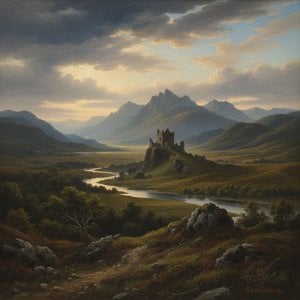
A Highland Sanctuary: The Living Chronicle of Brodick Castle
Nestled on the rugged, emerald Isle of Arran, a jewel adrift in the Firth of Clyde, lies Brodick Castle—a magnificent edifice that serves as much more than a mere stately home. It is a living chronicle of Scottish history, artistry, and the enduring spirit of conservation. Owned and meticulously cared for by The National Trust For Scotland, this grand residence offers a journey through centuries, revealing layers of aristocratic life intertwined with the dramatic landscapes that have shaped its storied existence. To step across its threshold is to enter a realm where the echoes of the past resonate within walls designed to inspire awe, inviting every visitor to connect deeply with Scotland’s rich and turbulent cultural heritage.
The architectural grandeur of Brodick Castle is a deliberate statement of ambition and romanticism. While its origins trace back to the 13th century, much of its present splendor is defined by the Gothic Revival style, spearheaded in the 19th century by the renowned architect William Burn. Under the influence of the Hamilton family, the Dukes of Abercorn, the castle was transformed with imposing towers, pointed arches, and intricate detailing that evokes the majesty of medieval fortresses while incorporating modern comforts. This architectural choice reflects a fascination with the romanticized past, creating a sense of timelessness that is further enhanced by the castle's strategic location overlooking the sweeping coastline of Arran.
A Tapestry of Artistry and Heritage
Within these storied walls, the collection held in trust offers a breathtaking encounter with history and fine art. The Great Hall serves as a testament to military prowess, boasting a stunning display of arms and armour that speaks to the Hamiltons’ influential role in Scottish conflicts. Moving through the state rooms, one discovers an opulent tapestry of life; intricately carved furniture and exquisite tapestries depicting pivotal scenes of Scottish history surround visitors, creating an immersive atmosphere of aristocratic elegance. For lovers of portraiture, the collection offers a window into the souls of those who once inhabited these halls, while the delicate beauty of miniature paintings showcases the remarkable skill and fashion of a bygone era.
The museum’s treasures extend even to the intimate details of nature and life, such as the exquisite 1932 oil painting 'Tommy', a Bay Pony by Florence Mabel Hollams. This stunning work captures equine beauty with exquisite detail, serving as a poignant reminder of the estate's connection to the land and its inhabitants. Such pieces exemplify the museum's ability to blend grand historical narratives with delicate, emotive fine art that resonates with collectors and enthusiasts alike.
The Soul of the Highlands
Beyond the fine arts, Brodick Castle holds a profound connection to Scotland's national poet, Robert Burns. A significant portion of the museum is dedicated to honoring his legacy, housing original manuscripts and personal artifacts, including a quill pen used by the poet himself. This intimate setting allows for a poignant connection to the man behind the verse, grounding his legendary words in their true social context. This sense of historical intimacy extends to the very grounds of the estate, where formal Italianate gardens meet naturalistic woodland walks.
From the structured beauty of the walled garden to the wilder landscapes beyond, the estate stands as a masterpiece of landscape design, embodying The National Trust For Scotland’s holistic mission to preserve both the artistic treasures of man and the breathtaking natural beauty of the Scottish Highlands. It remains a destination where history is not merely observed but felt, making it an essential pilgrimage for those who seek the intersection of cultural depth and natural splendor.