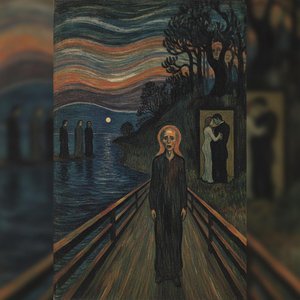
A Sanctuary of Soul
Oslo’s waterfront has undergone a remarkable transformation, and at its heart stands MUNCH, a striking architectural statement dedicated to the life and work of Edvard Munch. The building, designed by Juan Herreros, rises from the Bjørvika district with an undulating form that mirrors the turbulent life of its namesake. Its distinctive safety features and unconventional aesthetic have sparked conversation, with some noting the abundance of guard rails that secure the invaluable holdings within. The structure offers panoramic views of the Oslofjord, creating a space where the environment and the art exist in a constant, quiet dialogue.
The institution is a profound immersion into the emotional landscape of a man who dared to depict the anxieties and complexities of the modern human condition. It is a space designed to evoke feeling, resonating with themes of love, loss, and existential dread. The museum is not merely a repository for paintings; it is a place to witness the very core of human experience, rendered in swirling colors and haunting forms.
The Depth of the Collection
While The Scream holds a place in art history, the museum contains over 1,200 paintings and more than 18,000 prints and lithographs, alongside sculptures, drawings, sketches, and personal artifacts. To stand before these works is to trace the development of a singular vision.
Presences within the halls include:
- Man and Woman I (1905)
- Kiss (1897)
- Madonna
The collection tracks the evolution of Expressionism, moving from naturalistic influences toward a symbolic and psychological style. The volume of graphic works allows for a study of technique, revealing the energy in every line and shade. For the observer, these works provide a resonance that can transform a space into a site of contemplation.
A Living Legacy
MUNCH functions as a dynamic cultural hub, engaging with contemporary art alongside its permanent collection. The museum hosts rotating exhibitions that foster a dialogue between the legacy of Edvard Munch and current artistic trends. This commitment extends to lectures, workshops, film screenings, and performances, all intended to deepen the understanding of Expressionism and its continuing influence. By hosting these diverse programs, the museum ensures that the study of the artist remains a living, breathing endeavor rather than a static observation of the past.