A Symphony of Stone and Spirit: The Soul of Stuttgart
To step into the Staatsgalerie Stuttgart is to embark on a profound journey through the very heartbeat of European art history. It is not merely a destination for the casual observer but a sanctuary where the echoes of the past harmonize with the vibrant, often jarring energy of the modern era. Founded in 1843, the gallery began its life as a modest repository for the Württemberg royal collection, yet it has blossomed into a global beacon of cultural significance. The museum serves as a living dialogue between centuries, offering a rare opportunity to witness the evolution of human expression as it moves from the sacred stillness of the Middle Ages to the explosive, fragmented realities of the twentieth century. For the art lover, every corridor offers a new revelation; for the collector, it provides a masterclass in the enduring power of aesthetic innovation.
The architectural experience of the Staatsgalerie is as much a masterpiece as the canvases it protects. The museum presents a striking duality through its two primary structures: the Alte Staatsgalerie and the Neue Staatsgalerrie. The older building, with its dignified neoclassical facade, anchors the institution in tradition, housing a breathtaking array of Old German paintings, Italian Renaissance treasures, and the serene landscapes of the Romantic period. In stark contrast, the Neue Staatsgalerie—a Post-Modernist triumph designed by the visionary James Stirling—redefines the museum experience. With its playful use of industrial materials, unexpected geometric juxtapositions, and an open-top rotunda that invites the sky into the gallery, this architectural marvel challenges the boundaries between interior and exterior space. It is a building that breathes, much like the avant-garde movements it was designed to house.
A Tapestry of Modernity and Masterpieces
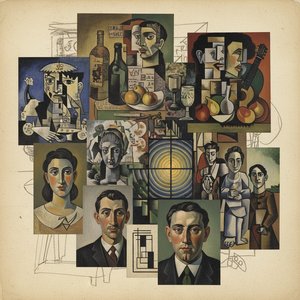
Within these walls, the transition from tradition to modernity is felt physically and emotionally. The collection reaches its crescendo in the twentieth-century galleries, where the titans of Modernism reside. One might find themselves lost in the rhythmic, primal energy of Pablo Picasso’s “Tumblers (Mother and Son)” or captivated by the luminous, sensory delights of Henri Matisse's “With the Toilet (La Hair-style).” The museum holds a particularly potent collection of German Expressionism and New Objectivity, where the unflinching realism of Otto Dix and the psychological depth of Max Beckmann offer a window into the tumultuous spirit of a changing Europe. These works do not merely sit on walls; they pulsate with the social and political tensions of their time, inviting viewers to contemplate the fragility and resilience of the human condition.
For those who find inspiration in the interplay of form and color, the gallery’s holdings of abstraction are equally profound. The geometric precision of Piet Mondrian’s “Composition in White, Red and Blue” resonates against the more fluid, dreamlike visions of Joan Miró and the ethereal marks of Paul Klee. This curated tension between structure and spontaneity makes the Staatsgalerie a premier destination for interior designers and decorators seeking to understand how different eras can coexist within a single aesthetic vision. The museum’s commitment to ethical stewardship—notably its active role in the restitution of artworks looted during the Nazi era—further elevates its importance, marking it as a place of profound integrity and historical truth.
Beyond its permanent treasures, the Staatsgalerie remains a dynamic cultural engine, hosting thought-provoking temporary exhibitions that bridge the gap between historical canons and contemporary discourse. Whether exploring the nuances of social identity or celebrating the revival of forgotten techniques, the museum ensures that its narrative is never static. It remains a place where the heavy weight of history meets the light of new ideas, making it an essential pilgrimage for anyone seeking to understand the enduring, transformative power of art.