A Sanctuary of Stone and Spirit: The Living Legacy of Oriel College
To step within the bounds of Oriel College, Oxford, is to leave the frantic pace of the modern world behind and enter a realm where the whispers of medieval scholarship intertwently with the grandeur of Renaissance patronage. Founded in 1326 by Adam de Brome under royal decree, this venerable institution was originally conceived as the House of the Blessed Mary. Its evocative name, derived from La Oriole —a bird symbolizing humility and piety—serves as a poetic prelude to the understated elegance that defines its character. As one wanders through the college’s courtyards, the journey becomes a temporal odyssey; Gothic arches soar above weathered cobblestone paths, and every corner of this architectural composition tells an organic story etched in stone. The very fabric of the college, composed of four medieval halls harmoniously blended, embodies an unwavering pursuit of knowledge that has endured for nearly seven centuries.
The architectural splendor of Oriel is not merely a backdrop for academic life but a profound testament to historical continuity and artistic evolution. The college’s silhouette is marked by its prestigious royal foundations, standing as Oxford's oldest royal foundation and having once hosted the King’s Oxford Parliament during the tumultuous English Civil War. This deep-seated connection to the Crown is visible in the meticulous attention to detail found within its structures, where the influence of legendary architects like Sir Christopher Wren can be discerned in significant renovations following the Great Fire of London. For the admirer of structural beauty, the college offers a masterclass in the blending of Gothic and Renaissance styles, creating a space that harmoniously balances scholarly contemplation with aesthetic magnificence.
The Art Within: Flemish Mastery and Medieval Treasures
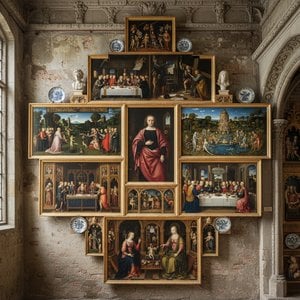
While Oriel College is celebrated globally for its academic rigor and its alumni, including two Nobel laureates, it quietly safeguards an art collection of exceptional historical resonance. For the discerning collector or art lover, the collection offers an intimate glimpse into the artistic sensibilities that shaped Oxford’s cultural identity. The crown jewel of this assembly is undoubtedly Bernard van Orley’s 1586 masterpiece. As a quintessential example of Flemish Renaissance artistry, this painting commands attention through its meticulous detail and refined composition. The delicate brushwork captures subtle nuances of expression, while the vibrant hues convey an opulent grandeur that reflects the sophisticated patronage system of the era. It is a piece that breathes life into the halls, bridging the gap between the viewer and the sixteenth century.
Beyond the luminous canvases of the Renaissance, the collection is enriched by tangible relics of the college's earliest religious roots. Three exquisite pieces of medieval silver plate serve as shimmering reminders of Oriel’s foundational years and its deep connection to liturgical ritual. Crafted with unparalleled skill by anonymous artisans, these objects exemplify the profound importance placed on visual representation and craftsmanship within medieval society. These treasures, alongside recent exhibitions that explore themes ranging from scientific discovery to humanist innovation, ensure that the college remains a vibrant center for intellectual engagement. For interior designers and curators seeking inspiration, the collection at Oriel represents a perfect synthesis of historical weight and exquisite aesthetic grace, making it a true sanctuary for the soul.