


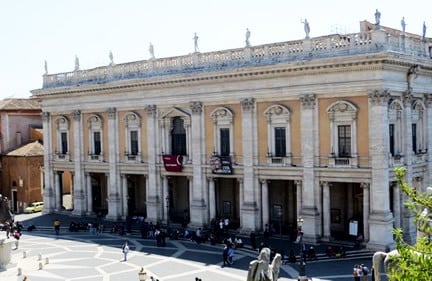


A Legacy Etched in Stone: The Eternal Soul of Rome
To step into the Capitoline Museums is to walk through the very heartbeat of Western civilization. As the world’s oldest public museum, born from the visionary generosity of Pope Sixtus IV in 1471, these halls do not merely display art; they preserve the foundational myths and triumphs of Rome itself. The collection serves as a profound dialogue between the ancient and the modern, where the bronze shadows of antiquity meet the dramatic intensity of the Baroque. For the art lover, it is a pilgrimage to the source of classical ideals, and for the collector, it is a masterclass in the enduring power of form, texture, and historical narrative.
The architectural stage upon which this drama unfolds is as much a masterpiece as the sculptures it houses. Overlooking the magnificent Piazza del Campidoglio, the Palazzo dei Conservatori and Palazzo Nuovo stand in a deliberate, rhythmic embrace. This square, a triumph of Renaissance urbanism designed by Michelangelo himself, was conceived to echo the grandeur of the Roman Forum. As one wanders through these palatial spaces, the architecture directs the gaze with a sense of theatrical purpose, creating an immersive environment where every corridor feels like a passage through time. The deliberate arrangement of the buildings reflects a conscious effort to revive classical dignity, making the museum experience an architectural journey as much as a visual one.
Masterpieces of Myth and Motion
The treasures held within these walls are icons that have shaped the collective human imagination. At the center of Rome’s identity stands the Capitoline Wolf , a bronze sentinel whose depiction of Romulus and Remus serves as a poignant, primal reminder of the city's legendary origins. This sense of mythic weight is echoed in the marble elegance of the Venus of Capitol Hill, where Hellenistic grace meets a timeless standard of beauty. Yet, the collection possesses a darker, more visceral dimension; the Bust of Medusa offers a chillingly realistic encounter with the Gorgon’s gaze, showcasing the dramatic tension and psychological depth that would later define the Baroque era.
Beyond the mythological, the museums offer an unparalleled survey of sculptural evolution. In the Palazzo Nuovo, visitors encounter the haunting pathos of the Dying Gaul , a work that captures the very essence of human vulnerability and tragic nobility. The halls are further enriched by the presence of works from masters such as Bernini and Rubens, whose contributions bring a sense of movement and light to the static stone. For the interior designer or connoisseur, these pieces represent the pinnacle of aesthetic achievement, offering profound inspiration through their mastery of anatomy, drapery, and emotional resonance.
A Living Monument of Cultural Heritage
What truly distinguishes the Capitoline Museums is their role as a living institution, bridging centuries of papal patronage and modern public access. The evolution of the collection—fueled by significant donations from figures such as Clement XII—reflects the shifting tides of political power and cultural taste in Rome. This history of stewardship has transformed the museums into a cornerstone of global heritage, where temporary exhibitions breathe new life into the permanent galleries, constantly recontextualizing ancient triumphs for contemporary audiences.
To visit the Capitoline is to witness the continuity of human creativity. It is a place where the heavy bronze of the past meets the light-filled brilliance of the Renaissance, creating a space that is both a sanctuary for history and a vibrant participant in modern culture. Whether one is drawn by the technical brilliance of Roman portraiture or the sweeping architectural vision of Michelangelo, the museums offer an experience that transcends simple observation, inviting every visitor to become part of Rome’s eternal story.





