A Living Chronicle of the Russian Stage
To step into the A. A. Bakhrushin State Central Theatre Museum is to transcend the boundaries of time and enter a realm where the ephemeral magic of performance is rendered permanent. Located in the heart of Moscow, this extraordinary institution serves as the definitive sanctuary for Russia’s theatrical soul. Founded in 1894 by the visionary merchant Alexey Alexandrovich Bakhrushin, the museum began not as a formal institution, but as a deeply personal quest to capture the fleeting beauty of the stage. Through his tireless expeditions across the Russian landscape, Bakhrushin amassed a collection of rarities that would eventually grow into a staggering repository of over 1.5 million exhibits, making it one of the most significant theatrical archives in the entire world.
The museum’s architectural setting is itself a masterpiece of historical storytelling. Hancered within a meticulously restored manor house dating back to 1896, the building stands as a striking exemplar of the English Gothic style. This architectural elegance provides a sophisticated backdrop for the treasures contained within, offering a sense of grandeur that mirrors the dramatic intensity of the plays it commemorates. For the discerning traveler or lover of historical aesthetics, the museum’s location and structure offer an immediate immersion into the late 19th-century cultural atmosphere, where every carved detail speaks to the era's passion for romanticism and intricate design.
The Intersection of Fine Art and Spectacle
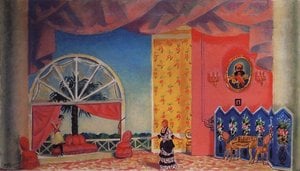
The true heart of the Bakhrushin Museum lies in its breathtaking collection of visual stagecraft, a place where the line between fine art and performance dissolves into a singular, vibrant experience. Visitors can wander through a vibrant chronicle of sartorial history, encountering original costumes worn by legendary actors that pulse with the energy of past performances. Beyond the fabric and thread, the museum preserves the very blueprints of imagination: original set designs, evocative sketches, and meticulous stagecraft documents. The collection features the handiwork of some of the most influential names in art history, including Mikhail Vrubel , Alexandre Benois , Léon Bakst , and Natalia Goncharova .
To witness these works is to see how the avant-garde movements of Russia—from Symbolism to Constructivism—were physically manifested on the stage through the genius of designers like Konstantin Korovin and Alexander Rodchenko . For collectors of historical narratives and interior designers seeking inspiration in the textures of the past, the museum provides a profound wellspring of aesthetic ideas, showcasing how color, movement, and form were once used to command the attention of an entire nation.
A Legacy of Creative Preservation
What distinguishes this museum from any other global institution is its holistic approach to the art of the spectacle. It does not merely display objects; it preserves a lineage of creativity. Through archival manuscripts, rare photographic documentation, and the physical remnants of iconic productions, the museum offers an unparalleled look at the evolution of stagecraft from the late 18th century to the modern era. It remains a vibrant cultural hub where the ghosts of the great Russian theatre continue to inspire new generations of performers, artists, and dreamers alike, ensuring that the brilliance of the Russian stage is never lost to the shadows of history.